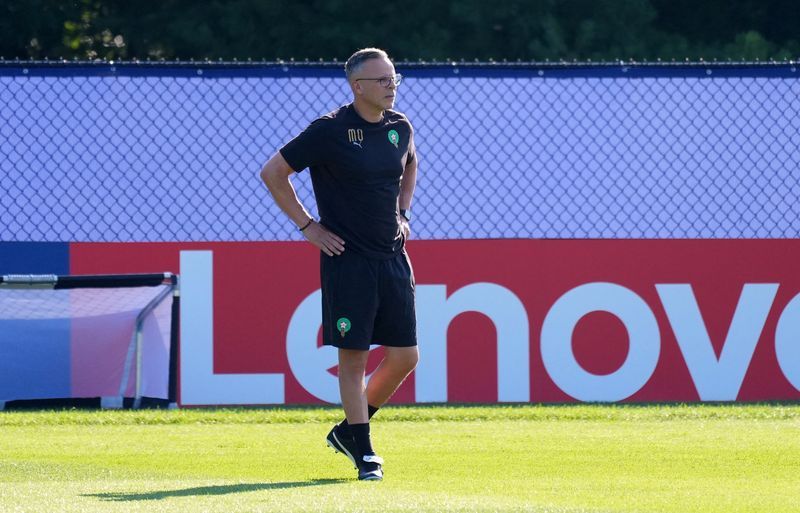
Morocco's pursuit of World Cup glory will tolerate no distraction from celebration. Coach Mohamed Ouahbi made this abundantly clear on Wednesday, addressing his squad's mindset as they prepare to face France in a high-stakes quarter-final clash that carries the weight of unfinished business from two years prior. The Moroccan delegation, gathered in Foxborough, Massachusetts for the crucial encounter, is acutely aware that premature congratulations could undermine their genuine ambitions at this tournament.
The psychological framing Ouahbi has constructed for his team represents a deliberate rejection of the narrative that often ensnares underdog nations in major competitions. He was emphatic that any retrospective analysis of Morocco's journey would wait until the final whistle sounds on the tournament itself, not before. This discipline reflects a maturity born from their semi-final experience in Qatar, where they came agonizingly close to something unprecedented for African football yet ultimately fell short. That loss to France, though painful, may have paradoxically equipped them with the mental resolve needed for a successful return engagement.
Thursday's fixture carries the unmistakable mark of unfinished business. The two nations last met in the 2022 semi-finals, a match that ended Morocco's historic run and crowned France as one step away from defending their world title. This time, however, the dynamic has shifted considerably. Morocco enters not as the surprise story that captured global imagination, but as a genuine contender whose credentials have been earned through convincing performances. They navigated their group stage with ease before dispatching the Netherlands and Canada in knockout rounds, establishing themselves as more than mere tournament entertainment.
Ouahbi's comments revealed the coaching philosophy underpinning Morocco's campaign. He rejected the notion that reaching the quarter-finals constitutes a victory in itself, a framing that occasionally creeps into discussions surrounding African and Arab nations in World Cups. His statement that the real "bonus" lies in winning the World Cup itself—not in simply competing at this level—signals how fundamentally Morocco's self-perception has evolved. This is not a team content with participation or emotional victories. They have tasted deep tournament runs and expect nothing less than continued progression.
France, by contrast, arrives as the established superpower in this encounter. The defending world champions and 2022 finalists boast the tournament's most formidable attacking arsenal. Kylian Mbappé, the tournament's second-leading scorer with seven goals, anchors a forward line that also features Ousmane Dembélé, Michael Olise, and Bradley Barcola. This constellation of attacking talent represents arguably the most dangerous offensive unit assembled at any recent World Cup, creating defensive challenges of immense complexity. France's path to the quarter-finals proved less elegant than Morocco's, requiring a penalty from Mbappé to edge past Paraguay in a scrappy encounter, yet their greater experience in knockout pressure situations cannot be discounted.
The stakes for both nations extend beyond mere progression. For Morocco, victory would represent a seismic achievement for African football and cement their status as a continental powerhouse capable of competing with Europe's elite on the grandest stage. The implications for the region would be substantial, reinforcing that nations from the Middle East and North Africa have moved beyond being peripheral figures in global football's hierarchy. For France, anything less than reaching the semi-finals would constitute a profound disappointment given their squad's depth and quality.
Ouahbi's insistence that his team would perform at "2,000 percent" without allowing complacency to seep in reflects the relentless mentality required to mount a World Cup challenge. He acknowledged France's status as favorites while simultaneously refusing to accept that this necessarily determines the outcome. This balance—respecting the opponent's quality while maintaining complete faith in his own team's capacity—represents the psychology that successful underdogs must cultivate. Morocco cannot afford the luxury of playing defensive football or settling for a creditable defeat.
The tactical and personnel dimensions of this encounter will prove decisive. Morocco must find ways to constrain France's devastating forward play while maximizing opportunities at the other end. The absence of significant injury concerns for either squad suggests both will field their strongest available lineups, ensuring a contest between fully resourced opponents. Ouahbi's team will need to execute their gameplan with precision while maintaining the intensity and focus that carried them through earlier rounds.
What becomes clear from Ouahbi's pre-match commentary is that Morocco has transcended the role of sentimental favorites or historic participants. They have arrived at this tournament with genuine aspirations for the title, and their coach's refusal to accept praise for merely reaching the quarter-finals underscores this reality. For Southeast Asian audiences watching these matches, Morocco's trajectory offers instructive lessons about how football development, strategic investment, and unshakeable self-belief can elevate a nation from regional prominence to global contention within a relatively brief timeframe.

