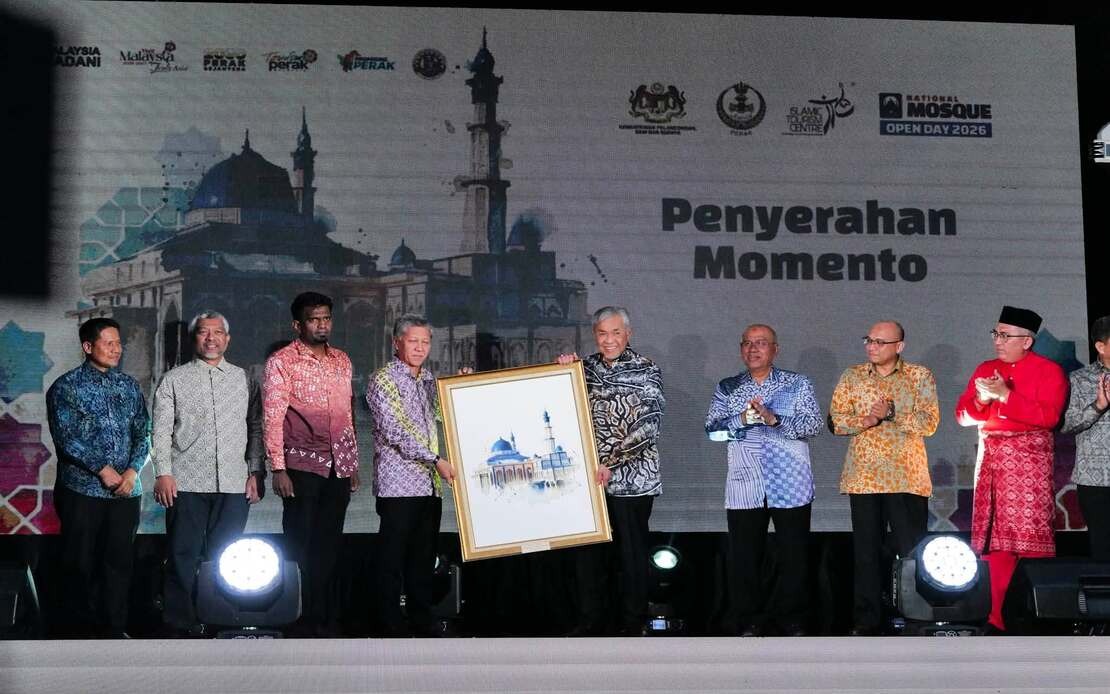
Deputy Prime Minister Datuk Seri Dr Ahmad Zahid Hamidi has articulated a vision for Malaysia's mosque sector that extends beyond traditional religious functions, positioning these institutions as crucial anchors in the country's tourism narrative. Speaking at the National Mosque Open Day 2026 in Bagan Datuk, Ahmad Zahid outlined how mosques can simultaneously serve as places of worship, preaching centres, and cultural attractions that showcase Malaysia's Islamic heritage to both domestic and international travellers.
The strategic thinking behind this approach reflects a broader recognition that religious sites represent significant untapped potential in Malaysia's tourism economy. Rather than viewing mosques exclusively through a devotional lens, Ahmad Zahid contended that these structures embody centuries of architectural innovation, historical significance, and cultural expression that warrant exposure to wider audiences. By facilitating mosque visits as part of tourism itineraries, Malaysia can narrate a compelling story about its Islamic civilisation and demonstrate how the faith has shaped the nation's identity and physical landscape across centuries.
Ahmad Zahid emphasised that opening mosque doors to non-Muslim visitors serves multiple strategic purposes beyond economic benefit. When tourists engage with mosque communities, they experience firsthand the hospitality values embedded in Malaysian Islamic culture and develop nuanced understandings that counter superficial or distorted perceptions of Islam globally. The Deputy Prime Minister noted that these encounters allow visitors to witness compassion, wisdom, and benevolence as lived practices rather than abstract concepts, fundamentally reshaping how they perceive Islam upon returning home. Such cultural diplomacy through tourism generates soft power benefits that conventional government communication channels cannot achieve as effectively.
The National Mosque Open Day initiative exemplifies this integrated approach, creating structured environments where visitors from diverse religious, ethnic, and cultural backgrounds can interact respectfully with mosque institutions and their communities. By scheduling dedicated open-day events, Malaysian mosques transform into educational platforms where cross-cultural dialogue occurs naturally within a framework of mutual respect. These occasions foster genuine appreciation for mosques as heritage institutions rather than exotic curiosities, building the intercommunal understanding essential for Malaysia's continuing stability and social cohesion.
Recognising the practical challenges of scaling such initiatives nationally, the Islamic Tourism Centre has established formal mechanisms to coordinate mosque participation in tourism development. The designation of Masjid Tuminah Hamidi in Bagan Datuk as Malaysia's 98th Tourism Mosque marks a deliberate effort to expand the roster of certified religious sites offering structured visitor experiences. Built in 2023 as a waqf (Islamic endowment) by Ahmad Zahid's family, the mosque's selection as a tourism facility acknowledges both its distinctive architectural merit and its function as a centre for Islamic knowledge dissemination through dedicated galleries and educational facilities.
The Islamic Tourism Centre Director-General Mohammad Faisal Abu Suaib Khan disclosed that Malaysia's 6,851 mosques represent an enormous reservoir of tourism potential yet to be systematically leveraged. Each mosque possesses unique architectural characteristics, historical narratives, and community traditions that could appeal to culturally-conscious travellers seeking authentic religious experiences. The Centre's ambition to substantially increase the number of certified Tourism Mosques reflects confidence that many institutions nationwide possess the requisite features and heritage value to attract visitors without compromising their primary spiritual missions or community functions.
The institutional framework supporting this tourism ecosystem extends beyond mere designation, encompassing comprehensive development guidelines and training initiatives. Coordination between the Islamic Tourism Centre, the Department of Islamic Development Malaysia, and state-level religious authorities ensures that participating mosques maintain consistent standards while respecting local variations in practice and tradition. This bureaucratic infrastructure prevents haphazard commercialisation that might alienate mosque communities or trivialise sacred spaces, instead channelling tourism development through thoughtful, stakeholder-inclusive processes.
The Centre has simultaneously developed complementary initiatives such as the Muslim-Friendly Tourism and Hospitality Assurance and Recognition programme and Muslim-Friendly Tourist Guides certification scheme. These initiatives extend the tourism ecosystem beyond individual mosques, creating an integrated infrastructure where guides possess knowledge about Islamic customs and visitors encounter consistent standards of cultural competence across the hospitality sector. The deliberate framing of Malaysia as "Muslim-Friendly, not Muslim-Only" signals an inclusive approach that welcomes visitors of all faiths while highlighting the country's capacity to provide religiously-informed tourism experiences.
For Malaysia's tourism sector, this strategic pivot holds significant implications given global trends toward experiential and religious tourism. International travellers increasingly seek meaningful cultural encounters rather than superficial sightseeing, making authentically-presented Islamic heritage increasingly marketable. By positioning itself as a destination where visitors can engage respectfully with living Islamic traditions rather than merely viewing architectural monuments, Malaysia can differentiate itself within competitive Southeast Asian tourism markets and capture growing demand from culturally-conscious travellers across Asia, Europe, and beyond.
The National Mosque Open Day 2026 event itself, spanning three days with programming combining spiritual, community, cultural, recreational, and family activities, demonstrates how tourist engagement can be structured to maximise mutual benefit. Visitors gain experiential understanding while mosque communities showcase their vitality and welcome spirit. Such events simultaneously serve resident Malaysians unfamiliar with different religious traditions, contributing to domestic intercommunal understanding alongside international tourism objectives.
This policy direction also responds to contemporary concerns about extremism and religious polarisation, using tourism as a mechanism for promoting moderate, inclusive Islam rooted in Malaysian traditions. By enabling widespread positive interactions with Muslim communities and Islamic institutions, the mosque tourism ecosystem contributes to countering narratives that portray Islam as closed, hostile, or incompatible with pluralism. Each respectful mosque visit becomes a small but meaningful intervention against prejudice and misinformation, leveraging tourism's unique capacity for human connection.
Looking forward, the success of this initiative depends on careful balance between economic opportunity and spiritual integrity. Mosque communities must retain ultimate authority over visitor access and programming, ensuring tourism development serves their religious mission rather than compromising it. State support through coordination, training, and certification should enhance rather than dictate local decision-making. As Malaysia implements these tourism initiatives, the question of maintaining authentic spiritual spaces while welcoming outsiders will ultimately determine whether mosque tourism becomes a sustainable model for cultural exchange or merely another extractive industry.

