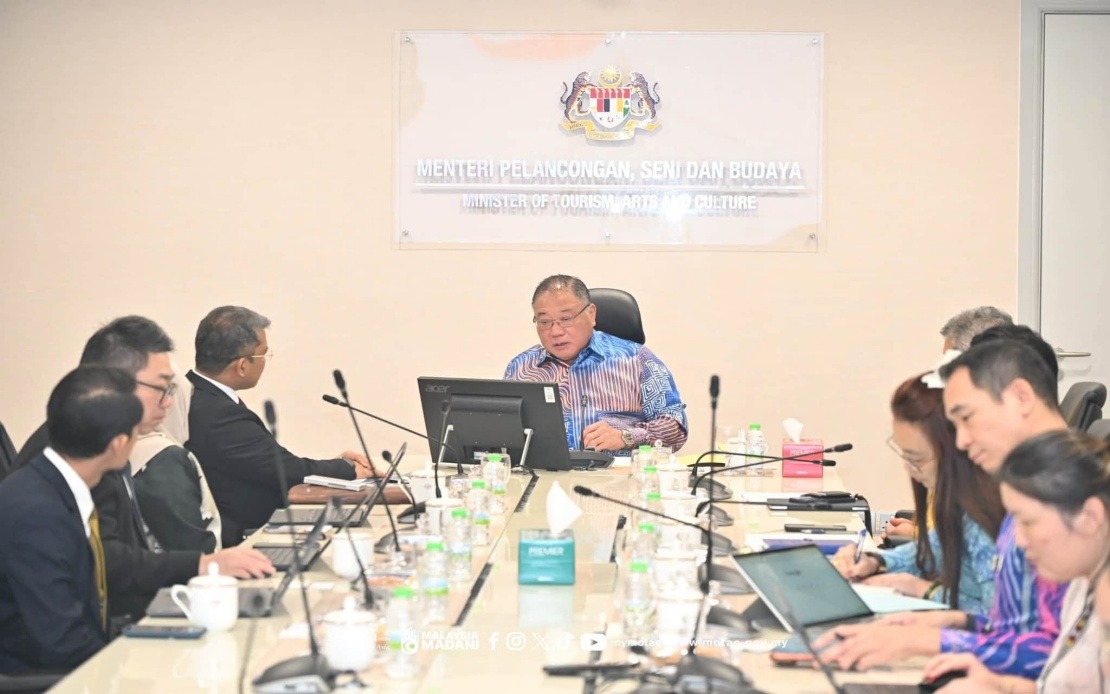
The Ministry of Tourism, Arts and Culture and Malaysia Aviation Group have reinforced their working relationship to capitalise on the Visit Malaysia Year 2026 campaign, which has now been extended through 2026. The two organisations intend to leverage their combined influence to draw significantly greater numbers of international travellers to Malaysia, building on the momentum generated by the initial promotional push.
Tourism, Arts and Culture Minister Datuk Seri Tiong King Sing met with MAG Group president and chief executive officer Captain Nasaruddin A Bakar to map out the enhanced collaboration. The discussions underscored growing recognition within government circles that sustained growth in visitor arrivals demands close alignment between the tourism sector and the aviation industry, which serves as the critical transport backbone for international arrivals.
Central to the partnership strategy is a deliberate expansion of Malaysia Aviation Group's route network to tap previously underserved markets. The airline group intends to strengthen its footprint in India, China and Europe—three regions representing enormous untapped potential for Malaysia's tourism sector. These markets collectively represent hundreds of millions of middle-class consumers with rising disposable incomes and growing appetite for international travel. Enhanced connectivity through additional flights and better scheduling can convert latent demand into actual visitor arrivals.
Beyond simply increasing frequency on established routes, the partnership contemplates opening entirely new destinations from Malaysia's hubs. The inclusion of Fukuoka, a major metropolitan centre in Japan's Kyushu region, signals intent to penetrate underserved corridors in East Asia. Fukuoka serves as a gateway to a wealthy regional market and could establish Malaysia as a preferred regional hub for onward travel within Southeast Asia, particularly for Japanese and other East Asian tourists seeking multi-country experiences.
The two parties also committed to developing sophisticated demand management strategies, particularly targeting the traditionally weaker seasons. Airlines and tourism operators have long grappled with seasonal volatility, with peak periods commanding premium pricing while low seasons see underutilised capacity. Through coordinated marketing campaigns and promotional flight pricing, MOTAC and MAG aim to redistribute visitor flows more evenly throughout the year, ensuring better asset utilisation for the airline and steadier business conditions for Malaysian hotels, attractions and service providers.
Equally significant is the commitment to enhance the passenger experience across the entire journey. Improvements to cabin facilities and in-flight services directly influence how travellers perceive Malaysia before they even arrive. First-time visitors forming impressions during their flight are more likely to extend their stay and spend more if the experience meets or exceeds expectations. Investment in cabin crew training and catering standards reflects understanding that airline staff serve as informal tourism ambassadors, capable of sparking interest in destinations and activities among passengers.
The collaboration extends beyond international route expansion and product enhancement to include substantive support for Malaysia's domestic tourism ecosystem. By increasing benefits accruing to local industry stakeholders—hotels, restaurants, tour operators, attractions—the partnership seeks to create multiplier effects throughout the economy. When international visitors arrive in greater numbers, local businesses capture revenue that ultimately supports employment, supplier networks and community development across tourist-dependent regions.
The strategic alignment between government and the private aviation sector reflects a broader policy shift toward coordinated, whole-of-economy approaches to tourism growth. Rather than viewing MOTAC and MAG as separate entities with differing mandates, the partnership recognises fundamental interdependencies. The ministry's promotional reach means little without reliable, affordable transportation; the airline's network expansion succeeds only when genuine demand exists for Malaysian experiences. By harmonising objectives and sharing commercial intelligence, both parties strengthen their individual competitive positions.
For Malaysia, this partnership carries broader economic significance. Tourism directly generates foreign exchange, creates employment across diverse skill levels and geographies, and drives infrastructure investment benefiting local communities. At a time of economic uncertainty globally, diversifying visitor source markets reduces vulnerability to localised downturns while spreading economic benefits across the region. The explicit focus on India, China and Europe suggests deliberate geographic diversification away over-reliance on traditional markets.
The initiative also positions Malaysia advantageously within broader Southeast Asian tourism competition. Rival destinations like Thailand, Vietnam and Indonesia have invested heavily in air connectivity and international marketing. By strengthening the relationship between aviation capacity and tourism promotion, Malaysia works to capture market share from competitors offering similar beach, cultural and culinary experiences. The extended VM2026 campaign provides a multi-year window to establish habits among new visitor cohorts and build repeat visitation.
Implementing this expanded partnership strategy will require sustained investment and operational coordination across multiple organisations. MAG must commit capital to aircraft and network development while managing increased operational complexity. MOTAC must craft messaging resonating with diverse cultural audiences across multiple markets, requiring sophisticated market research and creative localisation. Both institutions must maintain focus amid competing priorities and budget pressures.
The success of this initiative will ultimately be measured through visitor arrival statistics, average visitor expenditure and occupancy rates at Malaysian tourism facilities. As the VM2026 campaign extends into 2026, stakeholders will monitor whether enhanced airline connectivity and coordinated marketing translate into tangible increases in international tourist numbers and spending patterns.

