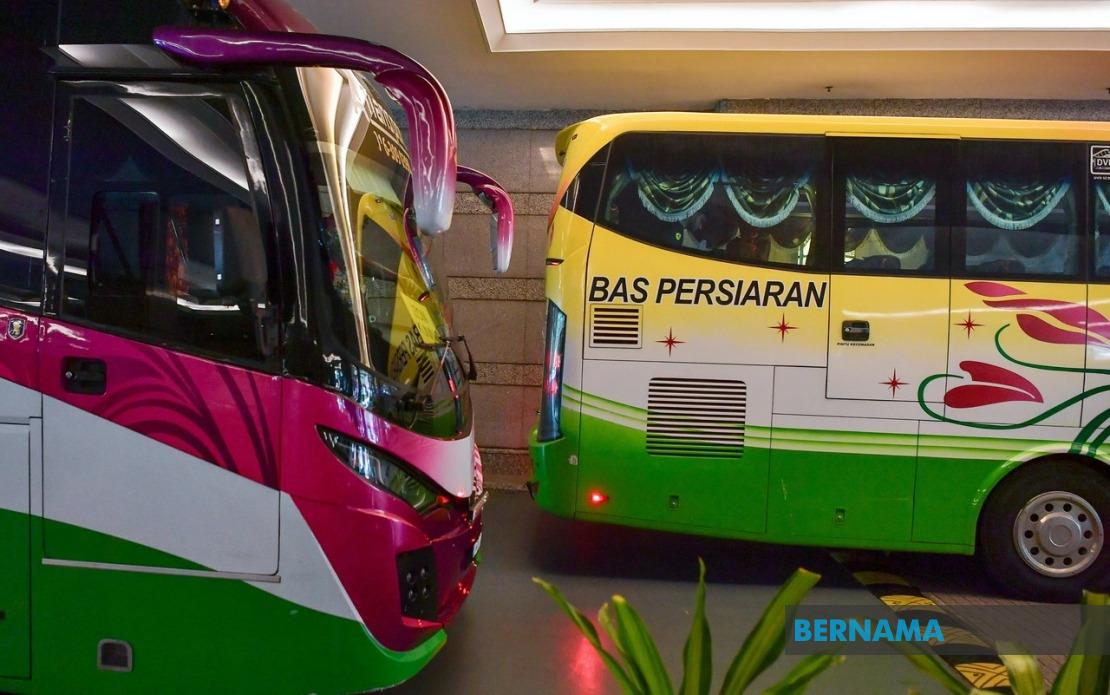
The Ministry of Tourism, Arts and Culture (MOTAC) has issued an urgent appeal for tour bus operators and tourism associations to submit comprehensive diesel usage data and supporting documentation, warning that without this information, the government cannot proceed with evaluating relief measures to cushion the impact of elevated fuel costs on the sector. In a statement released on June 30, MOTAC emphasised that the submission of complete and verified data is essential for designing assistance schemes that genuinely address industry needs rather than creating misaligned support that could disappoint stakeholders.
The timing of this request reflects growing pressure within Malaysia's tourism transport segment, where operators have struggled to absorb mounting fuel expenses following global energy market disruptions, particularly those triggered by instability in the Middle East. Tour bus operators, who form the backbone of domestic and regional tourism logistics, have faced compressed profit margins as diesel prices have climbed, creating a ripple effect across accommodation providers, attraction operators, and travel agencies that depend on reliable ground transportation to deliver tourists to their destinations.
MOTAC has already received representations from nine tourism associations detailing the hardships imposed by fuel price volatility, prompting the ministry to initiate dialogue sessions with industry representatives to understand ground-level challenges. However, the ministry's position is that anecdotal accounts and broad industry concerns, while acknowledged, cannot serve as the foundation for government expenditure or tax policy adjustments. The Finance Ministry has signalled openness in principle to considering assistance measures, but any commitment requires empirical validation demonstrating both the scale of cost increases and the differential impact across operator segments.
The requested data package extends beyond simple current diesel consumption figures. MOTAC has specifically asked operators to provide side-by-side comparisons of fuel expenses incurred before and after the period when Middle East tensions escalated, enabling analysts to quantify the actual burden imposed by the price surge rather than relying on estimates or industry averages. This granular approach reflects a sophisticated understanding that relief mechanisms must be calibrated proportionally—operators facing a 20 percent cost increase merit different support than those experiencing a 40 percent rise, and any blanket assistance risks either overshooting or undershooting genuine need.
For Malaysian readers familiar with transportation and tourism dynamics, this request underscores a persistent challenge in sectoral policy: the gap between government willingness to help and the administrative capacity required to deliver targeted assistance. Malaysia's tourism sector recovered significantly following the COVID-19 pandemic, with international visitor arrivals rebounding and domestic travel surging. However, this growth has coincided with global inflationary pressures that threaten to erode the sector's competitiveness relative to competing regional destinations in Southeast Asia, where neighbouring countries' tour operators may benefit from different cost structures or government support regimes.
The ministry's insistence on comprehensive data submission also reflects fiscal discipline and a desire to avoid ad hoc bailouts that could become politically difficult to justify or sustain. By demanding documentation of actual costs and impacts, MOTAC creates a defensible policy framework where assistance is visibly proportional to demonstrated hardship. This approach provides protection against accusations of favouritism toward particular operators or associations and establishes clear criteria for determining which businesses qualify for support.
Operators who have not yet submitted required documents face a tightening window, as MOTAC has signalled that expediting evaluation depends on prompt compliance. The ministry has committed to implementing assistance measures in staged phases following comprehensive assessment, but this timeline assumes steady submission of data. Delays by operators translate directly into delays in potential relief, creating an incentive structure for rapid compliance. Those who submit early and comprehensively may also benefit from clearer communication with government officials about what forms of assistance appear feasible given fiscal constraints.
The broader policy context here involves Malaysia's stated commitment to balancing fiscal responsibility against growth imperatives and sectoral sustainability. Any assistance package must account for the country's overall budget position and the imperative of supporting long-term economic expansion rather than simply reacting to cyclical cost pressures. MOTAC has flagged this explicitly, noting that support decisions must consider "the country's fiscal position and sustainable economic growth," signalling that relief will be meaningful but bounded by macroeconomic considerations.
For the tour bus industry specifically, successful navigation of this process depends on collective action. Individual operators submitting data enhance the credibility of industry-wide claims, while associations that consolidate member information and present coherent briefs strengthen their negotiating position. The emphasis on associations alongside individual operators suggests that MOTAC values both granular detail and summary-level analysis, requiring tourism groups to serve as intermediaries translating operator challenges into policy-relevant intelligence.
The stakes for Malaysian tourism extend beyond tour bus economics. Ground transportation costs directly influence package tour pricing, destination accessibility for budget-conscious domestic travellers, and the viability of rural tourism circuits that depend on long-distance coach transfers. A sector-wide contraction in tour bus capacity or service frequency would diminish Malaysia's appeal as a tourism destination, potentially redirecting visitor flows toward competitors offering better integrated and affordable tourism experiences. This systemic dimension underscores why MOTAC is invested in obtaining precise data—the goal is not merely to provide sympathy for struggling operators, but to preserve ecosystem functionality that benefits the entire hospitality and attractions sector.
Industry players now face a critical choice point: submitting detailed, verified data that enables government action versus withholding information and hoping for broader-based relief. MOTAC's framing suggests that cooperation yields better outcomes than resistance, and that the government's commitment to assistance is genuine but conditioned on operators meeting the ministry halfway through transparent data provision. This represents a standard public-private negotiation dynamic, but one with time sensitivity given the ongoing pressure of fuel costs on business operations.

