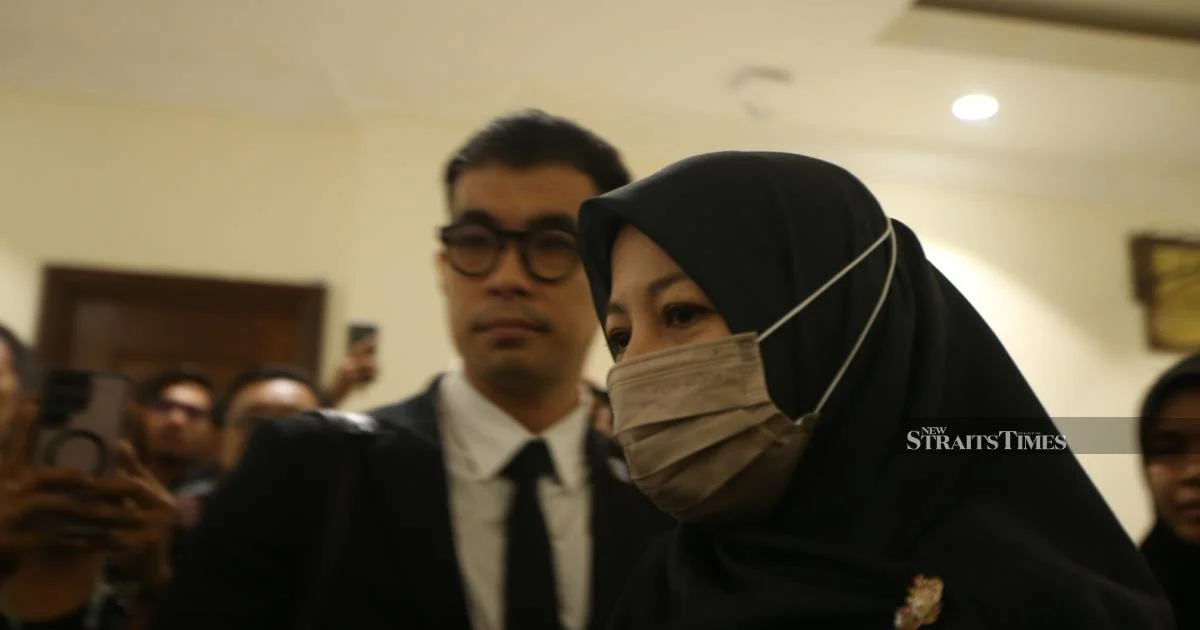
Testimony heard in the coroner's court in Kota Kinabalu has brought to light the anguished reflections of a mother confronting the consequences of an educational decision that would forever alter the trajectory of her family's life. Noraidah Lamat disclosed her deep remorse about having placed her daughter, the late Zara Qairinah Mahathir, into SMKA Tun Datu Mustapha, the state's prominent Islamic secondary boarding school, during proceedings investigating the circumstances and cause of the teenager's death.
The disclosure represents a poignant moment within the broader inquiry, shedding light on the emotional and psychological dimensions that often lie beneath discussions of school selection and parental responsibility. Educational choices, particularly those involving residential institutions where adolescents spend formative years away from direct parental supervision, carry significant weight and consequence. For Malaysian families, the decision to send a child to a boarding facility—whether for academic excellence, religious instruction, or to uphold family tradition—typically involves careful deliberation and considerable hope for the child's future development.
SMAK Tun Datu Mustapha, situated in Sabah's capital, operates as an institution combining Islamic religious education with standard academic curricula. Such schools hold particular importance across Malaysia's educational landscape, serving students whose families value the integration of faith-based learning with secular subjects. The school represents one avenue parents pursue when seeking to instil religious values during the crucial teenage years when adolescents navigate questions of identity and belonging.
The coroner's proceedings have progressively unveiled details regarding the circumstances surrounding Zara Qairinah Mahathir's death. Each revelation has evidently compelled reflection among those closest to the teenager, as they grapple with whether different decisions at critical junctures might have produced different outcomes. Parental regret in such contexts extends beyond simple second-guessing; it represents a profound examination of responsibility, foresight, and the inherent limitations of parental knowledge about institutional environments and peer dynamics within residential settings.
For Malaysian society, inquiries of this nature serve functions that transcend individual cases. They prompt broader conversations about safeguarding frameworks within boarding schools, the adequacy of duty-of-care protocols, communication channels between institutions and parents, and the emotional and psychological support systems available to adolescent boarders. The integration of religious education with the teenage experience, while valued for its spiritual and moral dimensions, simultaneously introduces complexities around authority structures, autonomy, and the navigation of institutional hierarchies.
Parents across Malaysia who select residential schools for their children do so with varying motivations—academic advancement, character development, religious formation, or sometimes practical necessity. The decision invariably entails relinquishing day-to-day oversight and trusting institutional leadership to provide not merely academic instruction but comprehensive duty of care. When tragic outcomes occur, the scrutiny naturally falls upon whether institutional environments provided adequate safeguards, whether warning signs existed that were not appropriately heeded, and whether communication protocols were sufficiently robust.
The coroner's court process itself represents an important mechanism within Malaysia's legal framework for investigating unexplained or suspicious deaths. Through these proceedings, crucial questions are formally examined: the timeline of events, institutional practices and policies, interactions between the deceased and peers or authority figures, and whether external factors—including the school environment—materially contributed to the tragic outcome. Each witness testimony adds texture to the evolving narrative.
Noraidah Lamat's expression of regret, while deeply personal, also carries implications for how Malaysian families and educators collectively think about the boarding school experience. The testimony implicitly raises questions about what different outcomes might have materialised had a teenager remained in a non-residential setting, had parents maintained greater proximity, or had different institutional conditions prevailed. These counterfactual considerations, while impossible to resolve with certainty, nonetheless inform the cultural and policy-level conversations surrounding educational arrangements for adolescents.
The Sabah religious school system, like similar institutions throughout Malaysia, operates within established regulatory frameworks, yet the capacity of regulations to prevent all tragic outcomes remains limited. Boarding school life inherently involves scenarios—peer relationships, social pressures, emotional challenges, late-night interactions—that occur beyond immediate adult supervision. The tension between fostering adolescent independence and providing comprehensive protective oversight presents unresolved challenges for institutional leadership and parental strategy alike.
As the coroner's inquiry continues, each piece of evidence and testimony contributes to a comprehensive examination of whether systemic failures, individual oversights, or tragic circumstance—or combinations thereof—contributed to the loss of a young life. For Noraidah Lamat and other family members, the proceedings represent an opportunity for answers, though answers alone cannot undo the devastating loss. For the broader Malaysian community, the inquiry serves as a sobering reminder of the complexities inherent in entrusting adolescent development to institutional care, regardless of the institution's academic reputation or religious mission.

