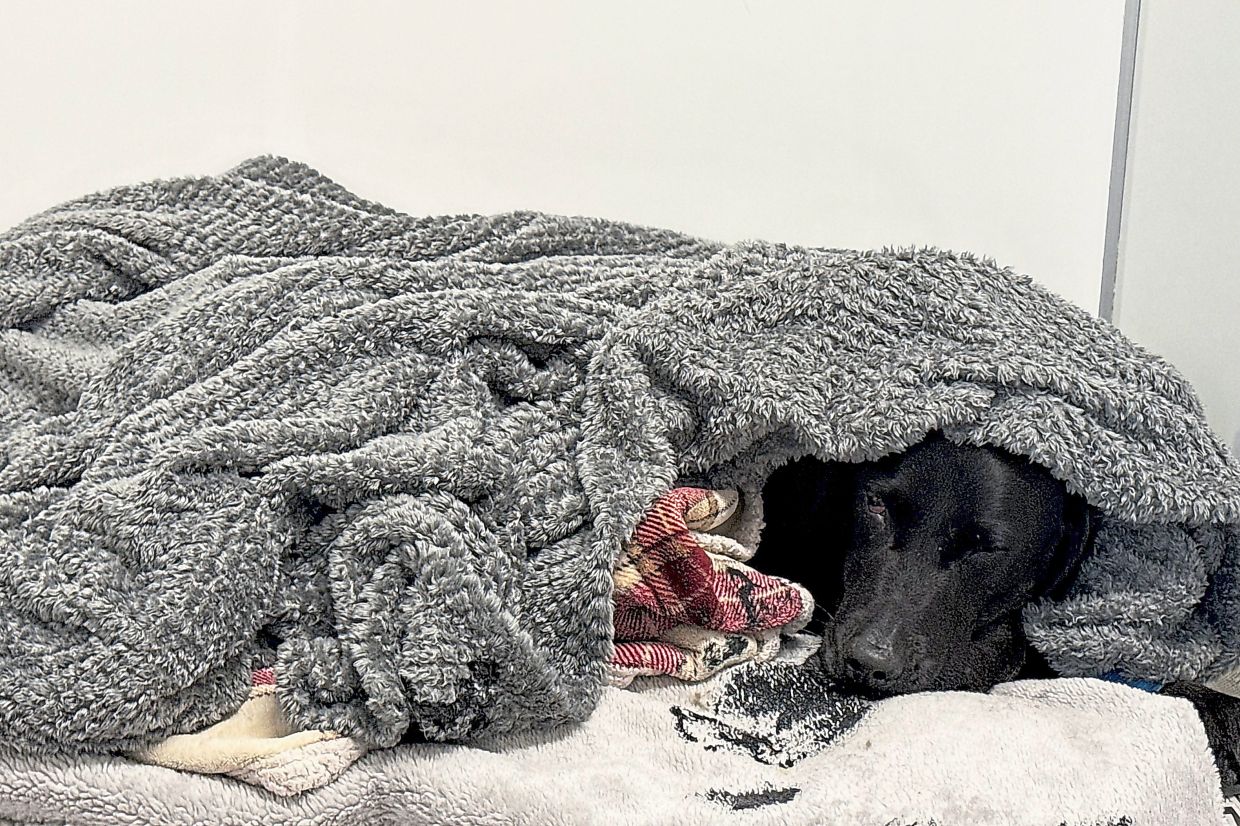
What began as a routine mountain hike in Scotland's highlands became an extraordinary rescue operation when Christina Bluhme realised her five-year-old black Labrador, Tokyo, was displaying alarming symptoms of intoxication during their July 5 ascent of Ben Nevis. The incident underscores the growing concern veterinarians across Britain and North America have raised about cannabis toxicity in companion animals, a problem that has escalated sufficiently to earn a place among the top ten pet toxins reported to American animal welfare authorities.
Bluhme, who brings considerable experience to canine matters through her 25 years working as a professional dog trainer, initially struggled to comprehend what was happening to her pet as the animal began swaying erratically along the trail before losing the ability to stand. The bewildering nature of Tokyo's condition reflected a broader knowledge gap; despite her extensive background with dogs, Bluhme had never encountered or suspected cannabis poisoning. Her initial confusion would soon resolve into focused crisis management as she and her son, Magnus, found themselves more than three hours into their climb on Britain's tallest mountain at 1,345 metres.
The situation deteriorated rapidly as environmental factors compounded the emergency. Weather conditions that had been benign at the start of the day shifted dramatically, bringing heavy rain and plummeting temperatures to around 5°C. Faced with a severely incapacitated dog, treacherous terrain, and a narrow window before nightfall, Bluhme made the critical decision to abandon their summit attempt. She instructed Magnus to contact emergency services, though initial police responses suggested uncertainty about whether rescue resources could be deployed to their location.
Fortune intervened through unexpected timing. A volunteer crew from the Lochaber Mountain Rescue Team was already descending from the peak after assisting with a helicopter evacuation of an injured hiker. These trained mountaineers rapidly assessed the situation and placed the 25-kilogramme animal into their stretcher, employing their specialist skills to navigate the steep, rain-slicked, rocky descent in approximately one hour. Bluhme's description of their response—nearly running while maintaining careful control of the stretcher—illustrated the remarkable coordination between speed and safety that professional mountain rescue demands.
Crown Vets in the nearby town of Fort William had been alerted by police to prepare for Tokyo's arrival. A veterinarian was standing ready when Bluhme reached the clinic, initiating diagnostic procedures that initially seemed to point toward spinal complications. The senior veterinarian's decision to reconsider the clinical presentation proved pivotal. Observing Tokyo's fluctuating consciousness and other neurological signs inconsistent with structural damage, the team identified the symptoms as consistent with neurotoxin exposure. Consultation with a poison control centre confirmed their suspicion: the dog's presentation perfectly matched cannabis intoxication profiles.
The treatment protocol employed activated charcoal to interrupt toxin absorption, and Tokyo responded remarkably well to supportive care overnight. The next morning brought complete recovery, with the dog displaying no residual effects from her ordeal—a sharp contrast to Bluhme's own lingering emotional strain from the harrowing experience. The veterinary bill of £1,000 (RM5,445) represented a considerable expense, yet Bluhme's perspective reflected the overwhelming relief of having her cherished companion returned to full health.
The incident illuminates a concerning trend in pet health across developed nations. Cannabis toxicity in animals has escalated dramatically in both Britain and the United States, reflecting broader patterns of cannabis use and disposal. In America, the toxin achieved sufficient prevalence to enter the American Society for the Prevention of Cruelty to Animals' top ten list of pet toxins for the first time in 2023, indicating a notable shift in veterinary emergency room presentations. The mechanism remains the same across species: animals consuming cannabis-containing products—whether through ingestion of discarded joints, edibles, or plant material on hiking trails—experience neurological effects ranging from disorientation to complete incapacitation.
For Malaysian and Southeast Asian readers, this incident carries particular relevance despite the region's different legal frameworks around cannabis. As some jurisdictions liberalise cannabis regulations or as medical cannabis discussions gain prominence in regional policy circles, veterinary professionals must remain alert to the potential for similar incidents. The case demonstrates how public health decisions and recreational substance policies create downstream consequences affecting animal welfare. Additionally, for Malaysians who hike popular destinations or travel to regions where cannabis consumption may occur, awareness of cannabis toxicity symptoms in companion animals—disorientation, loss of coordination, altered consciousness, and inability to stand—could prove life-saving.
The rescue itself represents a triumph of specialist expertise and volunteer commitment. Mountain rescue teams worldwide maintain rigorous training standards to handle complex evacuations in challenging terrain; the Lochaber team's ability to rapidly pivot from their primary mission to assist an animal emergency speaks to the versatility these organisations develop. Their decision to prioritise the rescue, despite the non-human subject, reflects growing recognition within emergency services that companion animals constitute valued family members deserving equivalent rescue efforts.
Bluhme's experience also highlights the education gap among pet owners regarding emerging toxin threats. Even someone with extensive professional dog-handling experience found the situation baffling until veterinary specialists intervened. This underscores the importance of public awareness campaigns about cannabis toxicity alongside the opioid, xylitol, and other established pet toxin warnings that veterinarians routinely communicate. For hikers specifically, awareness that cannabis-containing materials left on popular trails pose risks to dogs could encourage responsible disposal practices.
The speed of Tokyo's recovery—from crisis to complete normalcy within 24 hours—reflects the generally favourable prognosis for non-fatal cannabis toxicity when animals receive timely veterinary intervention. However, severe cases or situations where animals remain exposed to toxins without treatment can prove fatal, particularly in smaller animals or those with underlying health conditions. The incident thus serves dual purposes: it validates emergency response systems and specialist veterinary expertise, whilst simultaneously cautioning against complacency regarding household and environmental toxin management. For Bluhme, the experience concluded with profound gratitude for both the mountain rescue volunteers and the veterinary team, offset by ongoing reflection on how closely she had approached losing Tokyo on the Scottish mountainside.

