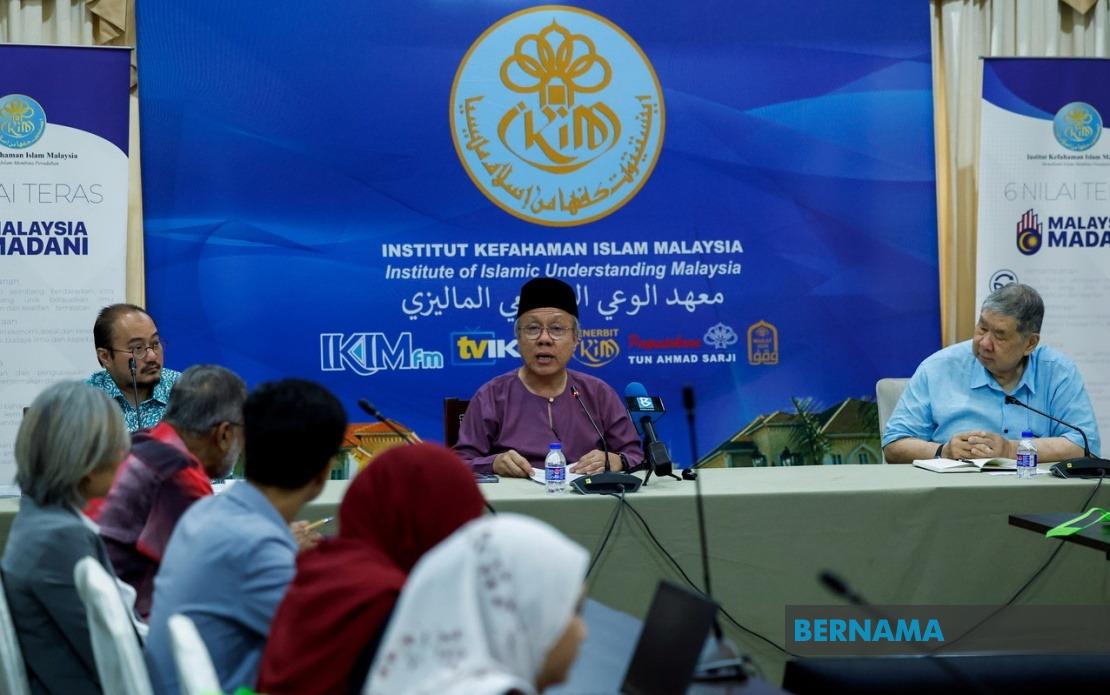
Three major Malaysian institutions convened in Kuala Lumpur to address a critical gap in media understanding of the Tabung Haji Royal Commission of Inquiry. The Malaysian Press Institute, in partnership with the Institute of Islamic Understanding Malaysia and Lembaga Tabung Haji, orchestrated a closed-door briefing session designed to equip journalists with authoritative information about the embattled pilgrim fund and the institutional reforms underway. The gathering, held at IKIM's headquarters, brought together more than 20 media practitioners alongside TH Group Managing Director and Chief Executive Officer Mustakim Mohamad, MPI president Datuk Yong Soo Heong, and IKIM Director-General Associate Professor Datuk Dr Mohamed Azam Mohamed Adil.
The nearly two-hour session represented a deliberate effort by these institutions to establish a controlled information environment where journalists could pose direct questions to TH leadership about the RCI, its findings, and the broader implications for Malaysia's pilgrimage management system. This approach reflects growing recognition among institutional leaders that the narrative surrounding Tabung Haji requires careful stewardship through media engagement. Mustakim used the platform to outline TH's strategic response to the RCI recommendations, fielding substantive queries from assembled journalists about the fund's trajectory and confidence-restoration initiatives. The closed-door format, rather than a public press conference, signals an intention to foster deeper, more nuanced discussion than typical media interactions allow.
For Malaysian readers unfamiliar with Tabung Haji's contemporary challenges, context matters considerably. The pilgrim fund has faced sustained scrutiny over governance, investment decisions, and the security of depositors' savings designated for Islamic pilgrimage. An RCI investigation into these matters produced findings that prompted institutional soul-searching and public concern among millions of Malaysians who view TH as a trusted custodian of their religious obligations and financial resources. The organisation's reputation, built over decades, required active rehabilitation through transparent communication with media gatekeepers who shape public perception.
MPI President Datuk Yong Soo Heong characterised the initiative as a valuable collaboration, emphasising journalism's role in disseminating verified information to the broader public. He noted that the briefing served the practical purpose of ensuring that journalists possessed accurate details about TH's remedial measures, allowing for more informed and balanced reporting. Yong suggested that such programmes might expand to other Malaysian states through town halls and dialogue sessions, indicating institutional commitment to geographic inclusivity in media engagement. This expansion consideration reflects awareness that Tabung Haji's depositor base spans the country, making regional outreach strategically important for public confidence rebuilding.
A particularly significant intervention came from IKIM's Director-General, who reframed the entire TH RCI matter in explicitly institutional rather than communal terms. Mohamed Azam articulated a deliberate counter-narrative to potential public misinterpretation, cautioning against viewing the inquiry as a controversy implicating religion or ethnicity. Instead, he positioned it squarely within a governance framework centred on management integrity and organisational accountability. This rhetorical move carries considerable weight in Malaysia's politicised environment, where religious and racial dimensions often overshadow substantive discussions of institutional performance. By redirecting focus to trust and fiduciary responsibility, IKIM sought to depoliticise coverage and anchor it to universally valued principles of competent administration.
The emphasis on trust proved central to IKIM's messaging strategy. Mohamed Azam urged journalists to transmit this corrected narrative to depositors and Malaysians generally, positioning accurate media coverage as essential infrastructure for confidence restoration. He underscored TH's distinctive status as an Islamic financial institution entrusted with managing what he explicitly termed the fifth pillar of Islam—a framing that elevates the organisation beyond routine financial management into spiritual and religious significance. This linguistic choice carries implications for how Malaysians should perceive TH's recovery: not merely as fixing a troubled corporation, but as restoring an institution integral to Islamic practice in the country.
For Southeast Asian observers, this media engagement initiative illustrates broader trends in how regional governments and major institutions manage reputational crises. Rather than stonewalling or centralising information control, Malaysian actors increasingly recognise that selective transparency and journalist education can serve institutional interests while maintaining democratic norms. The approach differs markedly from crisis communication strategies in some neighbouring jurisdictions, where institutional defensiveness predominates. By inviting scrutiny and providing substantive briefing materials, TH and its partners signal confidence in their reform narrative while demonstrating responsiveness to public concerns.
The participation of both religious and secular institutional voices—IKIM and MPI respectively—reflects recognition that religious credibility and media credibility represent distinct but complementary legitimacy sources in Malaysian society. IKIM's involvement legitimises reform efforts within Islamic intellectual frameworks, while MPI's brokerage role establishes professional journalistic validation. This multi-institutional approach attempts to construct a broad coalition supporting TH's institutional rehabilitation. Journalists attending received authority and permission to report positively on TH's recovery, provided by trusted mediating institutions rather than TH itself, which might provoke scepticism.
The literacy programme concept itself merits examination. By framing the session as educational rather than promotional, organisers attempted to elevate the discussion above simple publicity. Journalists were positioned as learners acquiring sophisticated understanding of complex governance issues, rather than passive recipients of corporate messaging. This pedagogical framing can prove more persuasive than transparent advocacy, as it appeals to professional journalistic identity and the intellectual satisfaction of mastering difficult subjects. Media practitioners attending would likely emerge with greater investment in accurately conveying TH's story, having participated in collaborative knowledge production rather than receiving one-directional briefings.
The suggestion that similar programmes might expand to other states indicates institutional thinking about sustained, long-term engagement with media ecosystems beyond Kuala Lumpur. Regional journalists and state-based media outlets shape local public opinion about TH, and their understanding of institutional reform matters considerably for maintaining depositor confidence across Malaysian territories. By proposing geographical extension of such literacy initiatives, organisers demonstrate commitment to comprehensive rather than centralised media strategy. This geographic thinking reflects sophisticated understanding that Malaysian public opinion forms through multiple, distributed media channels rather than through unified national narratives.
Looking forward, this media engagement effort establishes precedent for how Malaysian institutions address complex governance crises. The model combines transparency with narrative control, institutional collaboration with professional respect, and information provision with message discipline. Whether journalists attending this briefing will translate their enhanced understanding into substantively different coverage remains uncertain, but the attempt to shape media narratives through education rather than coercion represents considered institutional strategy. For Tabung Haji specifically, success depends on whether confidence restoration efforts sufficiently address underlying governance concerns or merely create more sophisticated public relations around persistent problems. The coming months will reveal whether this media literacy initiative translates into restored depositor confidence and sustained institutional stability for Malaysia's pilgrim fund.

