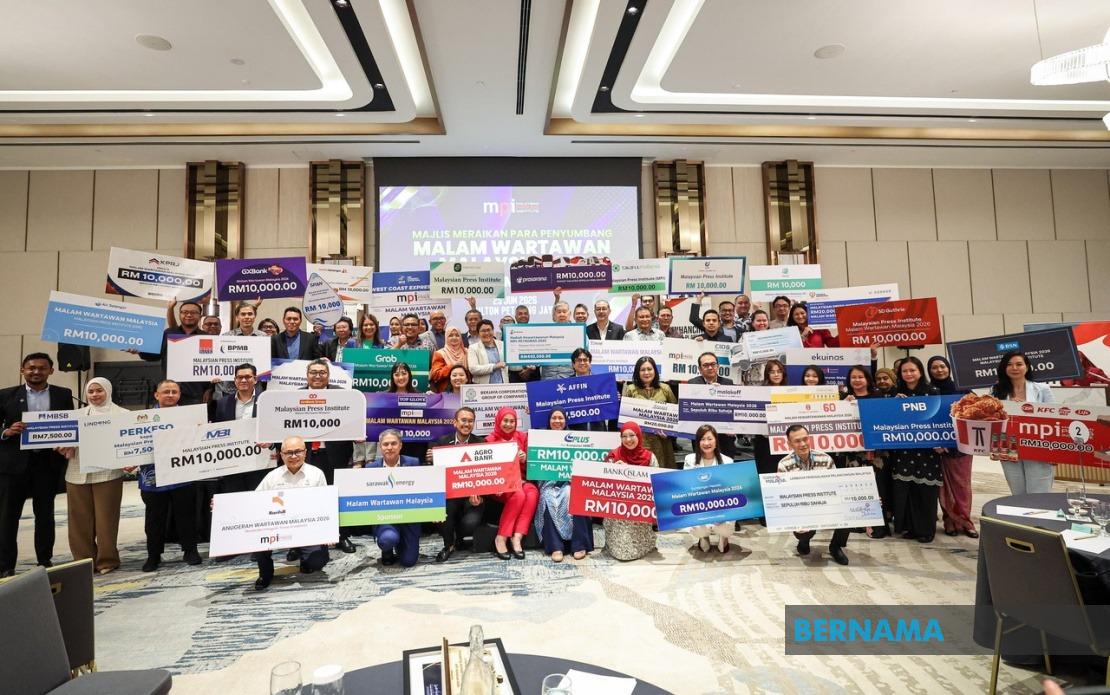
The Malaysian Press Institute has successfully assembled RM1.037 million in financial backing for the Malaysia Press Night 2026, underscoring continued industry confidence in the profession's leading annual gathering. The funding represents a substantive vote of confidence from both corporate partners and media organisations, reflecting broader recognition of journalism's vital role in Malaysian society.
Dr Ainol Amriz Ismail, chief executive of the MPI, broke down the funding composition during the Contributors' Appreciation Ceremony in Kuala Lumpur on Tuesday. The institute secured RM587,000 from 60 contributing organisations across various sectors, demonstrating widespread stakeholder engagement. Complementing this was RM450,000 in major sponsorship from PETRONAS, extending the energy giant's three-decade partnership with the institute's journalism awards programme. This longstanding relationship underscores how Malaysia's corporate sector views investment in media standards as aligned with broader national development objectives.
The scale of backing reflects what MPI leadership characterises as industry-wide commitment to professional journalism underpinned by ethical standards and public trust. In his remarks, Ainol Amriz stressed that corporate and organisational contributions transcend mere event logistics, instead signalling shared dedication to elevating journalism's credibility and rigour. This framing resonates particularly given ongoing global challenges to media institutions, including misinformation, audience fragmentation, and financial pressures facing traditional newsrooms.
The 2026 edition carries heightened significance following confirmation that Prime Minister Datuk Seri Anwar Ibrahim will attend on July 17. The Prime Minister's participation elevates the event's political and symbolic importance, positioning the gathering as a national conversation about the state of Malaysian journalism. Such high-level engagement sends a message about government regard for press freedom and professional standards, matters of particular concern in Southeast Asia where media environments vary considerably by jurisdiction.
MPI president Datuk Yong Soo Heong, deputy president Farrah Naz Abd Karim, and other council members were present alongside representatives from PETRONAS and Bernama, Malaysia's national news agency. This constellation of stakeholders reflects the Malaysia Press Night's role as a convening platform for the entire media ecosystem, from government agencies to private publishers to corporate communications functions.
The Malaysia Press Night serves as formal recognition for journalism practitioners engaged in the often unglamorous work of fact-gathering, information verification, and accurate reporting. The institute characterises this labour as essential to societal and national interests, a perspective increasingly challenged in polarised media landscapes where partisan outlets blur journalism with opinion. By honouring this distinction, the MPI articulates a vision of professional media grounded in verification and public service rather than audience capture or ideological advocacy.
PETRONAS's sustained sponsorship of the associated Malaysian Journalism Awards—now spanning nearly three decades—demonstrates how major corporations can institutionalise support for journalistic excellence. The arrangement benefits PETRONAS through reputational alignment with professional standards while providing the journalism awards with financial stability independent of government appropriations. This model offers lessons for other regional media organisations seeking sustainable funding models that preserve editorial independence.
This year's event expanded its programming to include a substantive forum featuring prominent media figures and industry leaders. Malaysian Journalism Icon Datuk A. Kadir Jasin, Karangkraf Group CEO Firdaus Hussamuddin, TV AlHijrah CEO Namanzee Harris and Vanakkam Malaysia editor-in-chief Thiaga Rajan Muthusamy participated as panellists, moderated by Ally Iskandar. The inclusion of diverse voices—spanning print, broadcasting, digital and community media—reflects journalism's increasingly fragmented landscape where traditional hierarchies have given way to multiple platforms and audience segments.
For Malaysian media practitioners, the Malaysia Press Night represents validation of their professional standing at a moment when journalism globally faces existential pressures. Rising newsroom closures, journalist redundancies, and audience migration to social media have created an environment where formal recognition of journalism's value carries particular resonance. The gathering provides opportunity for collective reaffirmation of shared professional standards and ethical commitments that transcend individual outlets' commercial interests.
The RM1.037 million funding achievement also carries practical implications for MPI's operations beyond the marquee event itself. Institute leadership emphasised that corporate and organisational support enables continuation of professional development programmes, industry training initiatives, and other capacity-building efforts benefiting Malaysia's broader media community. These behind-the-scenes functions—often overlooked by general audiences—constitute the infrastructure through which journalism maintains technical and ethical standards across the profession.
Southeast Asian media observers will note that Malaysia's ability to sustain such well-funded industry institutions distinguishes it from several regional counterparts facing more constrained operating environments. The Malaysia Press Night's financial health and corporate backing reflect a particular media ecosystem configuration where professional journalism associations retain sufficient autonomy and resources to function as industry custodians. Whether this model proves replicable across the region remains uncertain, particularly where political pressures or economic constraints limit corporate sponsorship of press institutions.
Looking forward, the confirmation of Prime Minister Anwar Ibrahim's attendance signals potential for more intensive government engagement with journalism sector priorities. Whether this translates into concrete policy measures supporting newsroom economics, press freedom protections, or media literacy initiatives remains to be seen. The Malaysia Press Night 2026 will provide an important venue for articulating such priorities to Malaysia's political leadership and broader public.

