Parliament's special sitting on the Tabung Haji Royal Commission of Inquiry has crystallised growing demands from lawmakers for an investigation process that commands public trust and operates free from political interference. The call reflects broader concerns that the financial management failures documented in the RCI report risk being obscured by partisan squabbling unless handled through rigorous, impartial enforcement mechanisms.
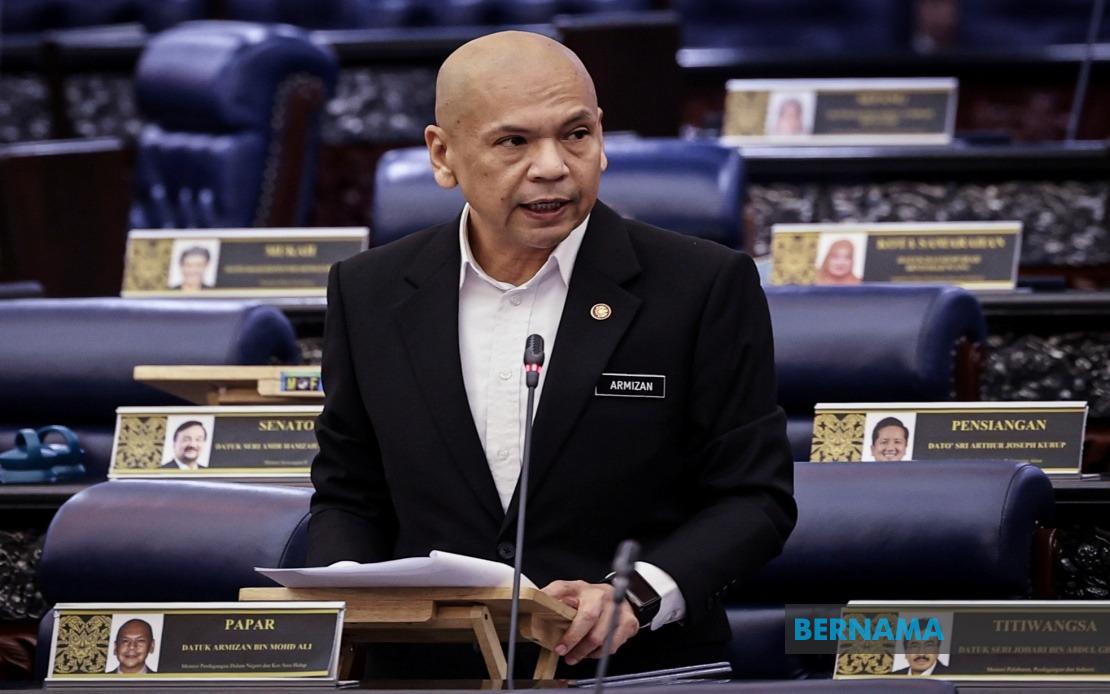
Minister Datuk Armizan Mohd Ali articulated the core challenge facing the government: the Tabung Haji crisis has devolved into a cacophony of allegations and counter-allegations that confuses rather than illuminates. When multiple parties accuse one another of slander and defamation, he observed, the public loses sight of what actually happened and who bears responsibility. The minister stressed that any investigation must anchor itself firmly in documented facts and legal principles, shielding the process from the contamination of political rhetoric that currently surrounds the issue.
The RCI report, released to the public on July 29 following government approval, identified systemic weaknesses spanning the 2014 to 2020 period—a six-year window encompassing multiple policy regimes and senior management teams. The commission's 25 recommendations represent a roadmap for institutional repair, yet three-quarters of these improvements have already been operationalised as of late July. This rapid implementation, while demonstrating management responsiveness, also underscores the urgency with which enforcement agencies must verify that the identified failures have genuinely been remedied and that accountability mechanisms are in place.
Armizan's emphasis on professional investigation aligns with international best practice in financial regulatory oversight. When state-linked institutions face governance crises, the credibility of subsequent inquiries depends on their adherence to transparent procedures, documented evidence-gathering, and professional standards. Malaysia's track record in such investigations has been mixed, making the parliamentary call for rigorous methodology particularly significant for restoring depositor confidence—a crucial consideration given that Tabung Haji manages savings for millions of Malaysians preparing for the hajj pilgrimage.
The minister also flagged the importance of examining the RCI's improvement recommendations themselves with the same scrutiny applied to the findings. This two-pronged approach recognises that addressing past failures requires not just accountability but structural reform. The recovery process depends on substantive governance changes, not merely punitive measures against individuals or entities identified as culpable. For Malaysian depositors and the broader public, such reforms directly affect whether Tabung Haji can operate with the integrity and competence expected of a major faith-based financial institution.
Minister Nancy Shukri's contribution introduced a secondary debate about institutional structure, arguing that the division of responsibilities between the Prime Minister's Department (Religious Affairs), which oversees hajj management, and the Finance Ministry, which handles investment and financial matters, represents rational specialisation rather than fragmentation. Her logic holds that clarity of jurisdictional responsibility prevents duplication and ensures each ministry deploys relevant expertise. However, the existence of a dual-authority arrangement itself warrants scrutiny in the context of the RCI's findings—institutional ambiguity over accountability may have contributed to the governance failures now under examination.
Shukri's remarks on board appointments strike at a persistent tension in Malaysian governance. She rejected the notion that political connections inherently disqualify board members, instead proposing that merit, qualifications, experience, and integrity should be the determinants. The principle is sound, but implementation remains problematic. Malaysia has repeatedly grappled with perception challenges when political appointees to state enterprise boards lack demonstrable expertise or when board selection processes lack transparency. The minister's call for explicit criteria, transparent selection methods, and defined expertise requirements addresses these deficits, though translating rhetoric into actual governance reforms requires legislative or regulatory action.
The broader context for this parliamentary debate extends beyond Tabung Haji itself. The institution manages one of the largest pools of Malaysian Muslim savings outside the conventional banking system, making its integrity a national financial stability concern. The RCI's findings of management weaknesses during 2014 to 2020 intersect with Malaysia's wider struggle to maintain institutional credibility following multiple corporate governance scandals. Public faith in major institutions depends significantly on whether investigations into failure are perceived as genuine attempts to establish truth or as exercises in selective accountability.
For Southeast Asian observers, Malaysia's handling of the Tabung Haji RCI process carries relevance beyond its borders. Several regional countries maintain similar faith-based financial institutions or state enterprises with mixed governance records. How Malaysia balances the need for transparency, enforcement, and institutional reform while navigating political sensitivities may offer lessons—positive or cautionary—for other governments wrestling with comparable challenges. The region's developmental aspirations depend partly on the quality of governance in major institutions, making these investigations matters of regional interest.
The parliamentary sitting itself represents a positive institutional mechanism: lawmakers scrutinising executive action and demanding accountability to standards of transparency and professionalism. That individual MPs and ministers felt compelled to articulate such demands publicly suggests that without explicit pressure, the investigation risk becoming a routine bureaucratic exercise, potentially compartmentalised or limited in scope. The parliamentary record documents that the public and their representatives expect more rigorous engagement with the RCI findings than a technical compliance exercise.
Looking forward, the success of any investigation will depend on sustained parliamentary and public attention to ensure that commitments to transparency translate into actual practice. Enforcement agencies must publish clear timelines, interim findings where appropriate, and final determinations that explain both what went wrong and what remedial actions are being taken. Without such transparency, even a professionally executed investigation risks being perceived as a whitewash, particularly if high-profile accountability gaps emerge in the final report.
The ministers' statements also implicitly acknowledge that institutional reputation cannot be restored through management initiatives alone. Depositors and the Muslim community more broadly require evidence that systematic failures have been thoroughly investigated, responsibility assigned, and safeguards implemented to prevent recurrence. This demand for accountability reflects not merely political theatre but a legitimate expectation from stakeholders whose financial interests and religious obligations are intertwined with Tabung Haji's operations. The coming months will reveal whether Malaysia's enforcement architecture can meet these expectations.

