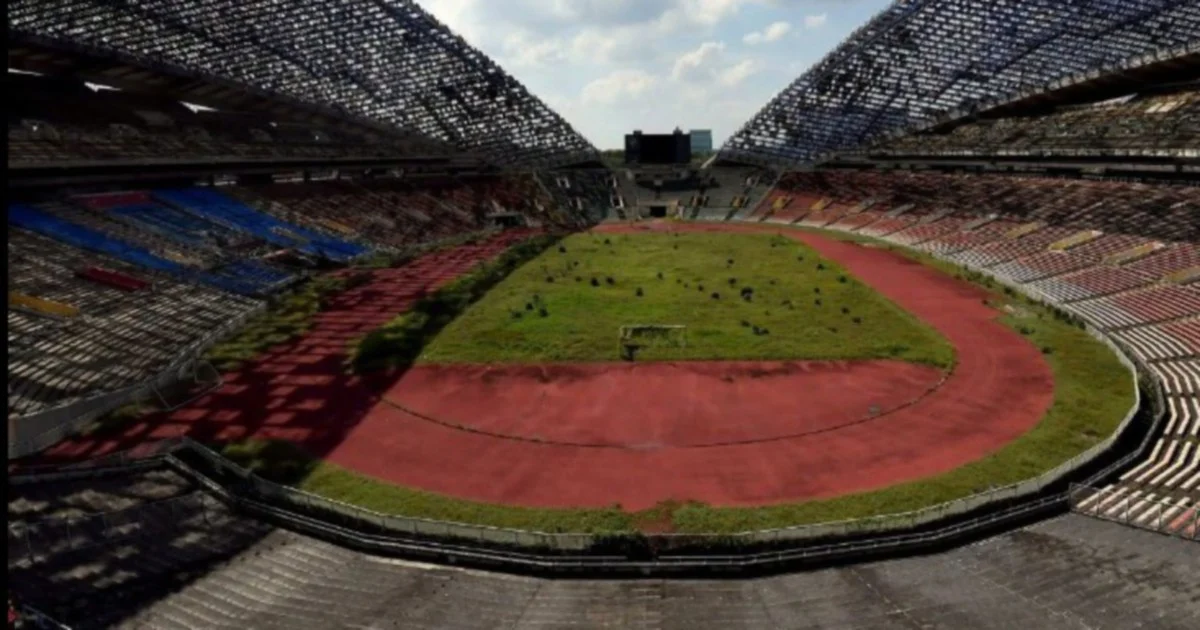
Malaysian Resources Corporation Bhd (MRCB) has obtained a consent judgment at the Shah Alam High Court against activist Abdul Razak Ismail, relating to digital content he published concerning the demolition and reconstruction of Shah Alam Stadium. The developer contended that the activist's online materials had inflicted financial losses on the company through reputational damage.
The settlement outcome underscores the growing intersection between corporate interests and digital activism in Malaysia, particularly as major infrastructure projects reshape urban landscapes across the Klang Valley. MRCB's decision to pursue legal remedies through a consent order—rather than proceeding to full trial—reflects a calculated approach to managing the controversy while potentially limiting further public scrutiny of the stadium project.
Shah Alam Stadium has long served as a focal point for community engagement and civic discourse in Selangor's state capital. The venue hosted sporting events, concerts, and public gatherings that formed part of the city's cultural identity. When redevelopment plans emerged, the project attracted significant attention from residents, activists, and civil society groups concerned about the loss of public space and the environmental and social ramifications of large-scale urban transformation.
Abdul Razak Ismail, as a vocal member of Malaysia's activist community, shared concerns and information through digital platforms that challenged MRCB's narrative around the stadium redevelopment. His publications apparently questioned the necessity of the project, its financial viability, or its alignment with community interests—matters that corporate entities often view as threatening to their market positioning and investor confidence.
The consent judgment mechanism is instructive in understanding contemporary Malaysian litigation strategy. Rather than engaging in protracted courtroom battles that generate unfavourable publicity and consume resources, corporations increasingly seek consent orders whereby the opposing party agrees to specific conditions without admitting liability. This approach allows both parties to declare victory: the company obtains a judicial restraint on the activist's communications, whilst the activist avoids mounting legal costs and the risk of an adverse judgment.
The economic damage claim by MRCB touches upon a contentious terrain in Malaysian jurisprudence. Quantifying harm arising from critical online speech remains legally complex. The company would need to demonstrate causation between specific publications and measurable financial losses—a threshold that sometimes proves difficult to establish convincingly, particularly when the target audience consists of existing stakeholders already familiar with the project's controversies.
For Malaysian civil society and digital rights advocates, such cases raise broader concerns about the boundaries of permissible criticism in an increasingly litigious environment. Activists face the prospect of defending defamation or economic damage claims even when their statements rest on factual foundations or constitute legitimate opinion. The chilling effect—where individuals self-censor to avoid legal entanglement—potentially diminishes public debate on matters of genuine community interest.
The Shah Alam Stadium case reflects patterns visible elsewhere in Southeast Asia, where developers and governments frequently resort to legal mechanisms to suppress dissenting voices. Malaysia's defamation law, inherited from common law traditions, offers relatively accessible grounds for civil suits. Unlike criminal defamation, which has narrower application, civil defamation claims can proceed with lower evidentiary thresholds, enabling corporations to weaponise the courts against critics.
MRCB's decision to pursue this matter through consent judgment also signals corporate confidence in its ability to navigate legal processes and access judicial mechanisms that may not be equally available to grassroots activists. The asymmetry in legal resources between multinational developers and individual activists shapes litigation outcomes and sends messages about whose voice receives institutional validation.
The redevelopment of Shah Alam Stadium itself warrants scrutiny beyond the immediate litigation. Public infrastructure projects in Malaysia increasingly transfer community assets into private hands or repurpose them for commercial ends. The absence of meaningful public consultation in such transitions has become a recurring flashpoint in Malaysian urban governance, particularly in states like Selangor where rapid development collides with established community expectations.
Moving forward, the consent judgment may temporarily suppress Abdul Razak Ismail's specific publications, but it unlikely resolves the underlying tensions surrounding the project. Other activists, journalists, and concerned citizens may continue raising similar questions through different channels. The case illustrates the limitations of legal suppression as a comprehensive strategy for managing reputational challenges in the digital age.
The broader implication for Malaysia involves recognising that robust public discourse around development projects—even critical discourse—serves essential democratic functions. Courts must calibrate defamation principles to protect genuine opinion and factual reporting on matters of public interest, whilst still offering legitimate recourse to parties suffering authentic harm from false or reckless speech. Consent judgments, whilst commercially convenient, should not become routine substitutes for this nuanced judicial balancing.

