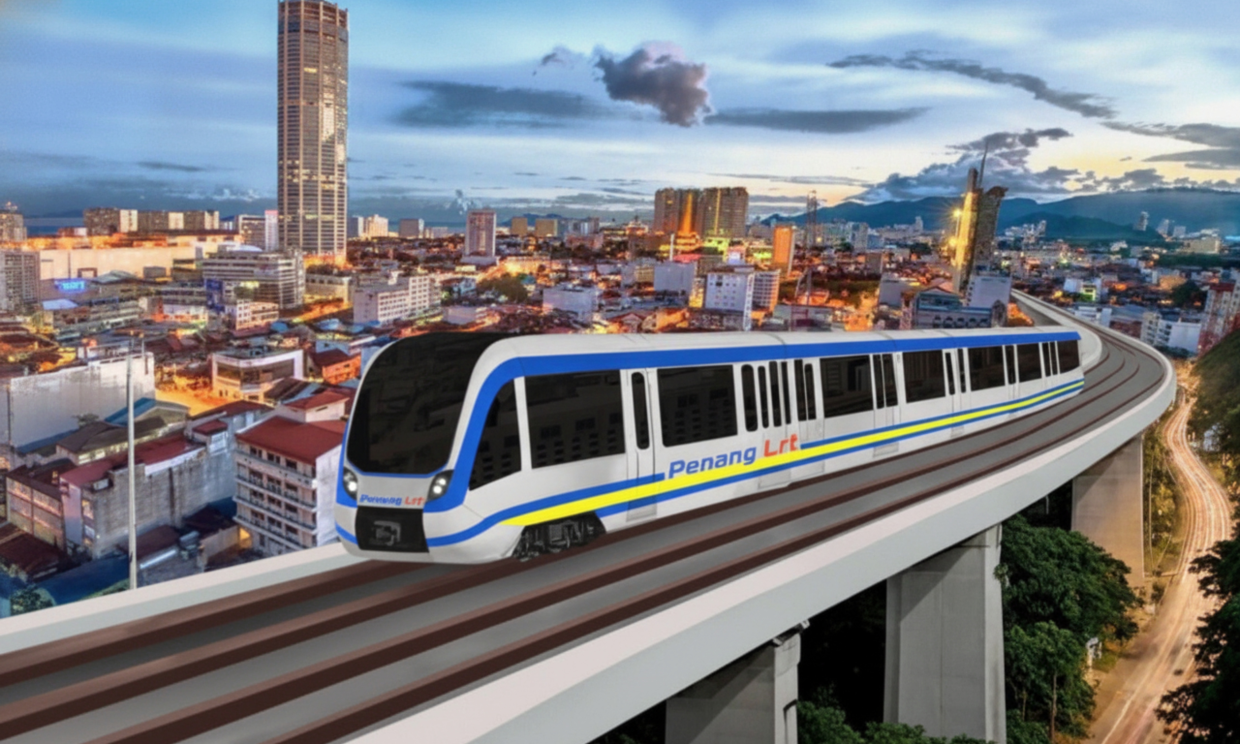
Malaysian Resources Corp Bhd (MRCB) has secured a significant RM3.028 billion contract to develop and maintain the railway systems for Penang's Light Rail Transit Mutiara Line, marking a major win for the infrastructure-focused conglomerate in an increasingly competitive market for Southeast Asian transit projects.
The announcement, disclosed through a filing with Bursa Malaysia, reveals that MRCB will undertake the assignment through a 90:10 unincorporated joint venture arrangement, demonstrating a strategic partnership approach that has become common in large-scale infrastructure development across the region. The structure allows MRCB to leverage expertise while spreading financial and operational risk across multiple entities.
The contract encompasses an ambitious 68.8-month timeframe, during which MRCB will manage the complete lifecycle of the railway systems infrastructure. This includes the critical design phase, procurement and supply of equipment, on-site installation work, rigorous testing and commissioning procedures, and ongoing maintenance commitments. The scope encompasses multiple interconnected systems: the rolling stock (trains themselves), sophisticated signalling networks that ensure safe train operations, comprehensive power supply infrastructure, telecommunications systems for operational control, and integrated ticketing mechanisms for passenger convenience.
For MRCB, this represents a substantial earnings contributor to the group's future financial performance. Large infrastructure contracts of this magnitude typically provide multi-year revenue streams that support investor confidence and stability in quarterly earnings reports. The company has flagged this positive outlook in its regulatory disclosures, signalling management's confidence that the project will be accretive to profitability once operational.
The undertaking does carry inherent risks that management has transparently acknowledged. Construction-phase uncertainties, including fluctuations in material costs and equipment pricing, could impact project margins. Supply chain disruptions—a persistent challenge across Southeast Asia since the pandemic—present another concern. Labour availability and wage inflation during the extended construction period could also pressure costs. However, MRCB has positioned itself as capable of managing these headwinds, citing its track record delivering comparable large-scale infrastructure schemes across Malaysia and the broader region.
The company's risk mitigation strategy relies on institutional controls, established operational procedures, and technical expertise accumulated over years of delivering transport infrastructure. MRCB's involvement in previous major projects provides operational knowledge that should help anticipate and manage challenges typical in railway system deployments. This experience particularly matters given the complexity of integrating multiple technological systems—signalling, power, and ticketing—which require precise coordination and testing.
The Penang LRT Mutiara Line represents a crucial piece of the state's long-term transport infrastructure vision. As Georgetown and surrounding urban areas grapple with traffic congestion and air quality concerns, modern rail transit becomes essential for sustainable urban development. The project connects to broader Southeast Asian trends where cities increasingly prioritise mass rapid transit to accommodate growing populations and reduce vehicle emissions. For Penang specifically, the LRT system could reshape commuting patterns and support economic activity by improving connectivity between key commercial and residential nodes.
Market sentiment around MRCB reflected positivity following the announcement. During midday trading, MRCB shares climbed one sen to 32 sen, representing a 3.23% gain. Joint venture partner Theta Edge experienced more pronounced appreciation, surging 14 sen to 69 sen, translating to a 25.45% increase. The differential response suggests investors view the joint venture partner's exposure more favourably, possibly reflecting leverage considerations or market cap weightings.
The contract win underscores MRCB's position within Malaysia's infrastructure ecosystem at a time when the government continues prioritising transport connectivity projects. Several major rail initiatives remain in various stages of planning and development across Peninsular Malaysia, suggesting potential pipeline opportunities for qualified contractors. Competition for such contracts remains intense, with both domestic and international players bidding for available projects, making MRCB's successful tender noteworthy.
For the broader Malaysian construction and engineering sector, this contract represents validation that large, technically complex infrastructure work continues to present viable opportunities domestically. It also highlights the sector's evolving sophistication, as modern rail systems demand integration of advanced technologies beyond traditional construction capabilities. This trend has implications for skills development, as MRCB and similar companies increasingly require workforces capable of managing sophisticated systems integration, not merely traditional construction trades.
The Penang project also sits within a larger context of urban development in northern Malaysia. As competition for economic investment intensifies across Southeast Asia, improved transport infrastructure becomes a key differentiator for cities seeking to attract business and talent. Penang's strategic location on major trading routes makes transport efficiency particularly consequential for the state's economic prospects.
Delivery success on this contract will be critical for MRCB's reputation in major infrastructure delivery, particularly as the company continues competing for future transport projects. Any delays or cost overruns could impact not only profitability but also the company's competitive positioning for subsequent tender opportunities. Conversely, on-time delivery and system reliability could establish MRCB as a preferred partner for future transport infrastructure in Malaysia and potentially across the ASEAN region.

