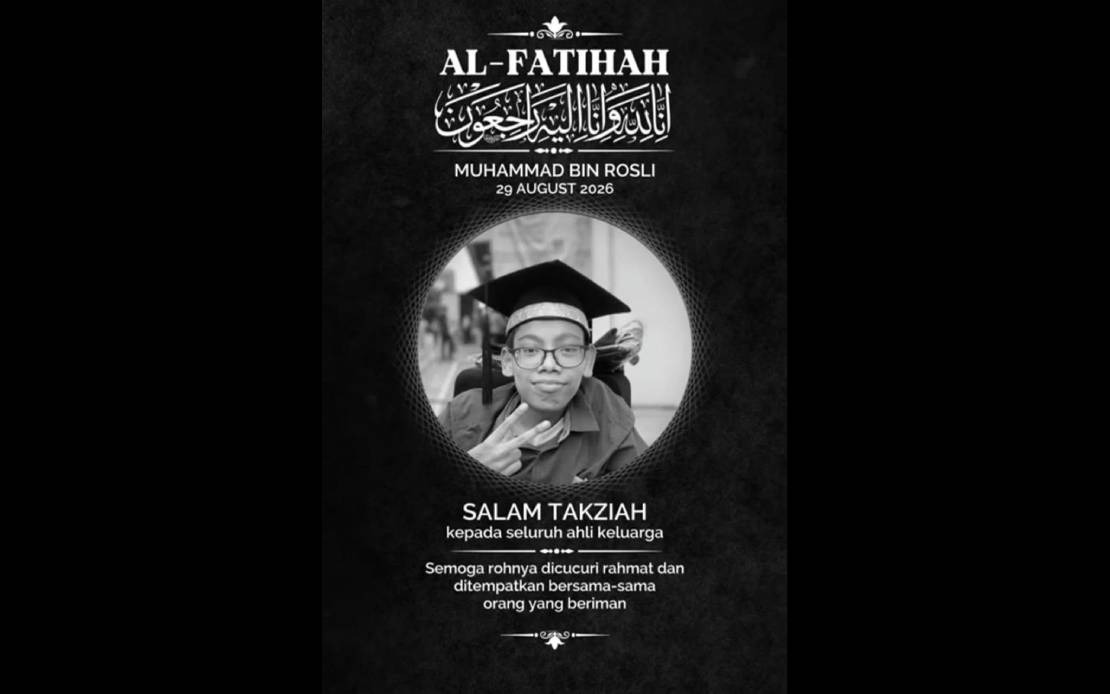
Muhammad Rosli, one of Malaysia's most well-known conjoined twins, died this morning at Chancellor Tuanku Muhriz Hospital in Cheras, ending a significant chapter in the nation's medical history. The 23-year-old succumbed to complications related to bladder cancer at 10:45 am, with his twin brother Ahmad announcing the death through social media. The passing marks the end of an extraordinary life that captured public attention across Malaysia and the wider Middle East following a pioneering surgical procedure two decades ago.
Ahmad shared the sorrowful news on Facebook, expressing gratitude for the prayers and support that had sustained his brother throughout his illness. In his message, the older twin reflected on Muhammad's return to his Creator and thanked well-wishers for their compassion during the family's ordeal. The announcement resonated deeply within Malaysian society, where the twins had become symbols of medical advancement and human resilience. Muhammad's remains were committed to the USJ 22 Muslim Cemetery in Subang Jaya later that evening, with funeral rites completed by approximately 6:00 pm.
The journey that defined Muhammad's public identity began when he and Ahmad were born conjoined, sharing vital organs including a liver. In 2001, both brothers underwent an initial liver-splitting procedure at the University Malaya Medical Centre, a groundbreaking intervention that prepared their bodies for complete separation. The following year proved to be the decisive moment: in September 2002, a complex 22-hour and 45-minute surgical marathon at the King Fahd National Guard Hospital in Riyadh successfully separated the twins. This operation represented a pinnacle achievement in conjoined twin separation surgery and drew international medical recognition for the teams involved.
Muhammad's recent decline in health began earlier this year when he was diagnosed with bladder cancer. Since July 2025, he had been undergoing intensive treatment at the King Fahd National Guard Hospital in Saudi Arabia, the same institution where his separation surgery had taken place more than two decades earlier. During his hospitalisation, Muhammad endured five separate surgical procedures and received five rounds of chemotherapy in an attempt to contain the malignancy. Initially, medical teams declared him cancer-free, and he continued regular follow-up appointments to monitor his recovery and guard against recurrence.
However, Muhammad's condition deteriorated markedly in recent days. Ahmad revealed yesterday that his twin brother's health had taken a critical turn when elevated blood acid levels sent his body into a state of semi-consciousness. The metabolic complications that developed suggested his organs were struggling to manage the aftermath of both his cancer treatment and the lifelong physical realities of having undergone separation surgery. These final hours underscored the complex medical legacy of conjoined twins, even after successful separation—the shared organ systems and surgical reconstructions continue to influence long-term health outcomes throughout life.
The death of Muhammad Rosli represents a poignant reminder of the extraordinary challenges faced by children born with severe congenital conditions. While the 2002 separation surgery was celebrated as a triumph of modern medicine and surgical expertise, it also initiated a lifetime journey of medical vulnerability for both brothers. Conjoined twins who undergo separation must live with permanently altered physiology, potential complications from reconstructive surgery, and increased susceptibility to certain conditions. Muhammad's battle with cancer and the complications that ultimately proved fatal exemplify these ongoing medical vulnerabilities that persist long after the dramatic moment of surgical separation.
For Malaysia, Muhammad Rosli's passing closes a remarkable chapter in the nation's healthcare narrative. The case of the twins had brought international attention to Malaysian medical capabilities and demonstrated the country's capacity to undertake world-class surgical procedures. The teams at both UMMC and the King Fahd National Guard Hospital had collaborated to achieve what was considered an extraordinary feat of surgical precision and post-operative management. Muhammad's survival for more than two decades following separation represented success by any reasonable measure, even though his life was ultimately constrained by health complications.
Ahmad's grief, expressed through his Facebook tribute, carries additional weight given the profound bond between conjoined twins. Beyond the obvious genetic connection, Ahmad and Muhammad had shared a physical existence from birth until the surgical separation at age three. The years following separation would have involved watching his brother navigate the same world from a different bodily circumstance, creating a unique psychological and emotional dimension to their sibling relationship. Ahmad's public acknowledgment of their connection and gratitude for prayers offered by the broader community suggests the family's resilience and faith have remained central throughout Muhammad's illness.
The broader medical implications of Muhammad's death warrant consideration as well. Physicians and researchers studying conjoined twins and separation outcomes will likely examine how his cancer developed and progressed, whether any connection existed between his previous surgical interventions and the malignancy, and what this case contributes to understanding long-term survival and quality of life for separated conjoined twins. Each such case provides invaluable data points for the global medical community grappling with these rare but profoundly complex conditions. Muhammad's medical records and post-separation trajectory have presumably contributed to international medical knowledge about optimal outcomes for conjoined twin separations.
For Malaysian families facing similar challenges with conjoined births, Muhammad Rosli's life and death offer both inspiration and sobering realism. The successful separation in 2002 demonstrated that such procedures were possible in accessible medical centres within the region, offering hope to parents confronting this diagnosis. Yet Muhammad's relatively early death, despite the success of the initial surgical separation, underscores that separation, though necessary and life-enabling, does not eliminate all medical risks. The twins' case, spanning from 2001 to 2025, represents the full arc of modern conjoined twin management—from diagnosis through pioneering surgery to long-term life with altered physiology and eventual mortality from unrelated illness.
The legacy Muhammad Rosli leaves extends beyond his own remarkable medical history. His case contributed to refining surgical techniques for conjoined twin separation and expanded understanding of post-separation management. The publicity surrounding the twins likely influenced policy discussions about resource allocation for complex paediatric surgery in Malaysia. Furthermore, for his twin brother Ahmad and their extended family, Muhammad's life—though marked by medical challenge—was lived in freedom and with the opportunity to develop as an individual rather than remaining permanently joined. In this sense, the 2002 surgery, despite its demanding aftermath, fulfilled its fundamental purpose of enabling two distinct human lives to unfold separately.

