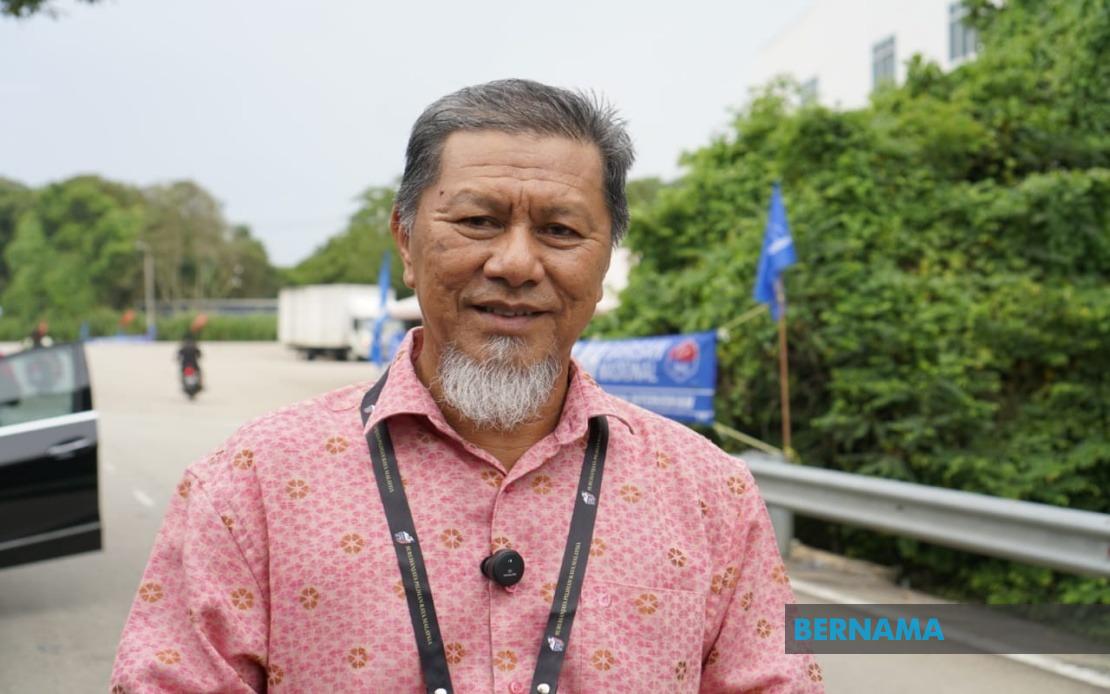
Pakatan Harapan candidate Muhd Najib Lep is pushing a comprehensive vision to transform Bandar Universiti Pagoh into a thriving economic centre, arguing that the township housing four major higher education institutions has been inadequately developed despite its strategic importance for the Bukit Pasir state constituency. Speaking in Pagoh this week, Muhd Najib outlined plans to enhance the education hub through sustainable urban infrastructure while ensuring local residents and small and medium enterprises capture tangible economic gains from the township's growth trajectory.
The candidate, who also serves as secretary of Amanah's Pagoh division, contends that Bandar Universiti Pagoh remains significantly underutilised as a driver of regional prosperity. The township hosts the Universiti Tun Hussein Onn Malaysia Pagoh campus and the Universiti Teknologi Malaysia Pagoh campus alongside other tertiary institutions, positioning it as a concentrated knowledge economy hub with unrealised potential. Yet despite these institutional anchors, Muhd Najib observes that the township suffers from critical infrastructure gaps that undermine both student life and business development prospects.
Missing essential services constitute a major blind spot in current development planning. Banking facilities, healthcare provisions, and retail infrastructure remain inadequate, creating friction for residents and limiting the township's attractiveness as a residential and commercial destination. These gaps directly constrain the multiplier effects that education hubs typically generate—university staff and students cannot easily access medical services, conduct financial transactions, or find diverse shopping options within the locality. Muhd Najib argues such deficiencies waste the township's inherent advantages and depress economic activity that could otherwise flourish.
Beyond brick-and-mortar infrastructure, Muhd Najib emphasises that affordable housing represents a foundational pillar for sustainable community development. Access to reasonably priced residential accommodation enables families to redirect financial resources toward education, healthcare, and small business investment rather than depleting savings on rental or mortgage burdens. He contends that relieving housing pressures creates psychological and material conditions for children to study effectively, attend school consistently, and develop aspirations toward higher education or entrepreneurship. The housing agenda thus interconnects with educational outcomes and economic mobility across the Bukit Pasir constituency.
Drawing on nearly thirteen years of military service, Muhd Najib has additionally prioritised welfare reforms for retired armed forces personnel. He identifies a substantial pension disparity between military retirees who departed service before and after 2013 as a pressing equity issue requiring legislative correction. This advocacy reflects his simultaneous role as chairman of the Pagoh Malaysian Armed Forces Veterans Association and signals his commitment to neglected constituencies beyond the broader electorate. The military veteran agenda positions him as attentive to specific demographic grievances that major parties sometimes overlook.
Muhd Najib previously won the Bukit Pasir seat during the 14th General Election, though that victory occurred in a parliamentary rather than state assembly context. His claim to have maintained community engagement and earned sustained local backing rests partly on grassroots outreach he continued after his parliamentary tenure concluded. He reports receiving positive feedback during recent voter contact campaigns, suggesting receptiveness to his policy platform among residents he has mobilised previously. Such incumbent advantage carries weight in state elections where personal relationships and demonstrated responsiveness often sway outcomes.
The competitive environment for Bukit Pasir remains tightly contested. Mohamad Fazli Mohamad Salleh represents the Barisan Nasional incumbent, holding the seat with a narrow majority of 198 votes in 2022—a margin suggesting substantial swing potential. Perikatan Nasional's Mohd Idzharruddin Mohd Nasirruddin completes a three-way race, introducing a split-opposition dynamic that could favour whoever consolidates votes most effectively. The slender 2022 margin indicates that Bukit Pasir voters have demonstrated willingness to shift allegiances, making local development promises and constituency-specific advocacy particularly consequential.
Johor's 16th state election unfolds against broader peninsular political currents. With 56 state assembly seats contested across the state, 172 candidates competing for those positions, and approximately 2.73 million eligible voters registered to participate, the election carries significance beyond Johor itself. Results will influence whether Pakatan Harapan can consolidate state-level presence outside Selangor and Penang, whether Barisan Nasional maintains grip on its historical stronghold, and whether Perikatan Nasional expands its state-level footprint following its 2020 federal entry. Bukit Pasir, therefore, functions as a microcosm of these larger competitive dynamics.
The Bandar Universiti Pagoh development narrative resonates with an emerging Southeast Asian focus on knowledge economy clustering and university town models. Cities from Kuala Lumpur to Bangkok and beyond have invested in tertiary education hubs as catalysts for innovation, entrepreneurship, and sustained employment growth. Pagoh's concentration of universities positions it similarly, yet realising that potential requires coordinated infrastructure investment alongside institutional strengthening. Muhd Najib's platform essentially argues that Johor state government must match federal and institutional commitments to higher education with municipal-level amenities and business support systems.
For Malaysian voters evaluating the upcoming state elections, Muhd Najib's Bukit Pasir candidacy exemplifies how elections increasingly hinge on specific, localised development agendas rather than abstract ideological positioning. Constituencies demand tangible improvements—functioning healthcare, accessible banking, affordable housing, utility infrastructure—that translate federal or state policy intentions into lived experience. His emphasis on capturing economic benefits for villagers and SMEs rather than concentrating them among large corporations reflects sensitivity to rural voter concerns about equity and inclusive growth that persist across Malaysian politics.

