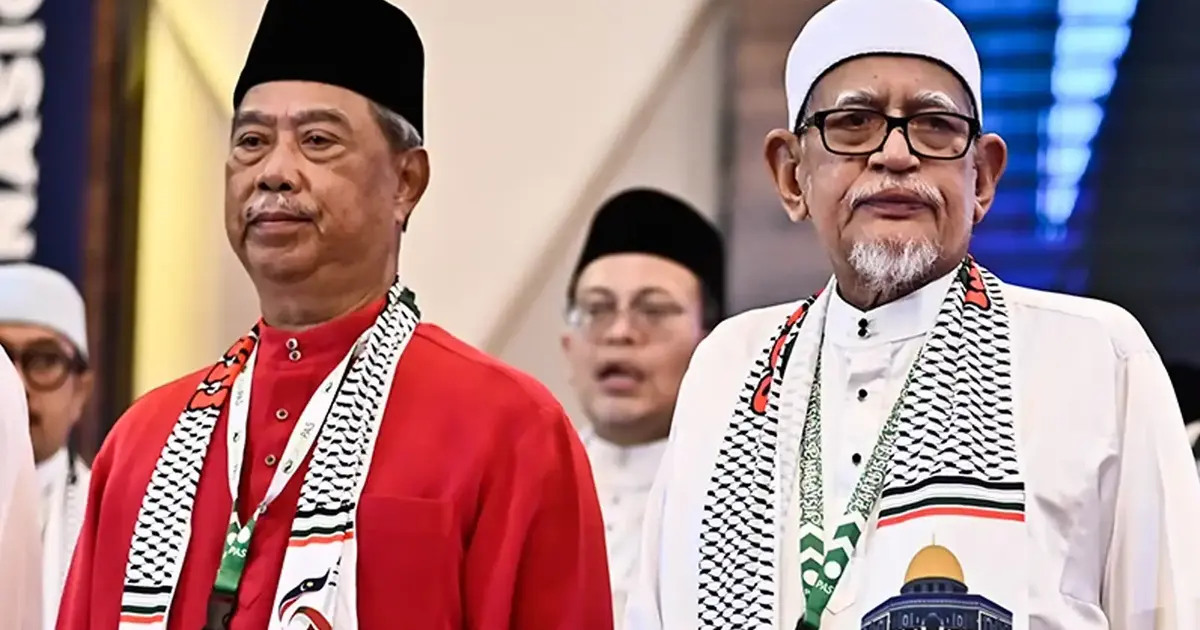
The fragile alliance underpinning Malaysia's current political configuration faces fresh strain as Bersatu president Muhyiddin Yassin has openly criticised PAS for conducting what he characterises as unauthorised talks with Barisan Nasional. The sharp rebuke from the Perikatan Nasional coalition partner suggests deepening fissures within the three-party grouping that has held considerable sway over national politics in recent years, even as questions mount about the durability of arrangements that have repeatedly shifted to accommodate competing interests.
Muhyiddin's complaint centres on PAS making decisions without consultation or approval from other Perikatan Nasional members, a charge that cuts to the heart of coalition governance. In political systems where power typically flows from collective arrangements rather than unilateral action, such independent manoeuvring represents a fundamental breach of partnership protocols. The Bersatu leader framed these moves as directly contrary to the coalition's collective interests, implying that PAS's overtures toward Barisan Nasional pursue narrow party advantage at the expense of broader partnership objectives. This distinction matters considerably for understanding how Malaysian coalitions function—they depend on trust and coordinated decision-making that PAS appears to have circumvented.
The emergence of PAS-Barisan Nasional discussions adds another layer of complexity to Malaysia's perpetually shifting political landscape. For Malaysian observers accustomed to coalition fluidity, such developments might seem routine; however, they signal that established partnerships remain contingent on factors that can change rapidly. PAS, as the Islamic party commanding significant grassroots mobilisation capability and rural representation, holds considerable leverage within any coalition structure. Its willingness to explore alternatives suggests confidence in its negotiating position, yet it also reflects the transactional nature of modern Malaysian politics where ideology increasingly takes backseat to pragmatic power calculations.
The timing of these revelations carries particular significance. Perikatan Nasional has maintained considerable influence despite facing persistent challenges from both within and outside its ranks. The coalition's capacity to govern depends substantially on maintaining internal discipline and preventing members from pursuing separate agendas that fragment collective strategy. PAS's independent diplomatic efforts with Barisan Nasional represent precisely the kind of behaviour that destabilises such arrangements, creating uncertainty about coalition cohesion at moments when unified messaging proves critical.
For Malaysian political observers, Muhyiddin's public airing of these grievances reflects a shift toward greater transparency about intra-coalition tensions that previously remained largely confined to backroom discussions. Rather than managing discontent through private channels, the Bersatu president chose a public platform to register his objections. This approach carries both advantages and risks—it demonstrates that Muhyiddin will not tolerate perceived disloyalty, yet it also broadcasts coalition dysfunction in ways that could undermine broader political positioning during sensitive periods.
PAS occupies a particularly interesting position within Malaysian politics' current configuration. The party commands substantial support among the Malay-Muslim electorate that forms Malaysia's demographic majority, providing Perikatan Nasional with essential constituency reach that other members cannot easily replicate. This reality gives PAS considerable negotiating leverage, potentially explaining its confidence in pursuing separate discussions. Barisan Nasional, despite recent travails, still retains institutional machinery and networks that make it an attractive interlocutor for parties calculating future political scenarios. That PAS would simultaneously maintain Perikatan Nasional commitments while exploring Barisan Nasional options reflects calculation about which alliance configuration might ultimately serve its interests better.
The broader implications extend beyond immediate coalition management toward questions about Malaysian politics' fundamental architecture. If coalition partners routinely pursue parallel negotiations and maintain undisclosed options, the stability that such arrangements theoretically provide becomes questionable. Governing coalitions require predictability and mutual assurance that partners will not undermine collective decisions. PAS's apparent willingness to negotiate independently suggests either that confidence in Perikatan Nasional's longevity has eroded or that party leaders believe positioning themselves across multiple potential configurations serves their interests better than exclusive commitment.
Muhyiddin's response also reflects Bersatu's particular vulnerabilities within Perikatan Nasional. As a newer party without the deep historical roots or established constituencies that PAS or even the PPBM component can claim, Bersatu depends substantially on maintaining coalition coherence and political relevance through participation in broader arrangements. When coalition partners behave independently, Bersatu's leverage necessarily diminishes. The Bersatu president's public criticism thus represents not merely a protest about process violations but also an attempt to reassert control over a coalition that increasingly shows signs of pursuing divergent agendas.
Regional observers watching Malaysian developments will recognise these dynamics as characteristic of Southeast Asian coalition politics more broadly. Parties maintain multiple pathways and preserve options rather than making exclusive commitments. This flexibility allows rapid repositioning when circumstances change, yet it creates ongoing uncertainty about partnership durability. For Malaysia specifically, such uncertainty has tangible consequences for governance stability and policy implementation, as coalitions unable to coordinate internally struggle to execute coherent national strategies.
The PAS-Barisan Nasional discussions also carry implications for smaller coalition partners and emerging political forces attempting to navigate Malaysia's competitive landscape. If established coalition relationships prove unstable, opportunities emerge for parties to leverage those instabilities toward their advantage. This dynamic creates constant pressure on coalition leaders like Muhyiddin to demonstrate that their arrangements deliver benefits sufficient to justify continued participation from other members. When those assurances prove insufficient, as PAS's independent negotiations suggest they may be, coalition dissolution becomes increasingly plausible.
Looking ahead, Muhyiddin's public criticism will likely prompt either reconciliation efforts demonstrating coalition commitment or further deterioration as other members reassess their participation. Malaysian political history suggests that coalitions experiencing such tensions typically either resolve disputes through explicit renegotiation of terms or gradually fragment as members pursue separate political trajectories. The outcome will depend substantially on whether PAS perceives greater advantage in maintaining Perikatan Nasional participation or in repositioning toward arrangements offering superior leverage and resource access.

