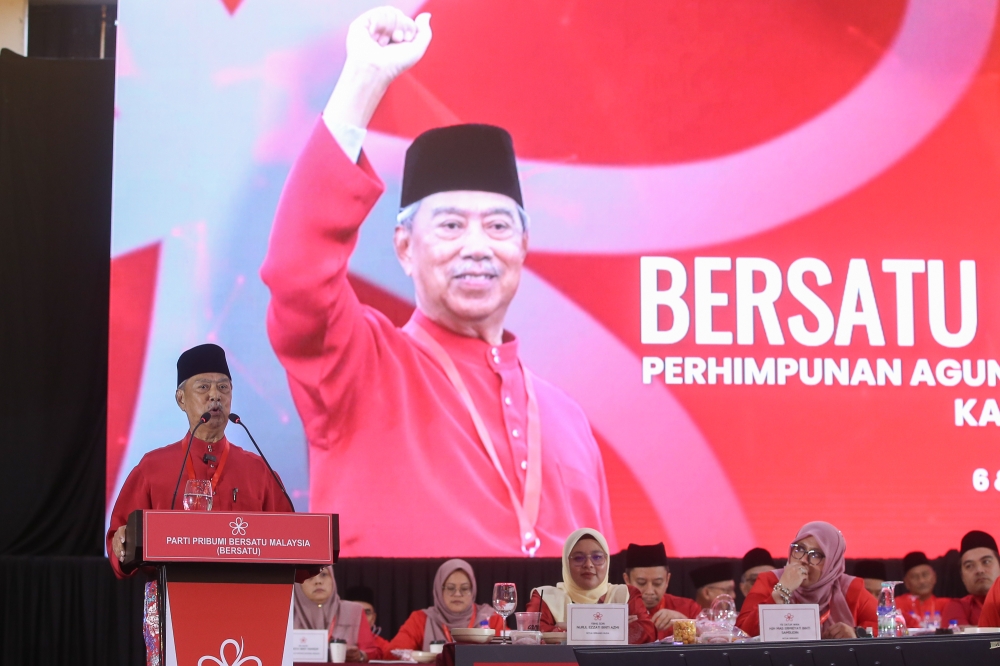
Tan Sri Muhyiddin Yassin, president of Parti Pribumi Bersatu Malaysia, has launched a pointed critique of the Perikatan Nasional alliance, contending that his party has been effectively excluded from meaningful decision-making within the coalition while simultaneously questioning whether the Umno-aligned grouping genuinely embodies the interests of the Malay community. Speaking in Kuala Lumpur on July 17, the veteran politician articulated frustrations that point to deepening fractures within Malaysia's complex coalition politics, at a time when questions about unity among Malay-dominant parties have become increasingly contentious.
Muhyiddin's remarks reflect broader tensions that have simmered within Perikatan since its formation. The coalition, which includes PAS and several smaller parties alongside Bersatu, has seen its internal dynamics shift markedly in recent months. The Bersatu president's contention that his party has been marginalised suggests that despite formal membership, Bersatu's voice in crucial deliberations has been diminished. This dynamic carries particular weight in Malaysian politics, where coalitional arrangements often determine ministerial portfolios, policy directions, and the distribution of government patronage.
The accusation strikes at a fundamental question within Perikatan: whether all member parties operate as equal partners or whether certain parties—particularly those with stronger parliamentary representation or political leverage—wield disproportionate influence. For Bersatu, which commands a meaningful but not overwhelming number of parliamentary seats, such marginalisation could have significant ramifications for its political relevance and its ability to deliver for its members and supporters.
Muhyiddin's challenge to the legitimacy of the Umno-led alliance as a representation of authentic Malay unity is equally significant. By questioning whether a coalition dominated by Umno can claim to speak for Malay interests, he advances a narrative that presents Bersatu as an alternative vehicle for Malay political aspirations. This positioning echoes Bersatu's founding premise as a Malay-centric party, though the party's political trajectory and alliances have been considerably more fluid than its ideological framing might suggest.
The distinction Muhyiddin draws between "genuine Malay unity" and the current Umno-led arrangement is strategically laden. If such unity is unattainable within existing coalitional structures, the implicit suggestion is that alternative political configurations might better serve the Malay community's interests. This opens philosophical and practical questions about what constitutes authentic representation of communal interests and whether such representation is even possible across diverse political organisations with competing ambitions.
Muhyiddin's intervention must be understood within the context of Bersatu's recent political trajectory. The party has navigated multiple alliance shifts, from its initial partnership with Pakatan Harapan through various reconfigurations involving both Perikatan and Umno-led arrangements. These shifts have sometimes appeared reactive rather than strategically consistent, potentially contributing to perceptions that Bersatu lacks a stable political anchor. His current criticism may therefore represent an attempt to reassert Bersatu's distinct political identity and grievances.
For Malaysian voters, particularly those in states or constituencies where Bersatu holds significant influence, these tensions raise questions about coalition stability and the party's capacity to deliver on its political commitments. When a coalition member openly criticises its partners, it signals potential fragmentation that could affect governance and policy implementation at both federal and state levels. The credibility of coalition-based governments depends partly on demonstrable internal consensus and collaborative functioning.
The broader implications extend across the Southeast Asian region as well. Malaysia's political configurations often influence discussions about Malay-Muslim politics and interethnic governance across the region. Any significant shifts in Malaysian coalitional arrangements could reverberate in neighbouring countries with similar demographic and political structures, making these internal Malaysian disputes relevant beyond national boundaries.
PAS, as the other significant party within Perikatan alongside Bersatu, faces implicit pressure from Muhyiddin's comments. The party must navigate between supporting Bersatu's concerns and maintaining its own coalition partnerships. How PAS responds to these tensions will likely shape the durability of Perikatan and influence whether the coalition can maintain sufficient internal cohesion to govern effectively.
Muhyiddin's statements also carry implications for potential political realignments. If dissatisfaction within Bersatu deepens over perceived marginalisation, the party might consider alternative coalitional arrangements or pursue a more independent political course. Such calculations involve complex assessments of electoral viability, potential coalition partners' receptiveness, and the party's capacity to maintain or expand its parliamentary representation.
The question of what constitutes genuine Malay unity reflects enduring tensions in Malaysian politics between communal identity politics and inclusive national governance. Muhyiddin's critique implicitly suggests that Malay interests cannot be adequately served within coalitions that include non-Malay parties or that prioritise other considerations alongside communal representation. This framing has deep roots in Malaysian political discourse but remains contested among different ideological camps.
Moving forward, whether these tensions translate into substantive political changes or remain rhetorical positioning will depend on multiple factors including electoral calculations, the behaviour of other coalition members, and broader public sentiment regarding these arrangements. The credibility of Muhyiddin's critique will be tested by Bersatu's subsequent actions and whether the party demonstrates tangible alternatives to its current situation.
Ultimately, these disputes underscore the fragile nature of coalition politics in Malaysia. While necessary for governing majorities, such arrangements perpetually balance competing interests, divergent objectives, and the ambitions of individual party leaders. Muhyiddin's challenge to Perikatan and Umno reflects both genuine grievances about party treatment and broader strategic calculations about Bersatu's political future in an increasingly fluid Malaysian landscape.

