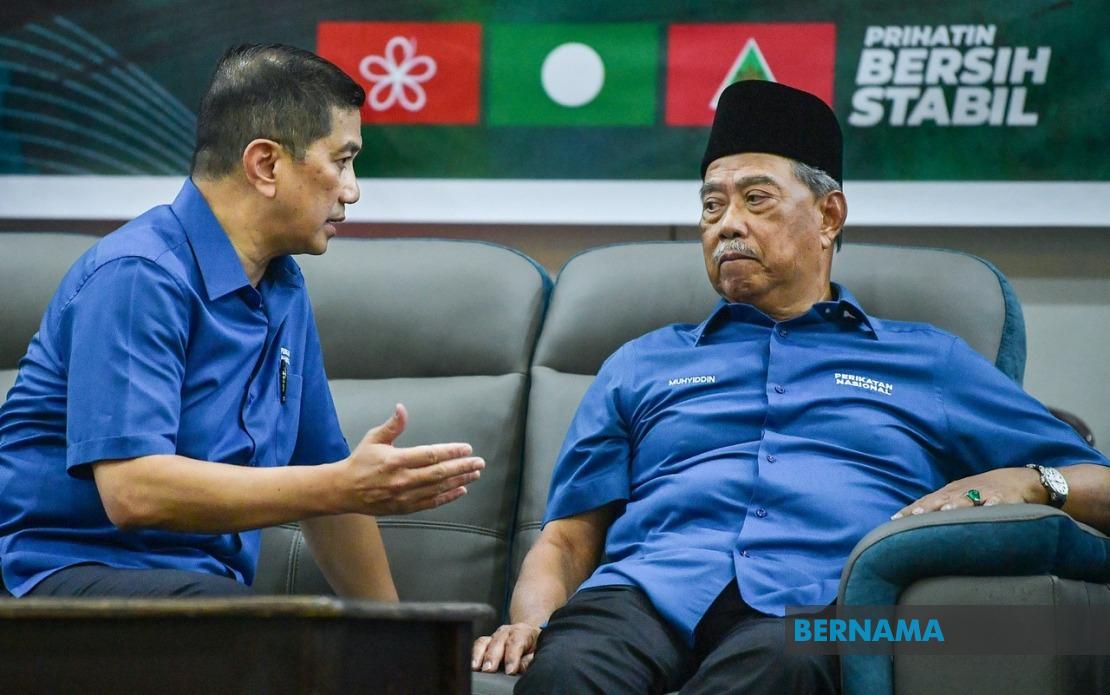
Tan Sri Muhyiddin Yassin, president of Bersatu and Malaysia's former Prime Minister, has expressed support for the government's recent announcement of multiple measures aimed at easing financial pressures on ordinary Malaysians and supporting the business community. The endorsement came following Prime Minister Datuk Seri Anwar Ibrahim's Sunday announcement of six immediate initiatives designed to take effect on September 1, signalling a coordinated effort across the political spectrum to address mounting cost-of-living concerns among the rakyat.
The centerpiece of the government's relief package involves expanding fuel subsidy coverage by restoring the RON95 petrol subsidy eligibility cap from 200 litres to 300 litres monthly. This increase in the subsidy ceiling represents a direct intervention in household fuel budgets, potentially yielding meaningful savings for regular commuters and small vehicle owners. Muhyiddin framed this adjustment as instrumental in helping ordinary citizens navigate the financial squeeze created by persistently high commodity prices and global inflationary pressures that have rippled through Southeast Asian economies.
Equally significant for the business community is the elevation of the e-Invoicing exemption threshold to encompass enterprises with annual turnover reaching RM3 million. This administrative relief addresses long-standing complaints from small and medium enterprises regarding compliance burdens, allowing a broader spectrum of traders to operate without implementing digital invoicing systems. For Malaysia's entrepreneurial base, particularly those operating at the micro and small-scale level, such exemptions can meaningfully reduce operational complexity and associated technology costs during a period of economic uncertainty.
Muhyiddin underscored the critical importance of swift implementation and rigorous oversight by relevant ministries and government agencies. His emphasis on rapid disbursement of allocations reflects a broader concern that policy announcements often lose efficacy when execution falters or administrative delays prevent benefits from reaching intended recipients. This structural challenge has historically plagued assistance programmes across Southeast Asia, where bureaucratic processes sometimes nullify the intended impact of relief initiatives. The former premier's insistence on accountability suggests recognition that political credibility increasingly depends on translating announcements into tangible outcomes for citizens.
Beyond immediate cost-of-living interventions, Muhyiddin highlighted the government's investment in longer-term service quality improvements. An additional RM500 million allocation for school maintenance addresses persistent infrastructure deficits that have constrained educational delivery, particularly in rural and underserved communities. Simultaneously, the digitalisation of healthcare services and subsidised access to artificial intelligence software subscriptions for youth represent forward-looking investments in human capital and technological capability. These initiatives acknowledge that sustainable relief requires not merely temporary financial assistance but structural improvements in public service delivery that enhance productivity and opportunity creation.
The MSME support ecosystem receives particular attention through dual mechanisms: an additional RM1 billion in micro-credit facilities and RM200 million in direct grants targeting petty traders, night market vendors, and home-based business operators—categories traditionally underserved by conventional financial institutions. This two-pronged approach recognises that small entrepreneurs require both capital access and non-repayable support to survive periods of demand contraction. For Malaysia's vast informal economy, where millions of families depend on modest trading activities, such targeted support can prove decisive in preventing business collapses and employment losses.
Muhyiddin's call for comprehensive policy review regarding taxation and subsidy rationalisation reflects sophisticated understanding of the fiscal pressures constraining government revenue. Rather than accepting announced measures as sufficient, he advocated for deeper structural examination of policies that compound financial strain on households. This perspective suggests that ad-hoc relief, while politically necessary, requires complementary long-term fiscal architecture adjustments to prove sustainable. His framing implicitly acknowledges tensions between immediate relief provision and fiscal sustainability—a calculus increasingly relevant as regional governments grapple with post-pandemic budget constraints and elevated debt servicing requirements.
The political significance of Muhyiddin's endorsement merits consideration within Malaysia's fractious coalition environment. As Bersatu president and opposition figure, his public support for government initiatives represents cross-partisan validation, potentially strengthening political consensus around cost-of-living responses. Such support also positions Bersatu as a constructive force concerned with national welfare rather than mere partisan opposition, potentially advantageous in future political negotiations or electoral contests. The timing of his statement—coinciding with early September announcements—suggests coordination between government and opposition in framing these measures as national priorities transcending political divisions.
Muhyiddin's conditional framing—welcoming current measures while urging further comprehensive action through Budget 2027—establishes expectations for ongoing government commitment to relief provision. His language avoids unqualified praise, instead positioning initial measures as necessary but insufficient responses to structural cost-of-living challenges. This rhetorical stance maintains political space for constructive criticism should implementation falter or circumstances demand additional measures. For Malaysian observers, such qualified endorsement suggests elite consensus that cost-of-living management will define political legitimacy through the coming budget cycle and beyond.
The interconnected nature of these initiatives—from immediate fuel subsidies through micro-financing to long-term service quality investments—reflects recognition that sustainable relief requires multifaceted approaches addressing both supply-side constraints and demand-side pressures. For Malaysia's economy and the broader Southeast Asian context, such integrated policy responses represent best-practice approaches to navigating post-inflation adjustment periods without sacrificing social cohesion or productive investment. Muhyiddin's backing suggests that regardless of political differences, Malaysia's leadership recognises the imperative of maintaining broad-based purchasing power and business viability during economically challenging periods.
As implementation commences in September, the authentic measure of these initiatives will emerge through monitoring whether promised allocations reach intended beneficiaries promptly and whether projected economic impacts materialise. Muhyiddin's emphasis on swift, effective disbursement establishes accountability benchmarks against which government performance will be assessed. For Malaysian workers, traders, students, and patients—the ultimate targets of these measures—real-world outcomes will supersede political statements, determining whether announced relief translates into tangible improvements in daily economic circumstances and public service quality.

