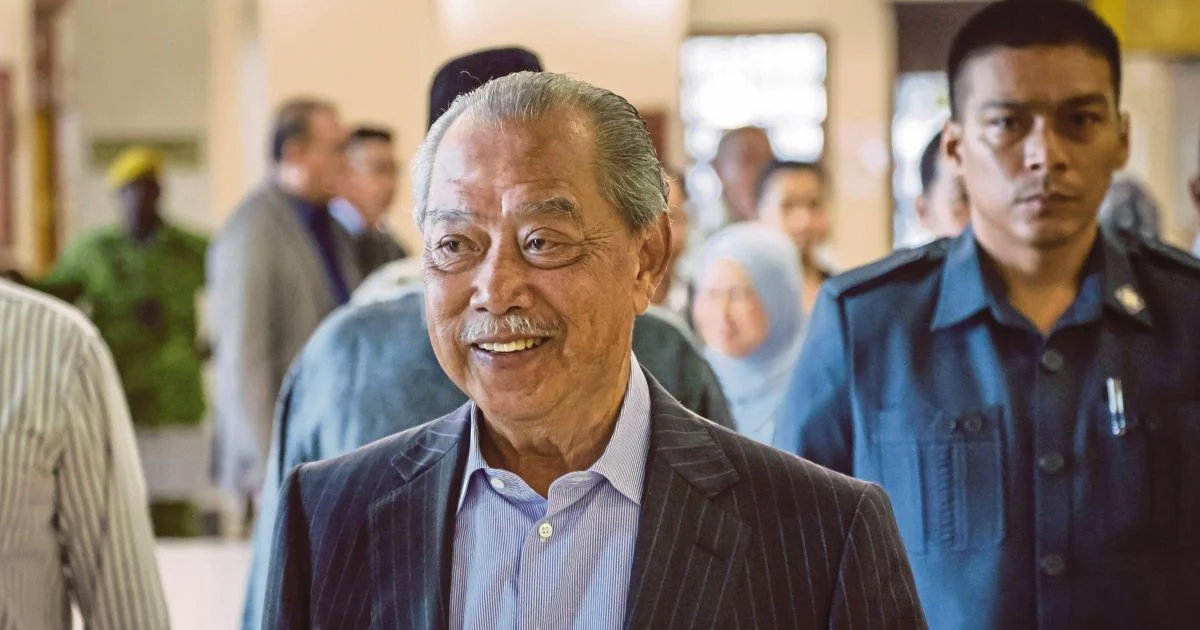
Perikatan Nasional maintains realistic hopes of securing the Johor state government despite adopting a markedly constrained electoral strategy that sees the coalition contesting just 33 seats in the coming state election. Bersatu president Tan Sri Muhyiddin Yassin articulated this optimism during an engagement in Pagoh, signalling that PN believes selective seat selection could yield a decisive advantage over rival coalitions vying for control of Malaysia's southernmost state.
Muhyiddin's confidence reflects a broader calculation within opposition circles that numerical seat count alone does not determine electoral outcomes in Malaysia's state-level contests. The decision to contest fewer seats represents a deliberate strategic choice rather than an acknowledgment of weakness, according to the Bersatu leadership. This approach mirrors historical precedent in Malaysian politics, where coalitions have achieved governmental majorities through concentrated campaigning in winnable constituencies and strategic alliances with independent candidates or smaller parties.
The Johor state election carries considerable symbolic and practical significance for Malaysian politics. As the country's second-largest state by population and a traditional economic powerhouse in the southern region, Johor's administration shapes policies affecting millions of residents and influences broader national political momentum. Control of Johor has historically translated into enhanced positioning for contenders in federal-level negotiations and coalition-building exercises.
Perikatan Nasional itself represents a fluid political arrangement that emerged from the instability following the 2022 federal election. The coalition comprises Bersatu, the Malaysian Islamic Party (PAS), and other allied parties that collectively challenge the ruling Barisan Nasional and Pakatan Harapan coalitions. Johor remains a competitive battleground where these three political blocs possess genuine organizational capacity and voter bases, distinguishing it from states where one coalition holds overwhelming dominance.
The strategic decision to contest 33 seats presumably reflects PN's assessment of which constituencies offer the highest probability of victory. Rather than spreading limited resources across all available seats, this concentrated approach allows the coalition to maximize campaign intensity, candidate quality, and voter mobilization in targeted areas. Such strategies have proven effective in previous Malaysian electoral contests, where high-impact campaigns in specific regions have delivered unexpected results.
Johor's political geography presents particular complexities for all competing coalitions. The state encompasses constituencies ranging from rural agricultural areas to bustling urban centres, with voter demographics, economic interests, and political preferences varying significantly across these different regions. Understanding which areas represent core support bases and which represent persuadable territories requires sophisticated political analysis that informs seat selection decisions.
Muhyiddin's public expression of confidence serves multiple purposes within PN's campaign strategy. It projects an image of organizational coherence and conviction to potential voters, counters narratives of coalition weakness, and maintains internal party morale among grassroots supporters and candidates who face the demanding work of election campaigns. Political confidence expressed by senior leadership often influences media coverage and voter perception, creating psychological momentum that can influence electoral outcomes.
The opposition coalition's approach also reflects pragmatic resource management. Contesting fewer seats allows PN to concentrate its financial resources, volunteer mobilization, and senior leadership time on constituencies where victory appears achievable. This efficiency-focused strategy becomes particularly important for coalitions operating outside government, which typically command fewer resources than incumbent administrations with access to state apparatus and public funding mechanisms.
However, PN's limited seat count simultaneously presents vulnerabilities that rival coalitions will undoubtedly exploit throughout the campaign. Barisan Nasional and Pakatan Harapan can frame the opposition's approach as defeatism or acknowledgment of limited support, potentially dampening enthusiasm among voters who perceive winning coalitions as inevitable. Campaign narratives that emphasize PN's restricted ambitions may paradoxically undermine the coalition's actual chances by creating self-fulfilling prophecies of limited electoral performance.
The broader context of Malaysian electoral politics suggests that state elections increasingly function as mid-term assessments of federal government performance and laboratories for coalition realignment. Johor voters will evaluate not merely the local administrative records of incumbent administrations but also wider national factors including economic conditions, governmental competence, and satisfaction with federal leadership. These macro-level considerations often override local factors in determining electoral outcomes.
From a Southeast Asian perspective, Johor's election reflects broader patterns of electoral competition and coalition flexibility across the region. Malaysian politics continues demonstrating the dynamism and volatility characteristic of contemporary Asian democracies, where electoral surprises remain commonplace and party alignments shift considerably between election cycles. The region's largest economies increasingly experience political competition involving multiple serious contenders rather than dominant single coalitions or parties.
Muhyiddin's strategic positioning also illuminates internal opposition coalition dynamics that extend beyond Johor. The relationship between Bersatu, PAS, and other allied parties within Perikatan Nasional involves ongoing negotiations regarding seat allocation, campaign cooperation, and post-election government formation arrangements. Johor outcomes will influence these interparty relationships and shape subsequent coalition decisions affecting other forthcoming state elections and eventual federal-level contestation.
Ultimately, whether PN's optimism regarding its 33-seat strategy translates into actual governmental control depends on multiple variables that extend well beyond leadership confidence. Voter turnout patterns, split-ticket voting behaviour, campaign effectiveness, and last-minute political developments all significantly influence outcomes in ways that pre-election calculations cannot fully predict. The coming weeks will reveal whether Muhyiddin's conviction reflects sophisticated political analysis or underestimation of rival coalitions' advantages in Johor.

