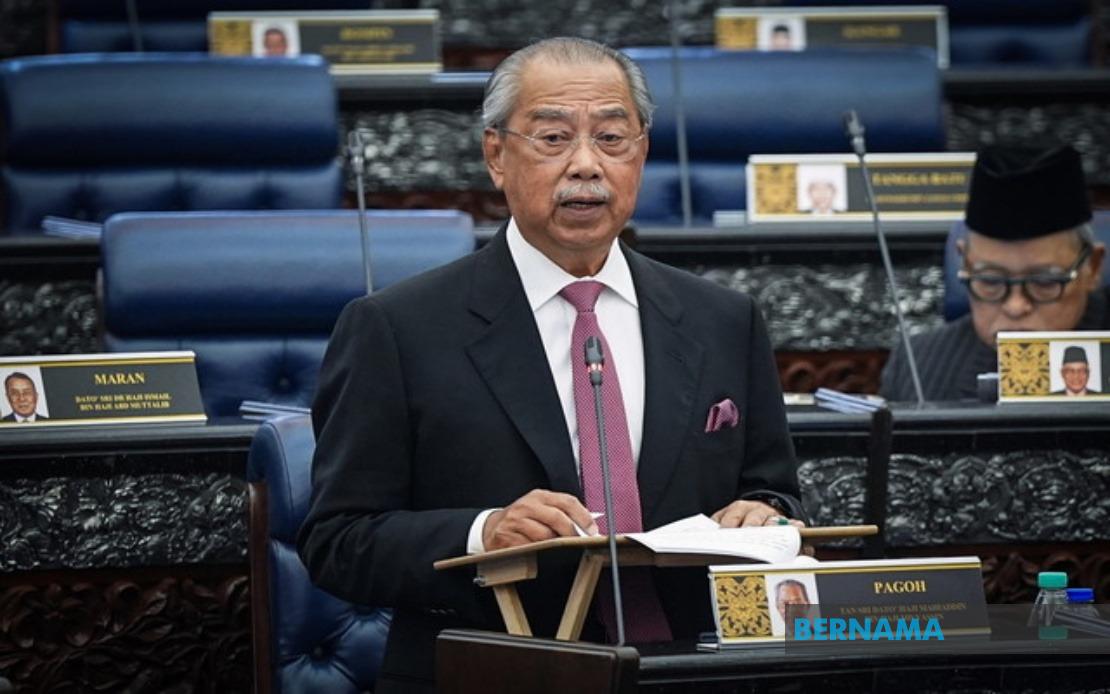
The governance crisis at Tabung Haji has prompted calls from senior parliamentarians for sweeping investigations into the pilgrimage fund's management. During a special parliamentary sitting examining the Royal Commission of Inquiry report released on July 29, Tan Sri Muhyiddin Yassin, the Pagoh MP and Bersatu president, emphasised the urgency of launching a comprehensive and transparent forensic audit to be completed within twelve months. His intervention reflects growing cross-party concern that the scale of financial losses unveiled in the RCI report demands immediate and decisive action rather than incremental administrative responses.
The RCI's findings have shaken confidence in one of Malaysia's most important institutional vehicles for Muslim savings and investment. The inquiry documented estimated cumulative losses ranging from RM10 billion to RM12.6 billion across the seven-year period from 2014 to 2020, a figure that underscores the magnitude of financial mismanagement or malfeasance that occurred during this critical decade for the fund. Muhyiddin stressed that these findings cannot be treated as merely technical matters requiring bureaucratic tinkering; rather, they demand serious accountability mechanisms with the full force of law behind them.
The rationale for an independent forensic audit extends beyond simple financial reconciliation. Muhyiddin articulated the core investigative objectives: tracing the movement of vast sums through Tabung Haji's various investment vehicles, pinpointing fraudulent transactions, documenting instances where authority was abused for personal or institutional benefit, and identifying negligence that contributed to capital destruction. This comprehensive approach recognises that losses of this magnitude typically result not from single errors but from systemic failures, deliberate misconduct, or some combination of both. An audit designed specifically to answer these questions would provide the factual foundation necessary for criminal referrals and civil remedies.
Muhyiddin's insistence that those responsible face justice—whether their culpability stems from fraudulent conduct, abuse of power, or negligence—reflects a principle increasingly central to Malaysian governance discourse: that institutional failures affecting public assets and citizen savings cannot be absorbed as sunk costs or treated through internal reorganisation alone. The three categories of wrongdoing he identified represent distinct legal and ethical failures, each requiring different investigative approaches and remedial responses. By grouping them together, he signalled that accountability must be comprehensive rather than selective.
The parliamentary debate also revealed a consensus that Tabung Haji's problems cannot be addressed in isolation from broader governance issues across government-linked entities. Syed Saddiq Syed Abdul Rahman, representing MUDA from Muar, broadened the scope by proposing a Multi-Agency Task Force specifically to investigate fourteen problematic investments that the RCI identified. His intervention highlights a critical gap in Malaysia's institutional response mechanisms: the tendency for investigations to proceed within single agencies rather than through coordinated, cross-functional inquiry. Such silos can inadvertently protect perpetrators by ensuring that no single investigator sees the complete picture of how fraudulent schemes operated across multiple entities or regulatory jurisdictions.
The proposed task force would integrate the Malaysian Anti-Corruption Commission, police, and the Inland Revenue Board, creating investigative synergies that would be impossible if these agencies worked separately. MACC brings forensic financial expertise and prosecutorial experience; police provide criminal investigation capacity; the Inland Revenue Board can illuminate tax implications and trace beneficial ownership across corporate structures. Syed Saddiq's suggestion that forensic audits be conducted specifically on the fourteen problematic investments reflects recognition that general financial audits often lack the investigative intensity required to uncover deliberate deception or concealment tactics that sophisticated actors employ to obscure wrongdoing.
Beyond Tabung Haji itself, Syed Saddiq's proposal to extend investigation scope to Felda, FGV, and Eagle High signals recognition that governance failures in government-linked companies operate according to common patterns. Multiple institutional investigations proceeding in parallel under unified oversight could reveal whether similar networks of corruption, related-party transactions, or conflicted decision-making affected multiple entities. Such discoveries would be far more difficult to uncover through separate, time-lagged investigations conducted by different agencies with varying priorities and investigative capabilities.
Datuk Seri Hasni Mohammad introduced a governance dimension equally important to investigations themselves: parliamentary oversight of implementation. His proposal that enforcement agencies provide regular updates within defined timeframes acknowledges a common weakness in Malaysian institutional reform: commissions of inquiry produce comprehensive reports that generate initial political momentum, but monitoring of subsequent investigation and implementation effort frequently lapses. By institutionalising reporting requirements to parliament, Hasni's suggestion creates accountability not only for wrongdoing but for the enforcement response itself, ensuring that investigative bodies cannot simply allow investigations to stall or fade from public view.
The proposal for continuous, bipartisan, institution-based parliamentary oversight represents a structural response to historical patterns where significant inquiries have been followed by extended periods in which little visible progress occurs. A formal mechanism requiring regular reporting to the full parliament creates political costs for inaction and establishes parliamentary committees with standing to demand explanations if investigations proceed slowly or produce weak outcomes. This approach transforms parliament from a body that reviews reports into one that actively supervises the accountability process, a meaningful shift in institutional practice.
The RCI report itself, released after the government determined its findings should be made public, contains twenty-five recommendations for improvement, of which seventy-five percent had been implemented by Tabung Haji as of July 30. This implementation rate suggests the institution has demonstrated some capacity to respond to governance recommendations, though questions remain about the depth and effectiveness of such responses. The recommendations likely include internal restructuring, enhanced oversight mechanisms, and procedural tightening rather than the aggressive investigative and prosecutorial actions that parliamentarians were now demanding, highlighting a distinction between administrative reform and accountability for past misconduct.
For Malaysian investors and pilgrims whose savings were invested through Tabung Haji, these parliamentary interventions signal that leadership recognises the scale of their losses and is committed, at least rhetorically, to determining responsibility and pursuing restitution where possible. The practical outcome will depend on whether forensic audits actually proceed as proposed, whether the Multi-Agency Task Force is genuinely empowered and resourced, whether enforcement agencies demonstrate determination to prosecute regardless of the status or connections of those implicated, and whether parliament sustains pressure over what may prove to be lengthy investigations. The consensus expressed during the special sitting creates political cover for aggressive action; whether that translates into sustained institutional effort remains to be seen.

