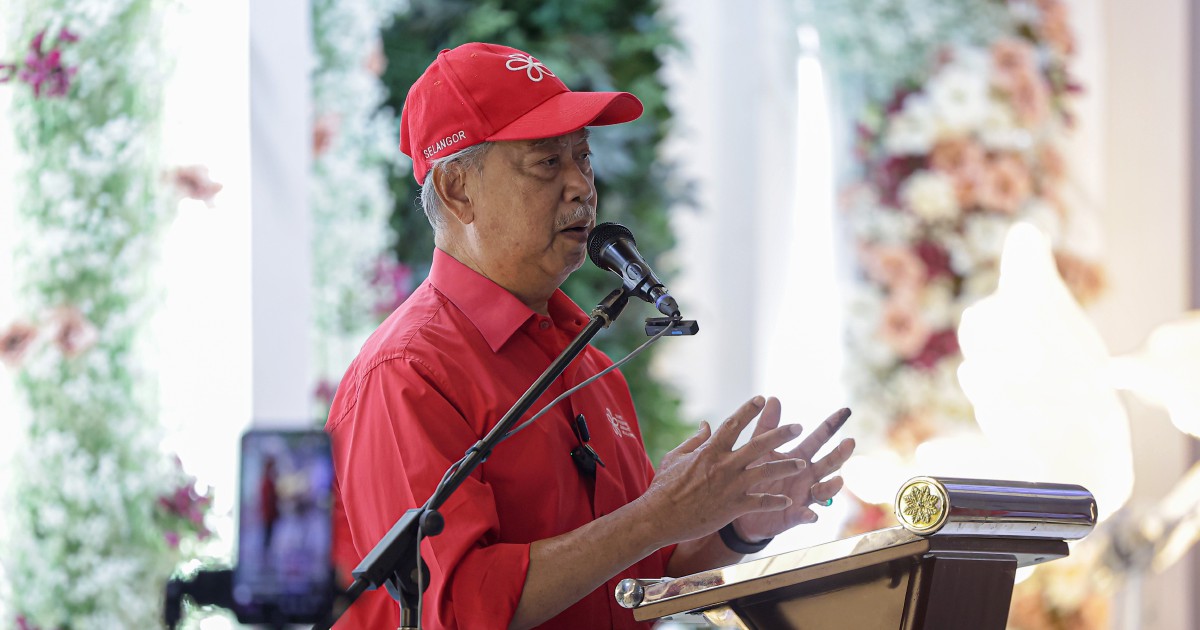
Bersatu president Tan Sri Muhyiddin Yassin has forcefully rejected claims by Umno vice-president Datuk Seri Mohamed Khaled Nordin that his party represents a "spoiler" in the Negri Sembilan state election. The rebuke underscores deepening tensions within Malaysia's ruling coalition at a time when unity among its members should be paramount. Speaking in Seremban, Muhyiddin dismissed the characterisation as unwarranted criticism of Bersatu's legitimate decision to field candidates across the state.
The dispute highlights broader fault lines within the Barisan Nasional coalition, which has historically relied on clear seat-sharing arrangements to avoid internal competition. Khaled's accusation that Bersatu is spoiling the chances of other coalition partners—particularly Umno—reflects growing irritation among certain quarters about what they perceive as Bersatu expanding its political footprint at the expense of established allies. This friction becomes especially significant given that Umno traditionally dominated Negri Sembilan politics and views the state as core territory.
Muhyiddin's counterattack centres on the principle that Bersatu has earned the right to contest elections as an independent political force. Since its formation and subsequent absorption into the Barisan Nasional framework, Bersatu has consistently advocated for greater representation and influence within coalition structures. The party maintains that fielding candidates in Negri Sembilan represents a natural expression of its political mandate and membership support, rather than an attempt to undermine coalition partners.
The Negri Sembilan election itself carries implications extending well beyond the state's borders. As one of the few remaining state contests that could reshape the national political landscape, the polling represents a crucial test of coalition cohesion. A fractured Barisan Nasional performance in the state could embolden opposition forces and raise questions about whether the government can maintain internal discipline ahead of the next general election. Conversely, a convincing coalition victory despite internal tensions might suggest that voters prioritise stability over intra-coalition squabbles.
This row underscores a persistent challenge for Malaysian coalition politics: reconciling the individual ambitions of component parties with the collective interest of maintaining electoral dominance. Umno's frustration with Bersatu likely stems from demographic and electoral calculations showing that direct competition between the two parties could fragment the Malay-Muslim vote, potentially benefiting opposition candidates. Such concerns are not entirely unfounded, particularly in urban and semi-urban constituencies where both parties draw support from overlapping voter bases.
Bersatu's positioning within Barisan Nasional has always represented something of an anomaly. As a relatively newer entrant compared to Umno's century-plus history, Bersatu has had to continuously negotiate its space within an alliance dominated by established heavyweights. Muhyiddin's insistence that Bersatu possesses the prerogative to contest independently reflects the party's determination to be perceived as more than a subordinate player dependent on Umno's goodwill for political survival.
The timing of this public spat also carries significance. Occurring during an active election campaign, the exchange risks creating narratives of coalition disunity that opposition parties will undoubtedly exploit. Malaysian voters often view intra-coalition friction negatively, interpreting it as a sign of weak governance and misaligned priorities. Both Muhyiddin and Khaled's comments, despite their defensive framings, potentially damage the broader coalition's electoral prospects by raising doubts about internal harmony.
For Negri Sembilan specifically, the situation creates a complex ground situation. Voters may find themselves uncertain about which coalition narratives to believe: Umno's warnings about Bersatu splitting the government vote, or Bersatu's assertion of its independent right to contest. This confusion could depress turnout among coalition supporters who might feel demotivated by perceived internal conflict, or conversely, energise opposition voters sensing an opportunity amid coalition divisions.
The dispute also illuminates the challenge of multi-party coalitions in a first-past-the-post electoral system. Unlike proportional representation systems where coalition parties can compete independently and still maintain overall alliance strength, Malaysia's electoral architecture requires careful coordination to prevent vote-splitting. This fundamental structural reality means that Khaled's spoiler concerns, however politically motivated, rest on genuine mathematical risks that could disadvantage coalition candidates in marginal constituencies.
Looking forward, this public disagreement suggests that the Barisan Nasional leadership will need to hold serious discussions about seat allocation and campaign coordination before the next general election. Allowing similar tensions to fester unchecked could gradually erode coalition unity and create openings for opposition advances. The Negri Sembilan election thus serves as both an important contest in its own right and a bellwether for whether Malaysia's ruling coalition can resolve internal disputes constructively.
Muhyiddin's aggressive response to Khaled's criticism also reflects Bersatu's broader strategy of asserting political relevance and refusing to accept subordinate status within coalitions. This posture appeals to the party's base but complicates coalition management. The central challenge facing Malaysian coalition politics remains finding mechanisms through which multiple parties can share power equitably while maintaining electoral effectiveness—a balancing act that the Negri Sembilan contest will test substantially.

