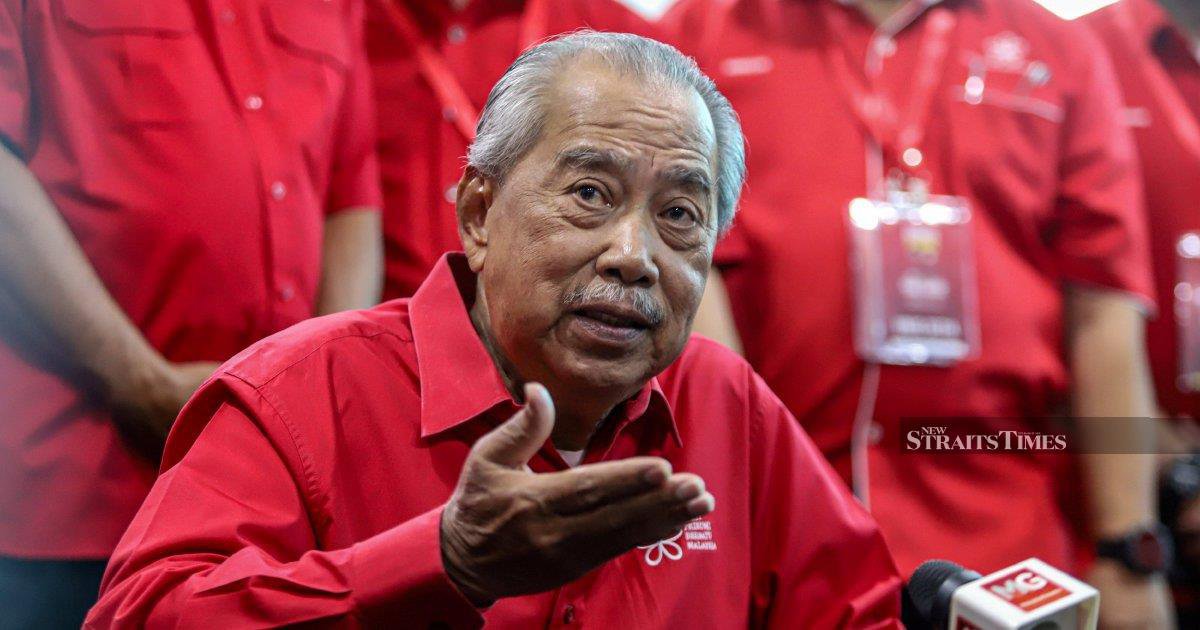
Tan Sri Muhyiddin Yassin has moved to refute claims made by Tan Sri Annuar Musa regarding the circumstances surrounding Bersatu's separation from Perikatan Nasional, particularly over disagreements relating to the Negri Sembilan election. The Bersatu chairman rejected Annuar's suggestion that his party had voluntarily chosen to mufarakah—an Islamic term denoting formal separation or dissolution—from the opposition coalition as a matter of principle or strategic choice.
The row between the two leaders underscores deeper tensions within Malaysia's fractious opposition landscape, where coalition partnerships remain fragile and subject to rapid recalibration based on electoral calculations and internal disputes. Muhyiddin's pushback against Annuar's narrative reveals competing versions of events that have significant implications for how the public understands the reasons behind the PN coalition's instability and the reliability of opposition unity efforts ahead of future electoral contests.
At the heart of this disagreement lies the question of agency and responsibility. By dismissing Annuar's characterization, Muhyiddin appears to suggest that Bersatu's departure was not a voluntary decision made by his party leadership but rather a consequence of broader PN dynamics or external pressures that forced the separation. This distinction carries weight in political circles, as accepting blame for a split could damage Bersatu's standing among voters and coalition partners who view reliability and steadfast commitment as essential qualities in political allies.
The Negri Sembilan election dispute that precipitated the PN coalition tensions represents a microcosm of the challenges facing opposition groupings in Malaysia. When individual state-level electoral interests collide with broader coalition strategies, the structural weaknesses of these alliances become apparent. Coalition partners must navigate the tension between pursuing local political advantages and maintaining the broader partnership necessary to challenge ruling coalitions at the national level.
For Malaysian voters and observers of domestic politics, the public recriminations between Muhyiddin and Annuar highlight the calculating nature of opposition politics in the country. Rather than presenting unified messaging about shared policy goals or a common vision for governance, the opposition remains preoccupied with assigning blame for setbacks and defending individual party interests. This pattern has repeatedly undermined opposition credibility and contributed to the fractious nature of Malaysian politics in recent years.
The timing of Muhyiddin's response carries strategic significance. By publicly refuting Annuar's claims, Bersatu's chairman is attempting to control the narrative around the PN split and preserve his party's reputation within opposition circles. How this dispute is settled—or remains unresolved—will influence the prospects for future PN revival and the willingness of coalition partners to engage in collaborative arrangements. Other parties within PN, including PAS and other component organizations, will be monitoring the nature and intensity of these accusations.
From a Malaysian governance perspective, the PN coalition's instability raises questions about the viability of opposition alliances as functional alternatives to ruling coalitions. The inability of opposition parties to maintain cohesion even when ostensibly united against the government suggests structural problems in how these partnerships are constructed and managed. The personal dynamics between leaders like Muhyiddin and Annuar appear to play an outsized role in determining coalition durability.
Regional implications also merit consideration. Within Southeast Asia's competitive democratic landscape, Malaysia's opposition politics increasingly mirrors patterns seen in other nations where fragmented opposition coalitions struggle to present unified challenges to entrenched ruling parties. The sophistication and resources available to governments in managing opposition divisions—whether through selective engagement, divide-and-conquer tactics, or exploitation of existing tensions—give incumbent coalitions significant advantages.
The Bersatu-PN dispute also reflects longer-term trends in Malaysian politics regarding the weakening of institutional party structures and the growing personalization of political rivalry. When disputes between party leaders dominate headlines rather than policy disagreements or substantive governance questions, it suggests that Malaysian politics remains trapped within a narrow circle of elite competition divorced from broader societal concerns.
Looking ahead, the resolution or continuation of tensions between Muhyiddin and Annuar will significantly influence the shape of opposition politics during Malaysia's next electoral cycle. Whether PN can reconstitute itself or whether its component parties will pursue separate trajectories remains an open question. The public nature of this dispute, conducted through media statements and press conferences, indicates that reconciliation may be difficult and that trust between these leaders has eroded substantially.
For Southeast Asian observers tracking Malaysian political developments, the Muhyiddin-Annuar disagreement illustrates the broader challenges facing opposition movements across the region. Building and maintaining viable political coalitions requires not only strategic alignment but also interpersonal relationships grounded in mutual respect and shared commitment to common objectives. When personal rivalries and competitive impulses override these considerations, coalitions fracture regardless of their electoral potential or policy coherence.
The ultimate impact of this dispute will extend beyond PN's internal dynamics. It will shape voter perceptions of opposition reliability and capacity to govern, while simultaneously offering opportunities for the ruling coalition to reinforce narratives about opposition fragmentation and instability. In Malaysia's intensely competitive political environment, such perception management often proves as consequential as the substantive disputes themselves.

