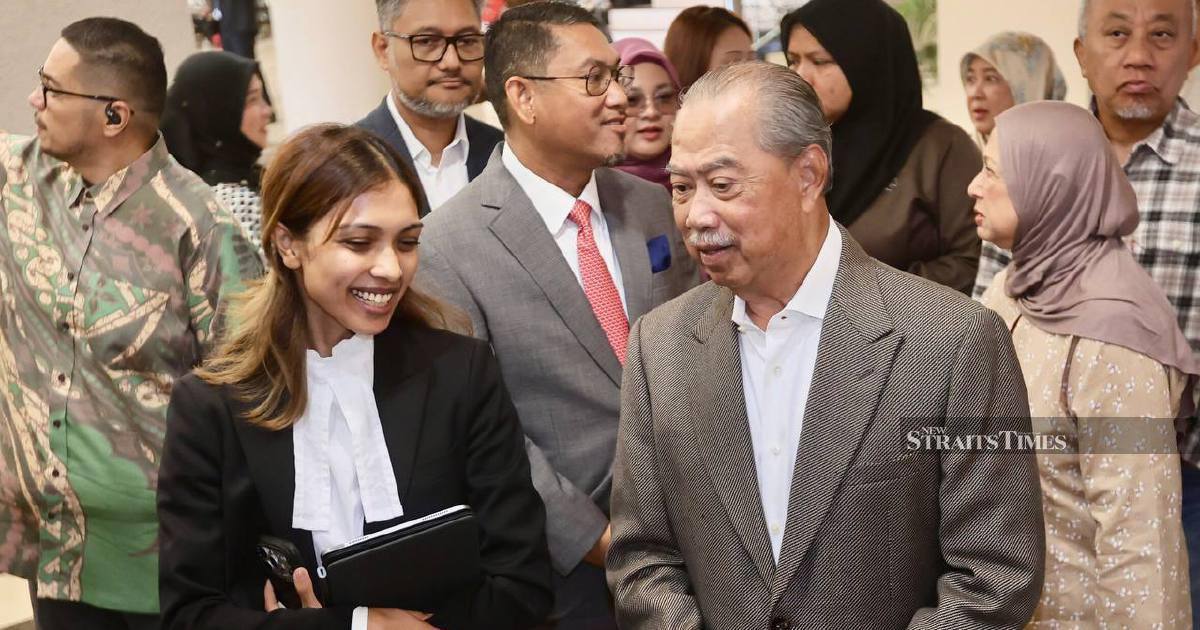
A key witness in the Jana Wibawa trial has declared to the High Court that former Prime Minister Tan Sri Muhyiddin Yassin did not approach him seeking any form of financial contribution, a statement that carries substantial implications for the prosecution's case against the prominent political figure.
The testimony emerged during proceedings at the High Court in Kuala Lumpur, where the defence continues to challenge allegations surrounding the Jana Wibawa transaction. The witness's account directly contradicts any suggestion that Muhyiddin or his political party Bersatu initiated requests for funds from Jana Wibawa, a key allegation that underpins the charges against the former leader who served as Prime Minister from 2020 to 2021.
Muhyiddin's legal team has built its defence around the proposition that the former PM maintained no improper financial relationships and made no solicitations that could be characterized as corrupt. This latest witness testimony strengthens that position by offering sworn testimony that speaks directly to Muhyiddin's alleged conduct. The distinction between receiving unsolicited funds and actively seeking contributions remains legally significant and operationally critical to the court's assessment of the allegations.
The Jana Wibawa matter has attracted considerable public and political attention given Muhyiddin's profile in Malaysian politics. His administration represented a significant political realignment following the collapse of the Pakatan Harapan government, and questions surrounding the financing of political figures and parties remain a sensitive topic in Malaysian governance. The trial's outcomes carry ramifications not merely for the accused but for broader questions about political accountability and fundraising practices across the Malaysian political landscape.
Witness testimony in trials of this complexity and prominence often determines crucial factual disputes. The court must assess credibility, motive, and consistency across multiple testimonies to construct its understanding of events. A witness's categorical denial that solicitation occurred represents a foundational refutation of the underlying conduct that prosecutors must establish to secure a conviction. The burden remains on the prosecution to prove beyond reasonable doubt that improper requests were made and that Muhyiddin's actions constituted criminal behaviour under relevant legislation.
The trial reflects ongoing scrutiny of political financing in Malaysia, a topic that has featured prominently following various political transitions and leadership changes. Public expectations regarding transparency in how political figures and parties fund their operations have intensified in recent years. Legal proceedings such as this Jana Wibawa case serve to test the adequacy of existing regulatory frameworks and enforcement mechanisms designed to prevent corruption and misuse of power.
Muhyiddin's case also occurs within a broader context of Malaysian politics where questions about party funding and personal enrichment have prompted both judicial examination and public debate. The outcome of high-profile trials involving former or current political leaders influences perceptions of whether Malaysia's institutions can effectively investigate and prosecute political misconduct. International observers and domestic constituencies alike monitor such proceedings as indicators of judicial independence and institutional robustness.
The defence strategy of presenting witnesses who contradict the prosecution's narrative represents standard trial procedure, yet the significance of testimony intensifies when the accused is a figure of Muhyiddin's stature. Each witness contributes pieces to a complex factual puzzle that the court must ultimately assemble into a coherent understanding. The cumulative weight of defence testimony, particularly when it establishes negative facts—that certain actions did not occur—shapes the judicial assessment of whether prosecution allegations rest on credible foundations.
As the trial progresses through additional witness testimony and evidence presentation, the court faces the challenge of distinguishing between credible accounts and motivated testimony. The Jana Wibawa transaction itself requires careful examination to determine whether it represented a legitimate business arrangement, a concealed political contribution, or something else entirely. Expert evidence regarding financial flows, documentation, and customary practices in similar transactions may illuminate the true nature of what occurred.
The trial's duration and complexity reflect the intricacy of financial crime investigations and prosecutions. Establishing criminal intent alongside material facts demands thorough examination of communications, financial records, and participant testimony. The judiciary's ultimate determination will likely influence how Malaysian authorities approach similar investigations involving political figures going forward, potentially setting precedents for future cases.
For Malaysian business and political communities, the trial underscores the legal risks associated with transactions involving prominent political personalities. The implications extend beyond Muhyiddin himself to questions about how Malaysian companies and investors navigate relationships with political figures while maintaining compliance with anti-corruption standards.
The trial continues as the court hears additional evidence. The eventual judgment will address not only Muhyiddin's culpability but also provide authoritative interpretation of relevant statutory provisions governing political financing and corrupt conduct. Such judicial clarification serves important functions in the nation's ongoing efforts to strengthen institutional integrity and public confidence in governance structures.

