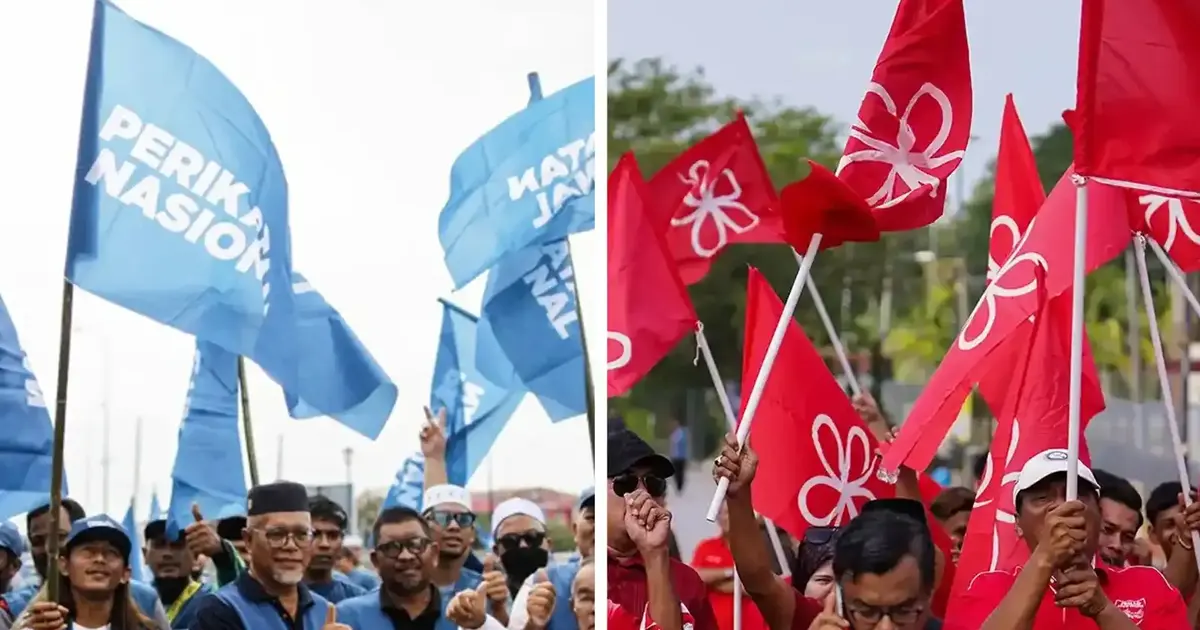
Bersatu president Muhyiddin Yassin has pushed back against assertions that any single coalition figure possesses unilateral authority to expel member parties from the Perikatan Nasional, emphasising that such consequential decisions demand collective endorsement from the entire coalition membership. His statement appears directed at clearing up confusion surrounding governance structures within the opposition alliance, which has faced periodic tensions over leadership dynamics and party autonomy since its formation.
The remarks underscore fundamental disagreements about how power functions within multi-party coalitions in Malaysian politics. Unlike political systems with hierarchical chains of command, the PN operates on a principle of partnership among equals, meaning no single party chairman, regardless of their profile or seniority, can unilaterally determine the fate of fellow members. This structural reality reflects both the democratic aspirations of coalition partners and the practical necessity of maintaining internal stability among ideologically diverse groups.
Muhyiddin's clarification carries particular significance given Malaysia's complex political landscape, where coalition configurations shift regularly and parties frequently negotiate their positioning relative to one another. The PN itself emerged as a significant political force following the 2020 political realignment, bringing together Bersatu, the Pan-Malaysian Islamic Party, and several smaller component parties. Understanding the coalition's decision-making mechanisms matters to Malaysian voters attempting to evaluate whether such alliances can effectively govern and how internal disputes might be resolved.
The insistence on collective approval for membership decisions reflects lessons learned from previous coalition experiments in Malaysian politics. The Pakatan Harapan alliance, which governed from 2018 to 2020, experienced dramatic implosion partly due to internal disagreements and perceived power imbalances among member parties. When coalition partners lack confidence in transparent, collectively-binding decision procedures, the partnership becomes vulnerable to collapse when serious disputes arise. Muhyiddin's emphasis on procedural requirements thus serves to reassure partner parties that their continued membership depends on formal consensus rather than the whims of individual leaders.
For Bersatu specifically, such guarantees matter considerably. As the numerically smallest major component of the PN, Bersatu relies on coalition participation to maintain significant political leverage. Without protection against arbitrary expulsion, smaller parties would face constant vulnerability to domination by larger partners. The principle that all parties must consent to removing a member therefore provides essential security for groups with modest parliamentary representation but strategic importance within the broader alliance.
This episode also highlights the fragility of opposition coalitions in contemporary Malaysian politics. The PN competes against a Pakatan Harapan alliance while both groupings face pressure from the ruling Barisan Nasional machinery. Internal disputes about governance and party conduct, if left unresolved, can rapidly metastasise into coalition-threatening crises. By articulating clear rules about membership decisions, Muhyiddin attempts to establish institutional guardrails that might prevent disagreements from escalating into existential threats.
The Malaysian political environment has become increasingly volatile since the 2018 general election shattered decades of Barisan dominance. Voters have demonstrated willingness to punish coalitions perceived as fractious or poorly governed, as evidenced by the 2022 election results that produced a hung parliament and subsequent complex negotiations. Coalition partners understand that public confidence evaporates quickly when internal quarrels dominate headlines. Establishing and communicating clear procedures for difficult decisions thus serves both practical governance and electoral positioning objectives.
For Bersatu's partners within PN, Muhyiddin's statement offers reassurance that the coalition operates according to rules rather than personal preferences. The Pan-Malaysian Islamic Party and other component members have their own interests in coalition stability and protection against arbitrary action. When all parties understand that major decisions require consensus, incentives align toward negotiation and compromise rather than aggressive manoeuvres by dominant partners.
Looking forward, the PN faces the considerable challenge of maintaining cohesion while competing effectively against established rivals. Coalition governance structures matter enormously for success, particularly given how quickly Malaysian political situations can transform. Voters increasingly demand that opposition movements demonstrate their capacity for disciplined governance before entrusting them with power. Muhyiddin's articulation of clear decision-making procedures represents a modest but meaningful step toward building confidence that the PN can function effectively as a governing entity if given the opportunity.

