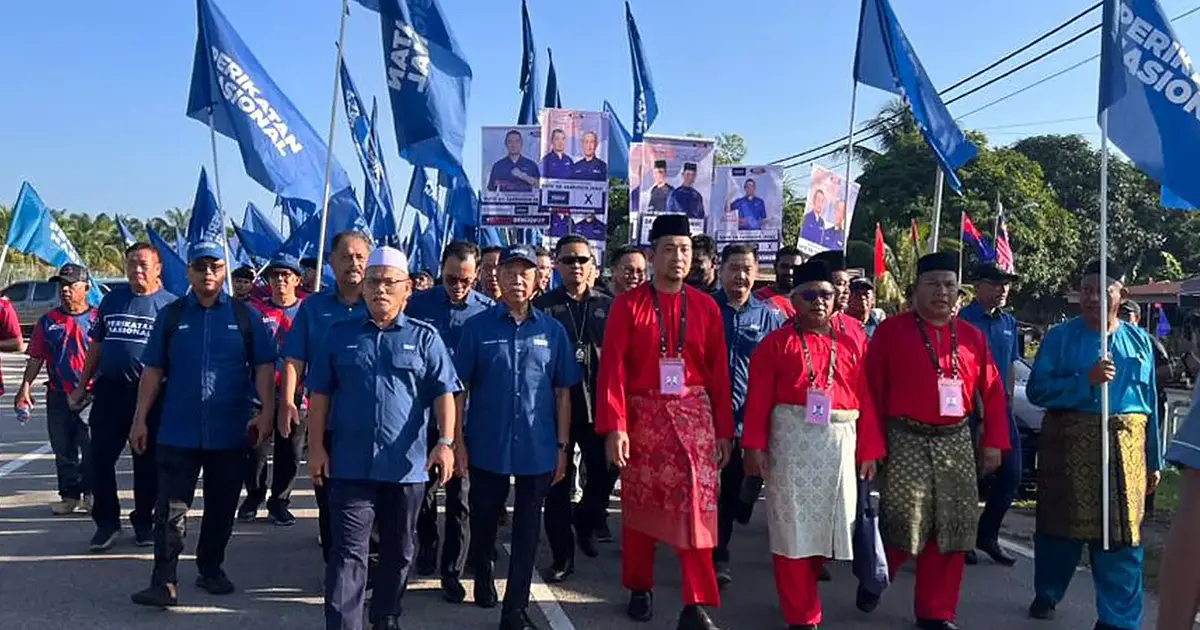
Tan Sri Muhyiddin Yassin demonstrated the Perikatan Nasional coalition's organizational muscle by leading hundreds of party faithful in a campaign appearance supporting Dr Sahruddin Jamal's candidacy for the Bukit Kepong legislative seat. The Bersatu veteran assemblyman, who has already secured two terms representing the constituency, is mounting his latest bid with backing from the senior opposition politician, signalling the coalition's determination to maintain its stronghold in the area.
The gathering underscores the broader political dynamics unfolding across Malaysia's competitive electoral landscape, where opposition coalitions are mobilizing grassroots support to contest parliamentary and state-level seats. Muhyiddin's personal participation carries particular weight, given his prominence within Perikatan Nasional and his history as Prime Minister. His presence communicates the coalition's confidence in Sahruddin's electoral prospects and reinforces party discipline among supporters who turn out for such public events.
Bukit Kepong represents the kind of constituency that both government and opposition forces view strategically. The seat's electoral composition and voting patterns matter considerably for overall coalition performance in any given election cycle. Sahruddin's incumbency, spanning two full terms, suggests he has cultivated a personal support base independent of broader national political currents, though coalition endorsements remain essential for electoral success in Malaysia's competitive environment.
The mobilization of hundreds of supporters reflects the resource-intensive nature of contemporary Malaysian electoral campaigns. Campaign events serve multiple purposes simultaneously: they generate media visibility, energize the party base, demonstrate organizational capacity to voters, and create momentum heading into polling day. The decision to feature Muhyiddin rather than rely solely on local candidates indicates strategic prioritization of this particular race within the opposition's campaign calendar.
Perikatan Nasional's investment in Bukit Kepong must be understood within the context of the coalition's broader positioning relative to both the government and Pakatan Harapan. The opposition coalition has been recalibrating its approach following various electoral setbacks and internal realignments. Visible demonstrations of strength, particularly when featuring recognizable senior figures, help sustain morale among party members and convey viability to undecided voters who assess candidates partly through institutional backing.
Sahruddin's two-term incumbency positions him as an experienced legislator with established relationships across the constituency. Assembly members typically develop deeper connections with local communities than federal-level politicians, managing constituent grievances, facilitating government service access, and building personal loyalty networks. This granular political work often provides stronger foundations for re-election than national political trends alone, particularly in state-level contests.
The campaign event also reflects how Malaysian political parties leverage party leader appearances to elevate local candidates' profiles. A candidate's association with senior party figures, especially former Prime Ministers, signals organizational importance and resources. Muhyiddin's attendance amplifies media coverage and social media reach far beyond what a purely local campaign could achieve, extending the campaign's geographical and demographic footprint.
For Perikatan Nasional more broadly, retaining and expanding state assembly seats remains critical for building influence at state government level. Control of state assemblies determines control of state governments, which manage significant budgets and patronage networks. Every constituency therefore carries importance proportional to its contribution toward achieving coalition majorities in relevant state legislative bodies.
The size of the turnout—hundreds of supporters—matters symbolically and substantively. Large gatherings generate atmosphere and energy that can translate into volunteer recruitment, increased campaign participation, and enhanced motivation among party workers. They also demonstrate to voters that the candidate commands organizational backing and popular enthusiasm, factors that Malaysian voters often consider when evaluating candidate viability.
Sahruddin's background as a two-term assemblyman means voters have a track record to evaluate. His performance on policy issues affecting Bukit Kepong residents, his accessibility, and his visible presence in addressing local concerns create or detract from his electoral prospects. Muhyiddin's backing signals that the Bersatu party leadership and broader Perikatan Nasional coalition view Sahruddin's continuation as serving their strategic objectives.
The timing and location of such campaign events are calibrated to maximize impact. Staging large rallies in target constituencies during peak campaign periods reaches residents directly and generates word-of-mouth momentum. The visual spectacle of hundreds of supporters physically present in Bukit Kepong creates impressions of political momentum and organizational capacity that local media inevitably covers.
Moving forward, Sahruddin's electoral performance will offer indicators about Perikatan Nasional's broader strength in the region. If the coalition successfully retains Bukit Kepong, particularly with strong margins, it suggests the combination of local incumbency advantage and high-level coalition support proved effective. Conversely, any losses would signal either shifting voter preferences or inadequate campaign resource allocation.
Ultimately, Muhyiddin's participation in this campaign event exemplifies how Malaysian political coalitions operationalize their organizational structures and leverage senior leadership to amplify local candidacies. The convergence of established incumbency, senior party backing, and substantial grassroots mobilization represents the full complement of resources parties deploy when genuinely committed to winning specific contests.

