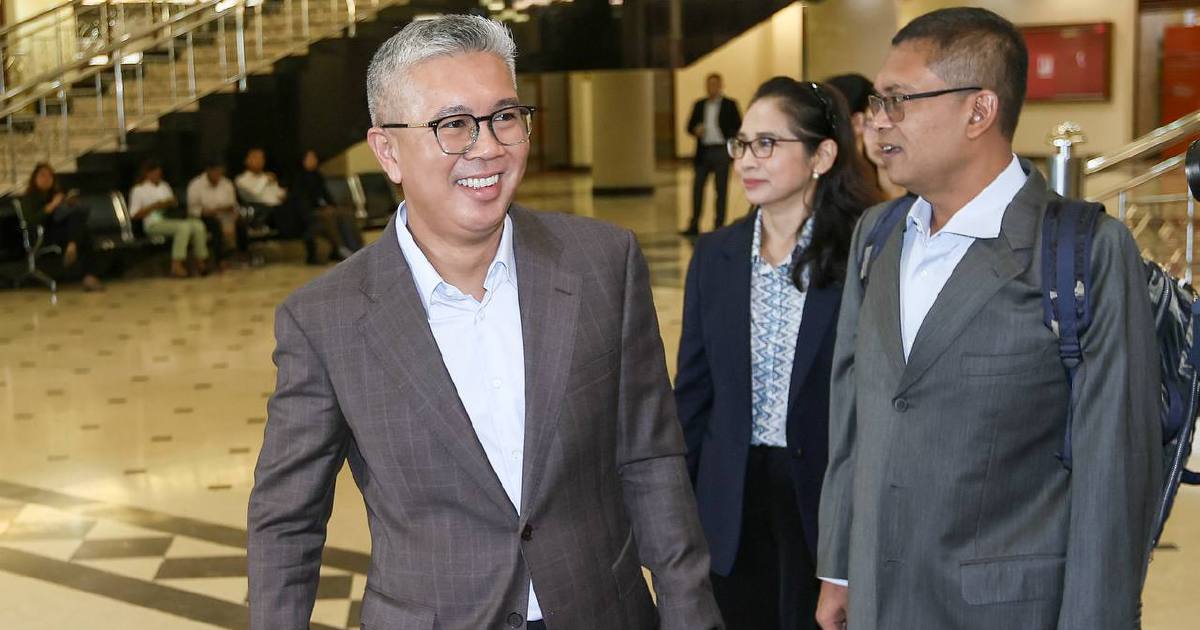
Former finance minister Tengku Datuk Seri Zafrul Tengku Abdul Aziz revealed in High Court proceedings today that then-Prime Minister Tan Sri Muhyiddin Yassin had put forward a proposal to appoint 54 contractors under the Jana Wibawa scheme using direct negotiation methods rather than through conventional competitive bidding processes.
The testimony sheds light on the procurement decisions made during the Muhyiddin administration, when the Jana Wibawa programme formed a central pillar of the government's economic response to the pandemic and its aftermath. The programme, designed to spur infrastructure development and economic activity, became the subject of intense scrutiny regarding its implementation procedures and contractor selection methodology. Tengku Zafrul's account provides crucial insight into how such high-level policy decisions were formulated at the highest echelons of government.
Direct negotiation procurement, which bypasses open tender processes, has long been a contentious issue in Malaysian governance circles. While such mechanisms can accelerate project implementation during emergencies, they simultaneously raise concerns about value for money, transparency, and competitive fairness. The revelation that such a substantial number of contractors—54 in total—were proposed for direct negotiation under Jana Wibawa underscores the scale of procurement decisions made during this period.
Tengku Zafrul's position as finance minister placed him at the nexus of all major budgetary and financial decisions during his tenure. His firsthand knowledge of how the Jana Wibawa contractor appointments were deliberated provides authoritative testimony regarding the government's procurement strategy at that time. The High Court proceedings appear to be examining whether appropriate procedures were followed in these appointments and whether due diligence was conducted.
The Jana Wibawa programme itself was introduced as a comprehensive stimulus measure to revitalise the economy through infrastructure and business support initiatives. The selection of contractors for such a wide-ranging programme would have involved substantial financial commitments and long-term implications for project delivery and public resource allocation. The manner in which these contractors were chosen thus carries significant implications for public accountability and the proper stewardship of government funds.
Public procurement reform has been a recurring theme in Malaysian governance discourse, with various administrations pledging greater transparency and competitive bidding. The use of direct negotiation for dozens of contractors suggests a deliberate policy choice by the Muhyiddin administration, though the underlying rationale for such an approach remains subject to judicial examination. Understanding the circumstances and justifications offered at the time provides essential context for evaluating whether such decisions align with public sector best practices.
The testimony also reflects broader questions about emergency governance and the balance between expedience and due process. During periods of economic crisis or rapid policy implementation, governments often face pressure to move quickly, sometimes at the expense of lengthy procurement procedures. However, this must be weighed against the fundamental principle that public funds should be deployed with rigorous oversight and transparent decision-making frameworks.
Tengku Zafrul's account will likely feature prominently in legal proceedings examining the governance of pandemic-era economic programmes. His testimony carries particular weight given his ministerial position and direct involvement in financial policy during the relevant period. The High Court is presumably establishing a detailed factual record regarding how these 54 contractors came to be selected and what deliberative processes, if any, preceded their appointment.
For Malaysian observers concerned with governance standards and public financial management, these proceedings highlight the importance of documentary evidence and first-hand testimony from key decision-makers. The judicial examination of major procurement decisions from this period sends an important signal that even emergency-period governmental actions remain subject to scrutiny and accountability mechanisms. This reinforces the principle that expedited implementation should not come at the cost of fundamental governance safeguards.
The Jana Wibawa programme represented an ambitious attempt to channel government resources into economic revitalisation, yet its implementation and contractor selection processes now form the basis of legal examination. As courts assess the propriety of these decisions, the testimony from senior officials such as Tengku Zafrul becomes instrumental in establishing whether appropriate governance frameworks were observed. The outcome of these proceedings may well influence how future governments approach emergency procurement and contractor selection during periods of economic stress.

