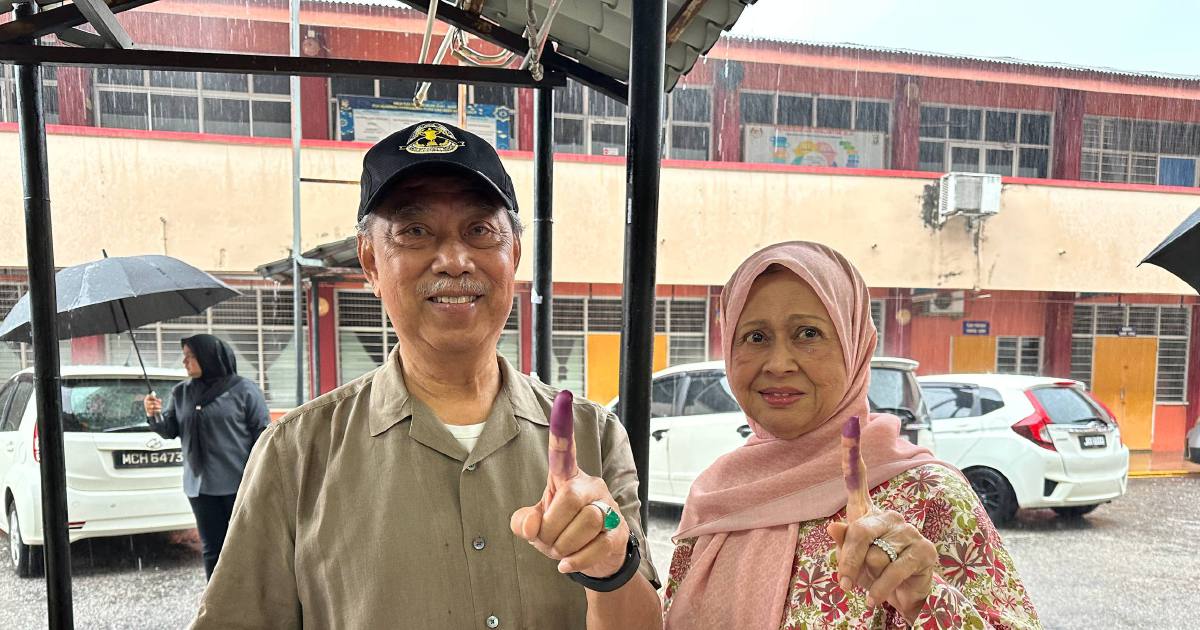
Bersatu president Muhyiddin Yassin has expressed optimism that voters in Johor will venture out to cast their ballots despite weather challenges, with the party leadership hoping to see participation rates climb above the 70% mark in the state election held today. The ambition reflects confidence within the coalition that public interest in the electoral process remains robust, though inclement conditions presented an early test of voter commitment across multiple constituencies.
The morning downpour that blanketed several districts in Johor presented logistical hurdles for both election administrators and the electorate. Heavy rainfall typically suppresses turnout in Malaysian elections, as voters weigh the inconvenience of travel against their civic duty. This weather pattern has featured in multiple electoral exercises across Southeast Asia, where monsoon seasons and unpredictable precipitation often correlate with lower participation rates. For Johor's election management teams, the challenge lay in ensuring polling stations remained accessible and that vulnerable populations—particularly elderly voters and those in remote areas—faced minimal obstacles in reaching their designated voting centres.
The 70% threshold represents a significant psychological benchmark in Malaysian electoral politics. Turnout at this level would typically indicate strong public engagement and validate the electoral exercise as genuinely representative of the wider population. Campaigns by major parties in the lead-up to polling day had focused heavily on mobilising support, recognising that high participation could either amplify victory margins or expose weaknesses in voter enthusiasm. For Bersatu specifically, strong turnout could strengthen its hand in coalition negotiations and broader political positioning, particularly as Malaysian politics continues to evolve following recent changes in federal government structures.
Johor's electoral significance extends beyond regional boundaries. As Malaysia's second-largest state by population and an economic powerhouse, outcomes here ripple across the peninsula and influence perceptions of national political trends. The state has historically served as a barometer for grassroots sentiment, and election results shape subsequent policy directions at both state and federal levels. Economists and political observers closely monitor Johor elections to gauge investor confidence and policy stability, particularly given the state's importance in manufacturing, agriculture, and port operations.
The logistics of conducting elections across Johor's varied geography—encompassing urban centres like Johor Bahru and Kluang, as well as rural constituencies and island communities—requires meticulous planning even in favourable weather. Election commission officials had to ensure adequate supplies of ballot papers, staffing at all polling stations, and security arrangements despite transport difficulties created by rain. Multiple districts faced the additional burden of managing voter movements as roads became slick and visibility diminished.
Muhyiddin's public confidence about reaching the 70% target may also serve a strategic purpose beyond reflecting genuine expectations. Statements from political leaders immediately before or during voting days often carry implications for post-election narratives. Should turnout fall significantly short, questions arise about public confidence in the political process itself. Conversely, higher-than-anticipated participation provides political ammunition regardless of which coalition emerges victorious, lending legitimacy to subsequent government formation and policy implementation.
Voter behaviour patterns in Malaysian elections have shifted subtly over recent years, with increasingly sophisticated voters responding to specific issues rather than purely factional considerations. Weather impacts interact with these behavioural changes in complex ways. Younger, urban voters may prove more resilient to adverse conditions, viewing participation as non-negotiable. Older rural voters, historically more committed to voting, might find rain a genuine barrier despite high motivation. This demographic sorting means that final turnout figures, combined with demographic breakdowns, could reveal important shifts in support coalitions across different voter segments.
The broader context of Malaysian electoral politics underscores why state-level contests matter increasingly. Federal and state governments now often operate under different political leaderships, creating complex governance dynamics. A strong turnout in Johor signals public engagement with these distinctions and validates decentralised democratic processes. For Southeast Asian observers watching Malaysian democratic institutions, turnout levels in state elections provide tangible measures of how federalism functions in practice.
Beyond the immediate question of reaching 70%, the weather conditions themselves become part of the electoral narrative. Voters who brave rain to cast ballots may feel heightened ownership of subsequent outcomes, potentially increasing pressure on elected representatives to deliver on campaign promises. Conversely, those who stay home due to weather might later question whether outcomes truly represent popular will. These psychological and social dimensions of electoral participation, though harder to quantify than simple turnout figures, influence the legitimacy and stability of subsequent governance.
As polling continued throughout the day across Johor, the actual turnout would ultimately reflect the balance between voter determination and the deterrent effects of weather. The final participation rate would carry significance not only for Bersatu's strategic positioning but also for broader assessments of democratic health and public engagement in Malaysian politics, contributing to understanding of how Southeast Asian electoral systems function under real-world constraints.

