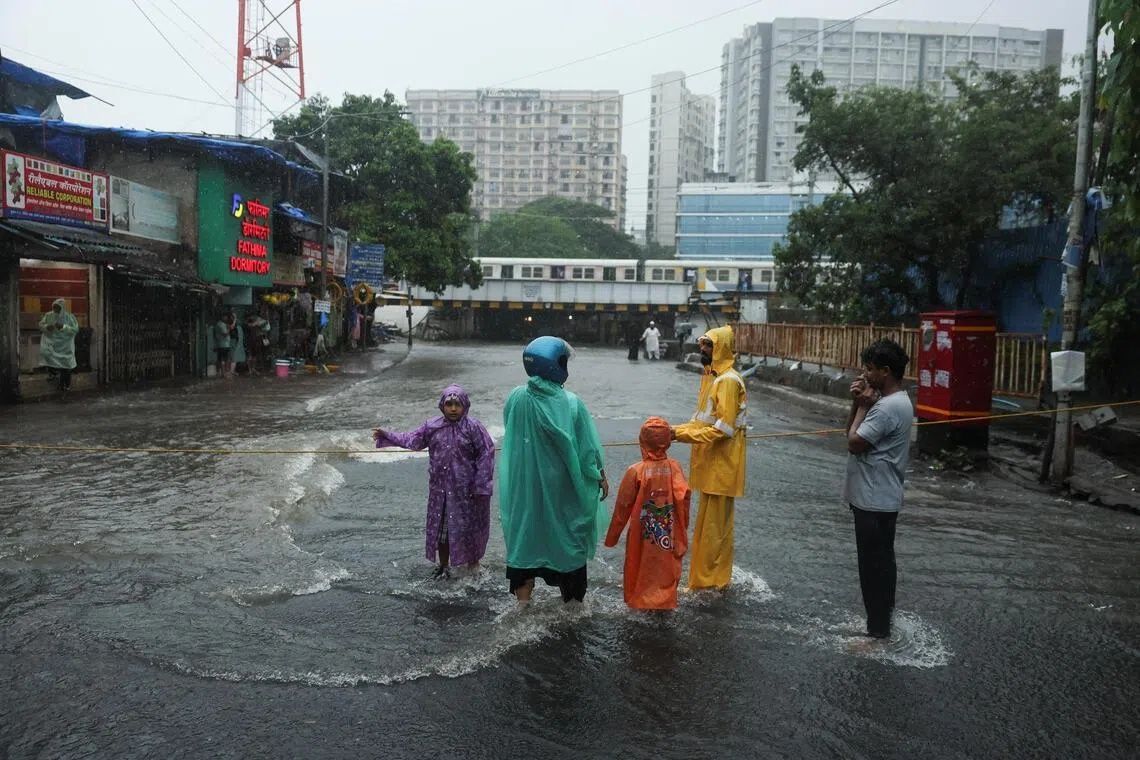
Mumbai is grappling with a monsoon crisis that has claimed two lives in recent days, exposing critical gaps in urban infrastructure maintenance and sparking renewed calls for government accountability. The India Meteorological Department's orange alert for July 3 underscores the severity of the weather system battering India's financial hub, with authorities warning residents to minimize travel as torrential rainfall persists. The twin tragedies—involving a schoolboy and a middle-aged resident—have thrust the preparedness of municipal authorities into the political spotlight, raising uncomfortable questions about how a city of over 20 million people manages its seasonal deluge.
On June 30, tragedy struck when an uprooted tree crashed onto a school bus in the Chembur neighbourhood, claiming the life of 11-year-old Vihan Shrivastav. The student, who attended either Universal High School or Tilak Nagar School, was among several children aboard the vehicle when the massive tree toppled in high winds accompanying the heavy rainfall. Emergency personnel deployed specialized cutting equipment to extract trapped students from the bus wreckage, with multiple children rushed to Zen Hospital and Jain Hospital for treatment. The incident sparked immediate political attention, with Maharashtra minister Ashish Shelar visiting the affected family and acknowledging that both the state government and the Brihanmumbai Municipal Corporation bore responsibility for the tragedy. Yet his measured response—promising action against responsible officers—drew criticism from local legislators who demanded deeper systemic reform.
MLA member Rohit Pawar met the grieving family of Vihan Shrivastav and emerged from the interaction convinced that accountability must extend far beyond junior officials. He emphasized the particular poignancy of the loss, noting that the boy was his parents' only child, and argued that punishing lower-ranking employees alone perpetuates a cycle of negligence at the institutional level. Pawar's intervention highlighted a recurring frustration among elected representatives: pre-monsoon inspections of roads, drainage systems, and other civic infrastructure appear insufficient to prevent recurring incidents. His implicit critique suggests that either these inspections lack rigor or their findings are not acted upon with sufficient urgency. For Malaysian observers, the situation parallels concerns about monsoon preparedness in Peninsular Malaysia and Sabah, where seasonal flooding similarly exposes lapses in municipal planning and maintenance protocols.
Just two days later, on July 2, a second fatality underscored the same systemic vulnerability. Aslam Isak Shaikh, a 60-year-old man in the Sakinaka area, fell into an open manhole that had been left uncovered and unbarricaded during maintenance operations. According to accounts, Shaikh was speaking on his mobile phone when fast-moving rainwater swept him into the aperture. Rescue teams required approximately three hours to locate and recover his body, a grim illustration of both the hazard and the challenges posed by monsoon conditions. Municipal officials had removed the drainage cover for routine maintenance but failed to implement adequate warning signage or physical barriers—a lapse that cost a life.
The manhole incident provoked sharper political responses than the tree tragedy. MLA member Vijay Wadettiwar demanded the filing of a formal first information report against responsible officers, arguing that the failure to secure open excavations during heavy rain constituted criminal negligence. The demand for criminal charges rather than mere administrative discipline signals the depth of political anger over what many view as preventable deaths caused by inadequate safety protocols. MLA Speaker Rahul Narwekar acknowledged the incident's gravity during legislative sessions and sought detailed reports, while Mumbai Mayor Ritu Tawde classified the death as an administrative error and announced compensation of 10 lakh rupees (approximately US$10,455) to the victim's family. The gesture, while symbolically important, raised implicit questions about whether monetary compensation adequately addresses structural failures that endanger residents.
Beyond the fatalities, the monsoon has strangled Mumbai's traffic networks and highlighted the city's vulnerability to flooding. A truck overturned near the Kharghar Toll Plaza on the Sion-Panvel Highway during the rainfall, blocking multiple lanes and creating severe congestion as emergency crews worked to clear the roadway. Waterlogging persisted across multiple neighbourhoods including Dadra East and Sion Gandhi Market, trapping commuters in extended traffic jams and disrupting morning rush hour. These cascading disruptions demonstrate how monsoon impacts extend well beyond isolated incidents, affecting the livelihoods and schedules of millions of residents who depend on functional transportation networks.
The orange alert issued for July 3 indicated that authorities anticipated continued heavy rainfall over a 24-hour window, prompting advisory warnings against unnecessary travel. Civic teams mobilized to manage flooded roads, clear fallen trees and debris, and restore passage where possible. Yet for many residents and opposition politicians, such reactive measures feel insufficient when preventive action—from tree maintenance to manhole surveillance—might have averted the deaths. The Mumbai scenario carries particular relevance for Malaysian cities that experience similar monsoon patterns and face comparable challenges in maintaining aging infrastructure systems under pressure from intense seasonal rainfall.
The political fallout from these deaths has exposed deeper anxieties about urban governance in India's largest commercial centre. Maharashtra's state government and the BMC, the municipal administration responsible for day-to-day city management, face mounting scrutiny over whether their preparation for the monsoon season is truly adequate. The pattern of incidents—environmental hazards (trees) and infrastructure lapses (uncovered maintenance points)—suggests that standard safety protocols are either absent or poorly enforced. Elected officials at various levels have stepped forward to demand accountability, yet meaningful reform often moves slowly through bureaucratic channels. For Southeast Asian cities, the Mumbai case serves as a cautionary reminder that monsoon preparedness requires sustained investment, rigorous training of municipal staff, and enforcement mechanisms that prioritize safety over administrative convenience.
The broader context of Mumbai's monsoon challenges reveals inherent tensions in managing rapid urbanization and aging infrastructure simultaneously. The city's population density and economic importance make it a national priority, yet the sheer volume of maintenance requirements—from drainage systems to roadside vegetation—strains municipal resources. When budgetary constraints or procedural oversights intersect with extreme weather, the consequences can be fatal. The deaths of Vihan Shrivastav and Aslam Isak Shaikh represent not merely individual tragedies but symptoms of systemic vulnerabilities that merit urgent attention from policymakers. As India's monsoon season intensifies, Mumbai's experiences offer sobering lessons about the costs of deferred maintenance and the importance of treating infrastructure safety as a non-negotiable responsibility of urban governance.

