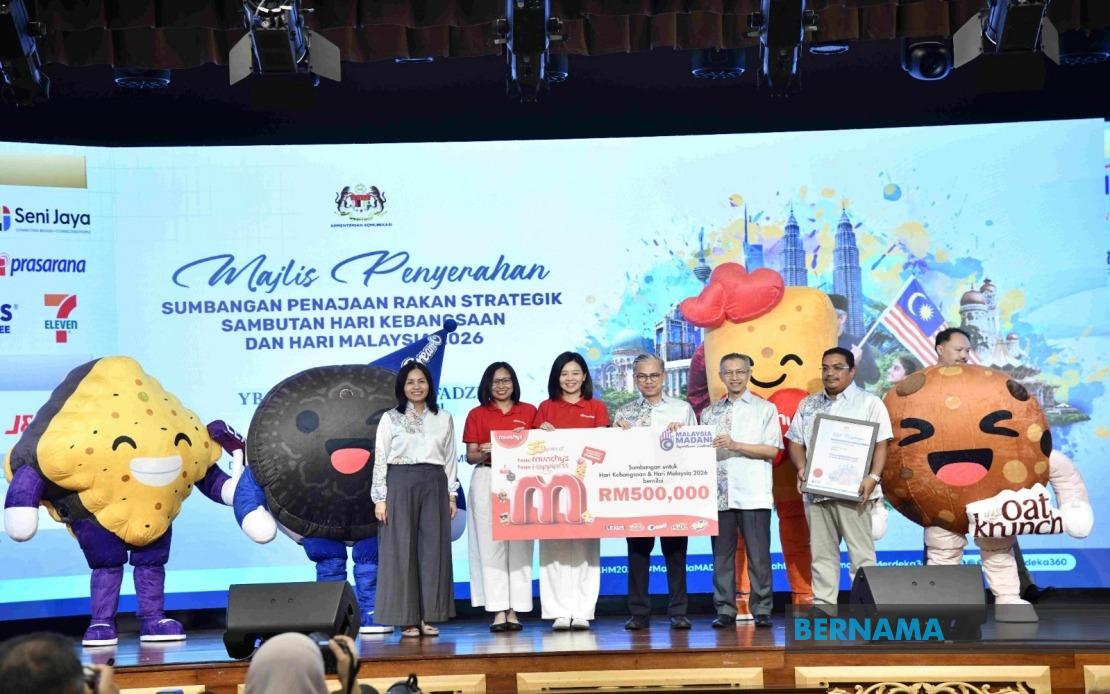
Munchy's Malaysia has committed RM500,000 worth of products to support the 2026 National Day and Malaysia Day (HKHM) celebrations, representing the snacks manufacturer's most substantial contribution to the annual observance. The pledge arrives as the company marks its 35th anniversary in the Malaysian market, underscoring a strategic alignment between corporate milestone-marking and national celebration sponsorship.
This represents the third consecutive year that Munchy's has backed the HKHM festivities, suggesting a deliberate corporate positioning around patriotic occasions and community engagement. The escalating value of contributions year-on-year signals not merely sustained commitment but deepening investment in what the company views as a culturally significant and commercially valuable platform for brand visibility.
Rodney Wong, chief executive officer of Munchy's Malaysia, framed the donation as an expression of corporate gratitude and social responsibility. He characterised the HKHM celebration as an occasion enabling the company to acknowledge the domestic market's foundational role in its three-decade-plus operational history. The statement emphasises reciprocal benefit—the company gains reputational and marketing returns while communities receive tangible product support for festivities.
The formal handover occurred at Menara Komunikasi in Putrajaya, with Communications Minister Datuk Seri Fahmi Fadzil receiving the pledge. This ministerial-level engagement reflects official recognition of private sector participation in national celebration infrastructure, a pattern increasingly common in Malaysian public-private partnerships around civic occasions.
For Malaysian readers, this development illustrates broader corporate trends in how businesses leverage national occasions for brand positioning. Fast-moving consumer goods companies particularly benefit from HKHM celebrations, which generate heightened consumer spending, community gatherings, and media visibility. Munchy's approach—escalating contributions over successive years—demonstrates calculated investment in what amounts to extended brand exposure during peak patriotic sentiment periods.
The donated products will channel through selected programmes and activities integrated into the official HKHM 2026 calendar, potentially reaching diverse demographic segments across the nation. This distribution mechanism ensures visibility across multiple community touchpoints rather than concentration in single locations, maximising the sponsorship's reach and the company's brand association with nationwide celebration.
For Southeast Asian context, corporate sponsorship of national celebrations reflects regional patterns where business entities increasingly fund public festivities as government budgets face constraints. Malaysia's HKHM celebrations, combining both National Day and Malaysia Day observances, represent significant annual occasions where such partnerships have become normalised. The trend raises questions about private sector influence over national celebration narratives and the commercial implications of patriotic occasions.
Munchy's 35th anniversary milestone provides convenient timing for elevated donation announcements, allowing the company to frame anniversary commemorations through nationalist prisms. This strategic messaging—linking corporate longevity to national development—resonates particularly within Malaysian business culture where many established companies emphasise their parallel growth trajectories with national progress since independence and formation.
The RM500,000 valuation appears calibrated for meaningful contribution without attracting excessive scrutiny or establishing unsustainably high precedents for future years. Corporate sponsorship announcements often employ product valuations rather than cash disbursement figures, a distinction with potential accounting implications regarding actual out-of-pocket costs versus wholesale transfer values.
For participants in HKHM 2026 festivities, the Munchy's contribution will likely materialise as snack products distributed at community events, concerts, parades, and celebration venues nationwide. Such in-kind sponsorship serves practical functions—reducing organisational costs for event management while providing tangible goods attendees appreciate during extended outdoor celebrations in Malaysia's tropical climate.
The announcement also reflects how Malaysian corporations navigate the broader context of national unity messaging. HKHM celebrations explicitly emphasise collective identity and social cohesion across Malaysia's diverse population. Corporate participation, particularly through visible patriotic contributions, allows businesses to position themselves as stakeholders in national unity narratives while garnering positive publicity and consumer goodwill simultaneously.
Looking forward, Munchy's escalating contribution pattern establishes expectations that may shape subsequent years' sponsorship discussions. Stakeholders managing HKHM 2026 will likely reference this RM500,000 pledge when approaching other prospective corporate partners, potentially establishing new baseline expectations for contribution scales. This demonstrates how individual corporate announcements create cumulative effects shaping the broader corporate sponsorship ecosystem around national occasions.

