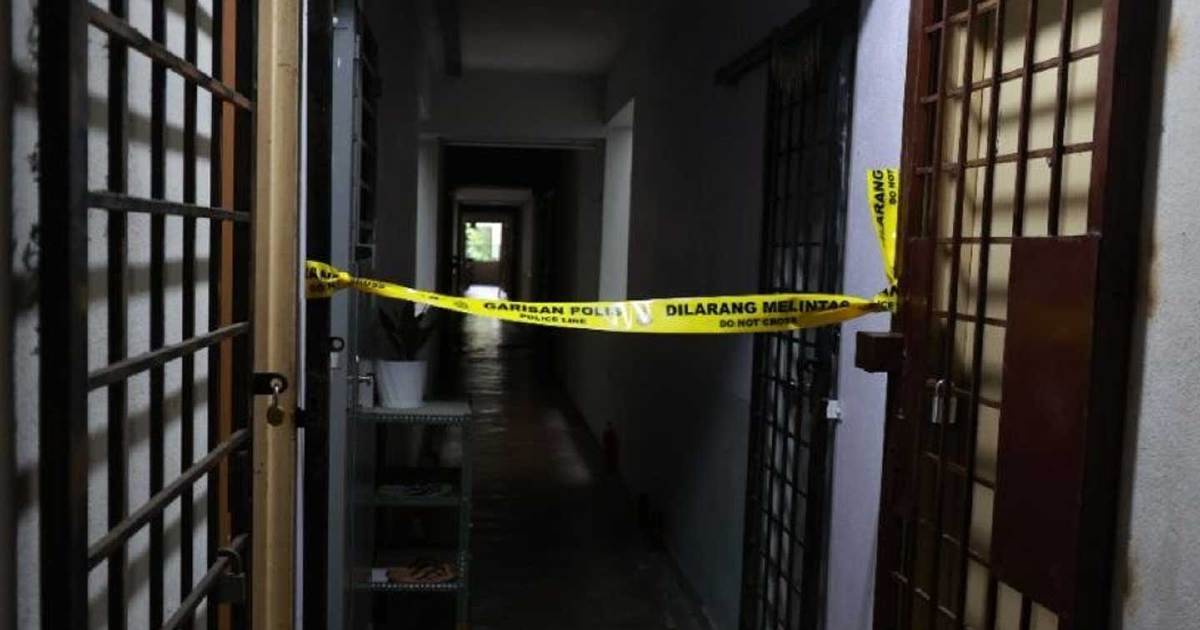
Murder investigators in Kajang have begun their probe into the death of a woman whose remains were discovered hidden inside luggage at a residential address in Taman Impian Indah. The grim discovery marks the beginning of what authorities are treating as a serious criminal matter, with initial inquiries pointing toward foul play. The circumstances under which the body was found—confined within luggage rather than discovered in a typical manner—has elevated the severity of the investigation and suggested a deliberate concealment attempt by whoever was responsible.
The Kajang police jurisdiction, which covers parts of Selangor, has mobilised investigative resources to establish the identity of the deceased and trace the events leading to her death. Such discoveries are relatively uncommon in the typically suburban setting of Taman Impian Indah, raising concerns among residents who may have been unaware of a criminal incident unfolding within their neighbourhood. The location of the residence where the luggage was found has become the focal point of the initial inquiry, with investigators expected to canvas the surrounding area for witnesses and relevant information.
The method of concealment suggests premeditation on the part of the perpetrator, whether the motivation stemmed from an attempt to evade detection, gain time before discovery, or transport remains to a remote location. Using luggage as a container indicates familiarity with the victim and access to the property, narrowing the initial pool of suspects to individuals with knowledge of the residence. Police investigators typically focus their early efforts on establishing connections between the victim and those who frequented the address, as well as documenting any signs of forced entry or struggle that might indicate the manner of death.
For residents of Kajang and the surrounding Selangor region, crimes of this nature invariably prompt heightened awareness of security measures and neighbourhood watch initiatives. The discovery occurs against a backdrop of ongoing concerns about personal safety in residential areas, where residents generally expect a degree of security from serious violent crimes. Investigations of this scale typically involve collaboration between Kajang police and the Selangor state criminal investigation division, pooling expertise and resources to advance the inquiry efficiently.
The identification process represents one of the critical early stages of the investigation. Without immediate knowledge of the victim's identity, investigators must rely on physical characteristics, personal effects found with the remains, and missing persons reports filed with authorities. Modern forensic techniques, including DNA analysis and dental records comparison, assist in establishing identity when conventional means prove insufficient. In Malaysia's investigative framework, such cases often require coordination with medical examiners to determine the cause and estimated timeframe of death.
Public appeals for information frequently accompany murder investigations of this profile. Residents who noticed unusual activity at the property—deliveries of large luggage, unfamiliar visitors, or distressed individuals—may possess information vital to the inquiry. Even seemingly insignificant details often prove crucial when investigators piece together the sequence of events leading to the death. Police typically emphasise that information can be provided anonymously through various channels, encouraging community cooperation without fear of identification.
The social fabric of suburban Kajang communities may be tested by such a discovery, particularly if the victim had connections within the neighbourhood. Concerns about stranger danger versus known-perpetrator violence will likely shape public discourse, though statistics demonstrate that many homicides involve individuals with established relationships to the victim. The investigation's trajectory will become clearer as police establish whether the death resulted from domestic violence, financial disputes, personal feuds, or other motivations.
From a forensic standpoint, the preservation of the crime scene and the condition of evidence in the luggage will heavily influence investigators' ability to reconstruct events. Environmental factors affecting the remains, the presence of biological or trace evidence, and any injuries sustained by the victim will all contribute to building a comprehensive understanding of what transpired. Investigators will likely examine the luggage itself for identifying marks, purchase records, or fingerprint evidence that might connect it to a suspect.
The broader context of crime in Selangor, Malaysia's most populous state, includes periodic serious incidents that capture public attention and raise questions about policing effectiveness and community safety. Individual cases of this nature occasionally become focal points for discussions about personal security, the treatment of women in society, and the adequacy of investigative resources. The manner in which police handle this inquiry—from initial evidence collection through eventual resolution—will influence public confidence in the criminal justice system's capacity to deliver accountability for such grave offences.

