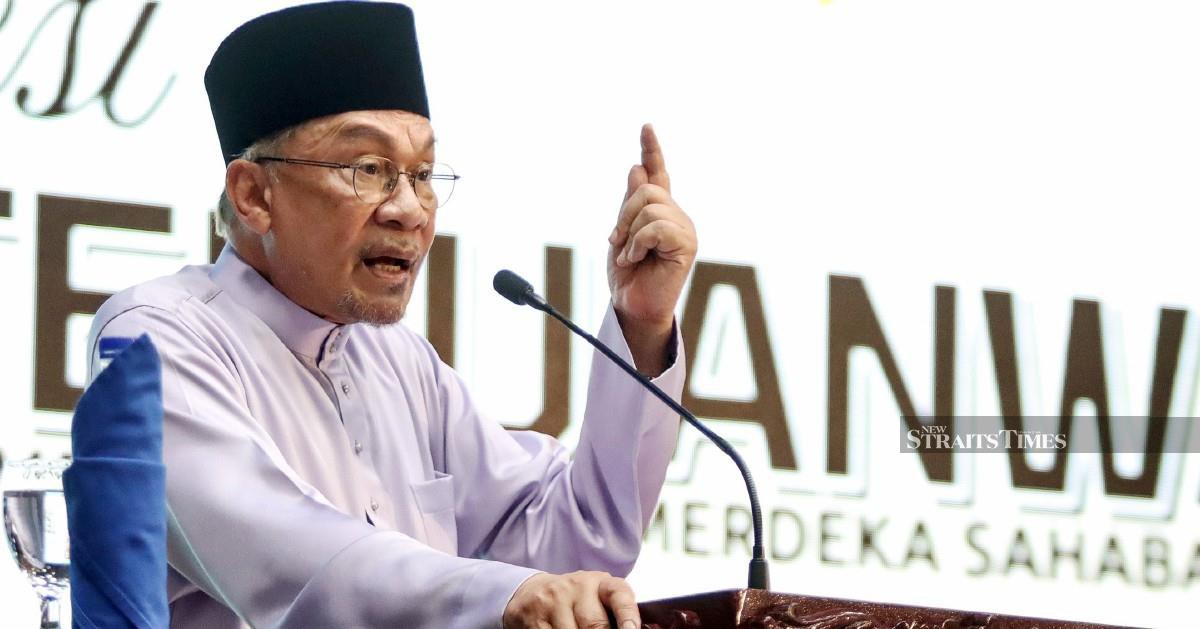
Prime Minister Datuk Seri Anwar Ibrahim has called on the Muslim community in Malaysia to serve as moral exemplars for society at large, emphasising that true religious commitment must be demonstrated through virtuous conduct, personal integrity, and unwavering opposition to corruption and unethical behaviour. Speaking at an event in Bukit Mertajam, Anwar underscored the significance of character-building as a foundational principle of Islamic teaching, asserting that believers bear a collective responsibility to uphold standards of honesty and diligence in their professional and personal endeavours.
The statement reflects a broader political emphasis within the current administration on linking religious identity with governance standards and public accountability. Anwar's message arrives at a critical juncture in Malaysia's ongoing efforts to rebuild institutional trust following years of high-profile corruption scandals that shook public confidence in government institutions and private sector conduct. By framing anti-corruption work as a religious imperative rather than merely a legal or administrative concern, the Prime Minister is attempting to mobilise moral authority within faith communities as a mechanism for systemic reform.
The significance of Anwar's remarks extends beyond symbolic messaging. Malaysia's multi-religious society places considerable weight on moral leadership from community representatives, making religious leaders and politically prominent Muslims influential voices in shaping public conduct and expectations. When senior national figures explicitly connect Islamic principles with transparent governance and ethical behaviour, the ripple effects permeate through families, workplaces, and civic institutions where everyday decisions about honesty and integrity are made.
Corruption has imposed substantial costs on Malaysia's development trajectory and regional competitiveness. The Southeast Asian nation has consistently ranked lower than several regional peers on transparency indices, constraining foreign investment and economic growth. Addressing corruption requires sustained effort across multiple fronts—institutional reform, law enforcement capacity, and crucially, cultural shifts in attitudes toward wrongdoing. Anwar's appeal to religious conscience taps into an underutilised lever for behavioural change that conventional anti-corruption enforcement alone cannot achieve.
The emphasis on diligence alongside integrity carries particular relevance for Malaysia's economic agenda. As the country seeks to elevate living standards and achieve developed-nation status, productivity and work quality directly influence competitiveness in high-value sectors. An appeal to Muslim Malaysians to exemplify diligence in their professional roles potentially strengthens workforce standards across industries, from manufacturing and services to technology and finance where Malaysia aims to consolidate advantages.
Anwar's message also speaks to intergenerational transmission of values. When public figures of his stature explicitly articulate expectations around moral conduct, young Muslims observing leadership behaviour receive powerful signals about what constitutes acceptable professional and social conduct. This is particularly consequential in a society where family and community structures remain influential in shaping individual choices and career trajectories.
The framing of Muslim leadership through moral example carries deeper implications for Malaysia's plural society. When religious communities are called upon to demonstrate ethical standards, it indirectly sets benchmarks against which all communities are measured. This can foster either virtuous competition in upholding public standards across faith communities, or conversely, perceived selective application of accountability standards if some groups are perceived as more rigorously monitored than others. Maintaining balance in these expectations remains critical for inter-communal cohesion.
Implementing cultural shifts toward integrity and against corruption requires sustained reinforcement beyond public statements. Educational curricula, institutional policies, workplace practices, and enforcement mechanisms must all align with the ethical standards that leaders articulate. The gap between rhetorical commitment and operational reality frequently undermines trust in leadership messages about integrity and character. Demonstrating concrete follow-through on anti-corruption principles strengthens the credibility of appeals to moral leadership.
For Malaysia's position within Southeast Asia, demonstrating progress on governance standards and corruption control carries strategic weight. Regional investors and trading partners increasingly factor governance quality into decision-making about where to allocate capital and establish operations. Mobilising religious communities as partners in advancing integrity standards could yield measurable improvements in institutional performance metrics that regional and international observers monitor closely.
Anwar's invocation of character, integrity, and diligence as core Islamic values reflects authentic theological grounding. Islamic jurisprudence and ethical teaching place substantial emphasis on honest dealing, trustworthiness, and fulfilling obligations conscientiously. By reconnecting governance reform explicitly to these traditional religious principles, the Prime Minister positions anti-corruption work not as external imposition but as organic expression of faith commitments.
Moving forward, the real test of this messaging lies in whether it catalyses sustained behavioural change within institutions and communities. Inspiring appeals to moral leadership prove effective only when paired with transparent systems, accountable institutions, and consistent consequences for those who breach public trust. The challenge facing Malaysia's leadership is translating this articulation of values into structural and cultural transformations that measurably strengthen governance quality and reduce corruption across sectors.

