The Mutiara Line Light Rail Transit project in Penang has progressed significantly, with Malaysia Rapid Transit Corporation Sdn Bhd announcing the award of a RM3.028 billion System Turnkey Contract to the Malaysian Resources Corporation Berhad and Theta Edge Berhad Joint Venture. This major procurement milestone positions the infrastructure initiative to advance both its technical development and physical construction phases concurrently, maintaining integration across the project's ambitious timeline.
Under the systems contract, MRCB-Theta Edge will oversee seven interconnected railway system packages essential to transforming Penang's urban mobility landscape. The scope encompasses electric train procurement and associated depot facilities, alongside sophisticated signalling infrastructure and automated platform gate systems that will facilitate seamless passenger movement. These components represent the technological backbone of the modern transit network envisioned for the island state.
Beyond rolling stock and safety systems, the contract extends to trackwork installation, conductor rail infrastructure, and maintenance vehicle provision—elements critical for sustained operational reliability. The power supply and distribution architecture will ensure consistent energy delivery throughout the network, underpinning daily service continuity. The inclusion of railway supervisory control and data acquisition systems, paired with computerised maintenance management platforms, demonstrates a commitment to operational efficiency that extends beyond initial commissioning into long-term asset stewardship.
Communications and fare collection technologies complete the package, reflecting the integrated digital approach that characterises contemporary transit infrastructure in the region. The automatic fare collection system will streamline passenger transactions while generating data valuable for operational planning and revenue optimisation. Meanwhile, telecommunications and information technology systems will enable real-time communication between control centres and operational teams, enhancing response capabilities during normal and emergency scenarios.
Simultaneously, the civil engineering programme continues gathering momentum along the Silicon Island to Komtar alignment. The Civil Main Contract 1 encompasses foundation work that has already advanced substantially, with 45 pile caps completed and 32 pier columns constructed. These substructure elements form the geological foundation upon which the entire elevated guideway will rest, requiring precision engineering to ensure structural integrity across Penang's varied terrain. Construction activities now span 14 of the planned 19 sections, indicating that parallel design-and-build methodologies are delivering tangible physical progress whilst detailed engineering specifications are finalised simultaneously.
The extension phase from Komtar towards Penang Sentral, designated as Civil Main Contract 2, remains in procurement phase with contract award anticipated in November 2026. This staged approach allows the initial segment to mature whilst the subsequent alignment undergoes thorough competitive tendering and evaluation. Such sequencing reduces delivery risk by establishing construction methodologies and supply chains on the initial contract before expanding operations to encompassing segments.
Local industry participation has emerged as a defining characteristic of the project's approach to economic benefits distribution. Bumiputera involvement under the CMC1 package has now exceeded 20 per cent of total contract value, translating into substantial commercial opportunities for Malaysian firms across construction, manufacturing, and services sectors. This commitment to domestic capability development aligns with broader federal policy objectives regarding shared prosperity and structural economic transformation, whilst simultaneously strengthening domestic supply chain resilience for major infrastructure ventures.
Land acquisition efforts have progressed substantially, with 93 per cent of required property now secured for the CMC1 alignment following coordinated action between federal authorities, the Penang State Government, and relevant agencies. This administrative achievement represents considerable negotiation and planning effort, particularly given the complexities of urban land transactions in established communities. Successful land clearance removes significant schedule risk and enables construction teams to focus resources on technical execution rather than administrative impediments.
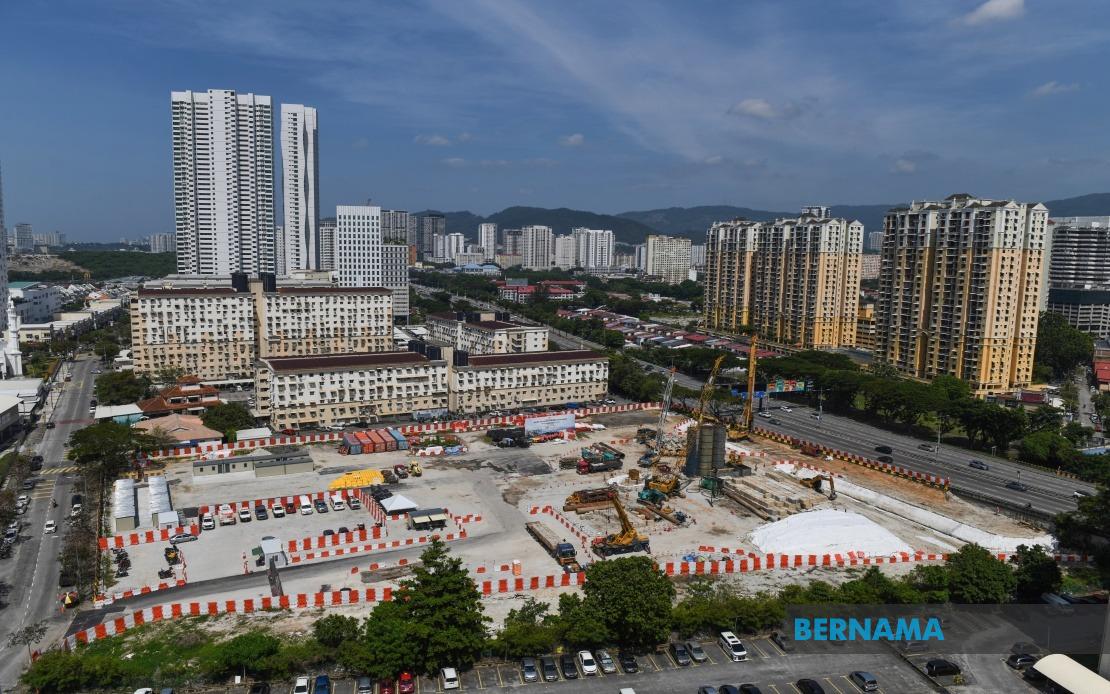
Depot facilities at Silicon Island constitute another critical workstream now advancing toward implementation. Soil investigation programmes have commenced to establish geotechnical parameters informing depot design and construction methodologies. The Penang State Government's handover of the Tapak Pesta site in April 2026 enabled MRT Corp to complete demolition of existing structures and undertake site preparation activities. This preparatory work removes temporal constraints, positioning the project to commence substantive depot construction imminently, which will ultimately provide maintenance, storage, and operational facilities for the fleet.
For Malaysian rail infrastructure development, the Mutiara Line represents a significant undertaking in expanding urban rapid transit capacity beyond the Klang Valley region. Penang's status as an economic engine and growing metropolitan centre justifies substantial investment in congestion-relieving transit infrastructure. The project's technical sophistication—particularly in systems integration and automated operations—demonstrates Malaysia's commitment to deploying contemporary technologies in regional contexts. Successful delivery will establish precedent for comparable urban rail initiatives elsewhere in Southeast Asia, potentially positioning Malaysian engineering firms and contractors for expanded regional opportunities.
The coordination demonstrated between federal, state, and statutory authorities throughout this project's development suggests institutional capacity for managing complex infrastructure delivery at the regional level. Future transportation infrastructure initiatives, whether in Johor, Selangor, or other growth centres, may benefit from methodologies and lessons emerging from Penang's experience. The emphasis upon phased delivery, local industry participation, and systems integration reflects evolving approaches to Malaysian infrastructure procurement that balance commercial efficiency with developmental objectives.

