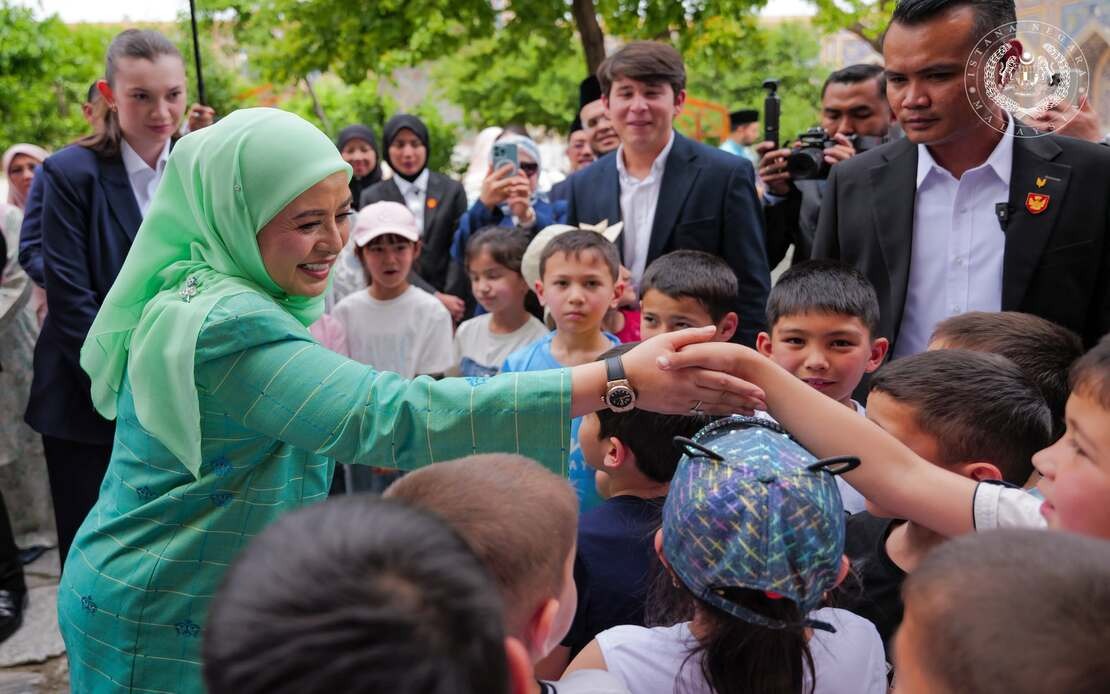
Her Majesty Raja Zarith Sofiah, Queen of Malaysia, has underscored the vital importance of mutual respect as one of the core values underpinning the nation's enduring social harmony and cohesion. Speaking through an official post on the Facebook page of Sultan Ibrahim Sultan Iskandar, the Queen highlighted how this principle has become deeply embedded in Malaysian culture and continues to strengthen both national unity and the collective well-being of the population.
The emphasis on mutual respect carries particular significance in a multicultural society such as Malaysia, where people of diverse religious, ethnic, and cultural backgrounds coexist. The Queen's remarks reflect a recognition that social stability and prosperity depend not merely on formal legal structures or economic policies, but fundamentally on the ethical conduct and considerate behaviour that citizens demonstrate towards one another in daily life. By elevating this concept to the national discourse, Her Majesty has reinforced its status as a shared value transcending sectional interests.
Central to the Queen's message was a call for greater courtesy and respect both within domestic spheres and in interactions with international visitors. She particularly addressed Muslim Malaysians, drawing upon Islamic scholarship to ground her appeal in religious tradition. By invoking the teachings of Prophet Muhammad as recorded in authentic hadith collections, the Queen demonstrated how universal principles of neighbourly conduct and hospitality find expression across Malaysia's faith communities and align with modern understandings of social responsibility.
The specific hadith cited—narrated by Abu Hurairah and documented in Al-Bukhari's collection—conveys three interconnected ethical imperatives: the duty not to inflict harm on one's neighbours, the obligation to honour guests and visitors, and the responsibility to speak beneficially or remain silent. These teachings resonate deeply within Islamic jurisprudence and ethics, yet their practical implications extend beyond any single religious tradition. The emphasis on refraining from harmful speech and action, coupled with an active commitment to treating others with dignity, creates a framework for peaceful coexistence applicable across diverse communities.
A significant aspect of Her Majesty's intervention lies in the illustrative example drawn from a February encounter at Istana Negara. During that occasion, the Queen engaged warmly with more than one hundred foreign tourists representing various nationalities and backgrounds. This interaction demonstrated in concrete form the values she was articulating—a gracious, welcoming demeanour towards visitors that reflects both personal courtesy and an institutional commitment to representing Malaysia positively on the world stage. Such moments of genuine human connection contribute substantially to how the nation is perceived internationally and influence the experiences and memories carried back by travellers to their home countries.
The Queen's emphasis on demonstrating concern and graciousness towards international visitors carries economic and diplomatic dimensions beyond its immediate humanitarian significance. Malaysia's tourism industry depends substantially on positive word-of-mouth recommendations and favourable impressions. When senior state figures model courteous behaviour and genuine interest in visitors' experiences, this sets a cultural tone that ripples through society and influences how ordinary citizens interact with foreign nationals. The underlying message conveys that hospitality and respect constitute not peripheral social niceties but central expressions of national identity and values.
In the context of contemporary Malaysian discourse, particularly amid occasional tensions arising from religious or communal sensitivities, the Queen's invocation of shared ethical principles takes on additional weight. By grounding her appeal in religious teachings respected across Malaysia's Muslim majority while simultaneously demonstrating inclusive behaviour towards international visitors of all backgrounds, Her Majesty has modelled how religious particularity and universal values of respect need not conflict. This approach acknowledges the diversity within the nation whilst affirming principles capable of uniting people across difference.
The timing and framing of these remarks reflect ongoing institutional efforts to reinforce social cohesion during a period when Malaysia faces various challenges—economic uncertainties, political transitions, and the lingering impacts of the pandemic on social relations. By articulating these foundational values through the ceremonial authority of the monarchy, the Queen has provided a focal point for national reflection on what binds Malaysians together despite their differences. Such leadership from the institution of the Yang di-Pertuan Agong carries particular resonance given the constitutional role of the monarchy in representing national unity.
For Malaysian readers and the broader Southeast Asian context, the Queen's message underscores a philosophy of social harmony grounded in reciprocal respect and ethical conduct rather than imposed conformity or hierarchical deference. This approach aligns with longstanding Malaysian and broader Asian traditions of consensus-building and maintaining group harmony through considerate interpersonal behaviour. At a time when social media amplifies divisive rhetoric and when competing narratives about national identity circulate widely, official articulation of shared values provides a counterweight and a reminder of principles capable of transcending sectional divisions.
The implications of emphasising mutual respect extend to practical governance and institutional practice. When leadership articulates these values publicly, it creates legitimate expectations that government agencies, service providers, and public institutions should embody these principles in their dealings with citizens and visitors. This establishes standards against which institutional performance can be evaluated and encourages a culture where respectful treatment of others becomes institutionalised rather than dependent on individual inclination or circumstance.
Ultimately, the Queen's intervention in this discourse affirms that Malaysia's greatest asset lies not in any single geographic or economic resource, but in the capacity of its diverse population to recognise their common humanity and treat one another with dignity. This philosophical emphasis on mutual respect as foundational to national well-being offers a constructive framework for addressing contemporary challenges and building a society where coexistence reflects genuine acceptance rather than mere tolerance.
%22%2F%3E%3C%2Fpattern%3E%3C%2Fdefs%3E%3Crect%20width%3D%22100%25%22%20height%3D%22100%25%22%20fill%3D%22url(%23ph5sogmg)%22%2F%3E%3Crect%20width%3D%22100%25%22%20height%3D%22100%25%22%20fill%3D%22url(%23ph5sogmp)%22%2F%3E%3Ctext%20x%3D%2250%25%22%20y%3D%2250%25%22%20text-anchor%3D%22middle%22%20dominant-baseline%3D%22central%22%20fill%3D%22rgba(255%2C255%2C255%2C0.95)%22%20font-family%3D%22Georgia%2C%20'Times%20New%20Roman'%2C%20serif%22%20font-weight%3D%22700%22%20font-size%3D%22320%22%20letter-spacing%3D%22-0.02em%22%3EUS%3C%2Ftext%3E%3C%2Fsvg%3E)
%22%2F%3E%3C%2Fpattern%3E%3C%2Fdefs%3E%3Crect%20width%3D%22100%25%22%20height%3D%22100%25%22%20fill%3D%22url(%23ph1yj1qg)%22%2F%3E%3Crect%20width%3D%22100%25%22%20height%3D%22100%25%22%20fill%3D%22url(%23ph1yj1qp)%22%2F%3E%3Ctext%20x%3D%2250%25%22%20y%3D%2250%25%22%20text-anchor%3D%22middle%22%20dominant-baseline%3D%22central%22%20fill%3D%22rgba(255%2C255%2C255%2C0.95)%22%20font-family%3D%22Georgia%2C%20'Times%20New%20Roman'%2C%20serif%22%20font-weight%3D%22700%22%20font-size%3D%22320%22%20letter-spacing%3D%22-0.02em%22%3EPAS%3C%2Ftext%3E%3C%2Fsvg%3E)
%22%2F%3E%3C%2Fpattern%3E%3C%2Fdefs%3E%3Crect%20width%3D%22100%25%22%20height%3D%22100%25%22%20fill%3D%22url(%23ph3uy27g)%22%2F%3E%3Crect%20width%3D%22100%25%22%20height%3D%22100%25%22%20fill%3D%22url(%23ph3uy27p)%22%2F%3E%3Ctext%20x%3D%2250%25%22%20y%3D%2250%25%22%20text-anchor%3D%22middle%22%20dominant-baseline%3D%22central%22%20fill%3D%22rgba(255%2C255%2C255%2C0.95)%22%20font-family%3D%22Georgia%2C%20'Times%20New%20Roman'%2C%20serif%22%20font-weight%3D%22700%22%20font-size%3D%22151%22%20letter-spacing%3D%22-0.02em%22%3EPerikatan%3C%2Ftext%3E%3C%2Fsvg%3E)