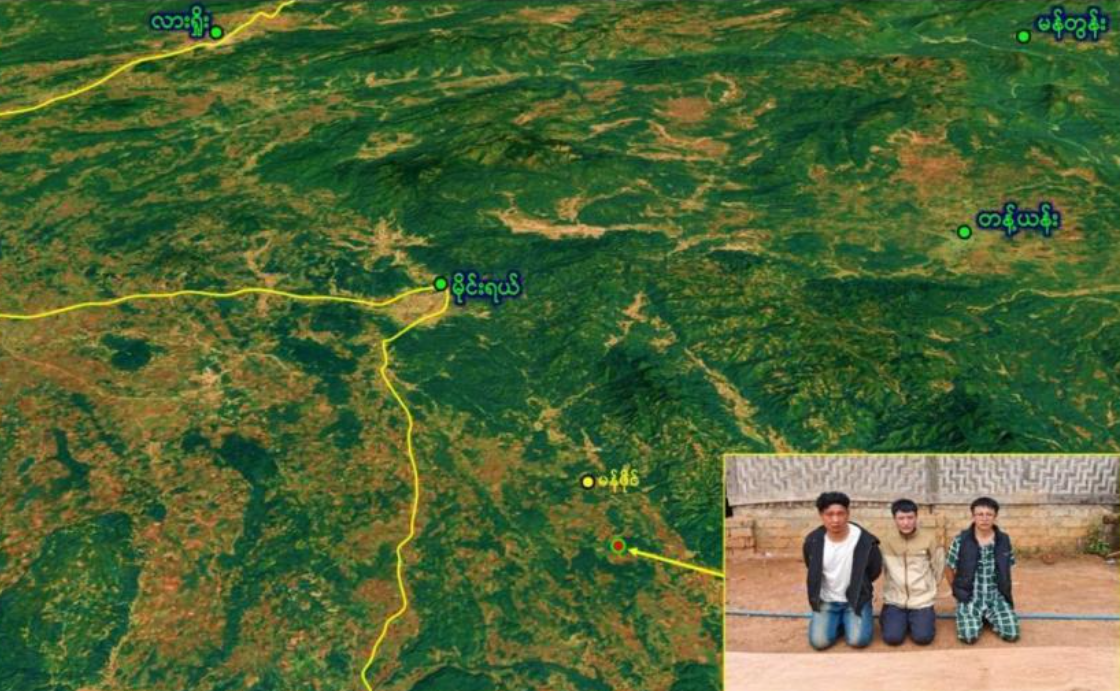
Myanmar's security forces have arrested three Chinese nationals suspected of running an online scam gambling operation in Mongyai Township, northern Shan State, marking another significant development in the country's escalating crackdown on cross-border cybercrime. The August 26 operation, which took place approximately 26 kilometers southeast of Mongyai township and near Manphai Village, resulted in the seizure of substantial equipment and infrastructure used to facilitate the illicit enterprise. The detainees are believed to have illegally crossed Myanmar's porous northern border, establishing temporary bases to conduct their fraudulent activities targeting victims across the region.
The operation underscores Myanmar's growing commitment to dismantling sophisticated online scam networks that have proliferated across Southeast Asia. What distinguishes this latest case is the substantial operational footprint uncovered by authorities—a far cry from small-scale criminal enterprises. Investigators discovered a primary corrugated iron-roofed structure measuring 50 by 20 feet alongside five temporary tarpaulin shelters of varying dimensions, indicating a well-organised setup designed for sustained operations. The sheer scale of the infrastructure suggests these suspects were not opportunistic criminals but rather part of a coordinated network with resources and planning capabilities.
The equipment seized during the raid reveals the technological sophistication increasingly employed by transnational cybercrime syndicates. Security personnel confiscated 25 mobile phones, five all-in-one computers, two power stations, one Starlink satellite internet device, and ten communication radios. The inclusion of Starlink technology is particularly noteworthy, as it provides reliable high-speed internet connectivity independent of local telecommunications infrastructure—a critical advantage when operating in remote border areas where traditional broadband coverage is limited. This technological infrastructure enables scammers to maintain constant contact with victims and accomplices across multiple jurisdictions simultaneously.
Myanmar's border regions, particularly Shan State, have increasingly become havens for transnational cybercrime operations. The porous nature of Myanmar's borders, combined with weak enforcement mechanisms in some areas and the country's ongoing security challenges, creates an environment where foreign criminal syndicates can establish operations with relative ease. Chinese nationals have reportedly dominated many of these ventures, exploiting linguistic advantages when targeting Chinese-speaking victims throughout Southeast Asia. The concentration of such operations in border areas reflects a deliberate strategy—these locations offer proximity to escape routes back across international boundaries while remaining beyond the immediate reach of more heavily monitored urban centres.
The intelligence that enabled this operation originated from local residents who reported suspicious activities in the area, highlighting the importance of community engagement in combating cybercrime. This grassroots intelligence gathering has become a cornerstone of Myanmar's enforcement strategy, particularly in remote regions where formal surveillance infrastructure remains limited. Once authorities received these reports, security personnel conducted thorough investigations and subsequently executed the security operation that led to the arrests. This bottom-up approach to intelligence collection, combined with military-led enforcement operations, represents Myanmar's attempt to systematically dismantle these networks rather than pursue isolated arrests.
Myanmar's government has positioned online scam gambling suppression as a national-level priority, signalling political will at the highest levels to address the problem. This comprehensive approach extends beyond border areas to target operators and facilitators within Myanmar itself, recognising that these criminal enterprises often maintain domestic components even when targeting international victims. The national campaign reflects growing regional concern about cybercrime's expansion, as Southeast Asian countries grapple with criminal networks that routinely operate across multiple jurisdictions and exploit the regulatory gaps between nations. For Malaysia and other regional economies, these developments are significant because many of the victims targeted by these syndicates are regional citizens and residents.
The seized suspects face prosecution under existing Myanmar laws following the completion of interrogation and formal investigations. While specific charges have not been detailed, they will likely include immigration violations related to illegal border crossing, operating unlicensed gambling facilities, and conducting fraudulent online transactions. The legal framework governing these offences in Myanmar has evolved to address contemporary cybercrime challenges, though observers note that prosecutorial capacity and sentencing guidelines have struggled to keep pace with the sophistication of modern criminal operations.
Authorities have committed to systematic dismantling of illegally constructed residential and operational shelters throughout affected areas, signalling an intent to eliminate physical infrastructure that enables these enterprises. This destruction of facilities represents both a practical denial of resources and a symbolic assertion of state control over border regions. The broader elimination campaign aims not merely to disrupt individual operations but to make the establishment of such facilities sufficiently difficult and risky to discourage future ventures. This approach recognises that determined criminal enterprises will always attempt to establish new operations, so the goal becomes raising the costs and risks to unacceptable levels.
For Malaysian readers and policymakers, this case illustrates the transnational nature of modern cybercrime and the necessity for enhanced regional cooperation in law enforcement. The sophistication of equipment discovered—particularly the Starlink connectivity—demonstrates that these operations command substantial capital and technical expertise. Many victims of such scams are Malaysians, making progress by neighbouring authorities directly relevant to domestic security concerns. The case also highlights why Malaysia itself must maintain vigilance regarding similar operations that might be establishing footholds within its own borders, particularly in areas with significant immigrant populations where criminal syndicates might exploit labour and communication networks.

