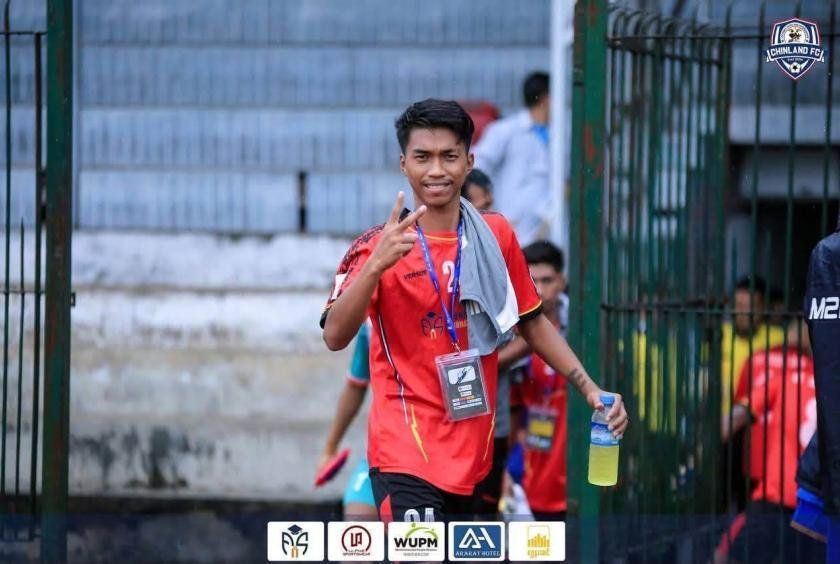
Chinland FC resolved a week-long search for missing player Pa Lung when the athlete was located safely on August 29, prompting immediate relief across Myanmar's football community. The club's announcement, shared through its official Facebook channel, confirmed that Pa Lung had returned to rejoin the squad after an unexplained absence that had triggered widespread concern among supporters, teammates, and family members throughout the region.
The circumstances surrounding Pa Lung's disappearance were more straightforward than initial fears might have suggested. According to the club's statement, the player had no choice but to leave his training commitments abruptly when his mother's health deteriorated critically. Facing what the club described as a serious medical emergency, Pa Lung made the immediate decision to return to his hometown without the luxury of notifying his club or coaching staff beforehand, a choice that any athlete in similar circumstances would likely have faced with equal urgency.
The communication breakdown that followed proved more troublesome than his initial departure. During his journey home, Pa Lung's mobile phone battery became depleted, leaving him unable to contact Chinland FC or update those searching for him. Compounding this technical setback, he encountered additional communication difficulties once he reached his destination, creating a period of complete silence that extended his contact blackout and intensified worries among those invested in his welfare.
Institutional responses to the disappearance demonstrated the seriousness with which Myanmar's football authorities and law enforcement treated the case. After establishing that Pa Lung could not be reached despite concerted efforts, Chinland FC escalated matters by filing an official missing-person report with the appropriate police station. Club officials simultaneously launched their own independent search operation, dedicating five days of intensive effort to locate the player while hoping for news that might ease mounting tensions.
When those initial search efforts yielded no results, Chinland FC made the difficult decision to seek public assistance. The club issued a formal appeal through media channels, requesting that anyone with information about Pa Lung's whereabouts come forward to help resolve the situation. This public plea reflected the genuine anxiety that had built up within the organization and extended throughout Myanmar's sporting circles, where the sudden unexplained absence of a young athlete naturally triggers worst-case scenario thinking.
The resolution brought substantial emotional relief to all quarters once communication channels reopened and Pa Lung's location became confirmed. The club's statement emphasised the safe nature of his return and assured everyone from family members to distant supporters that their concerns, though warranted, had ultimately been addressed positively. This reassurance proved particularly important given the potential for serious outcomes when athletes vanish unexpectedly in any region.
Chinland FC's response highlighted the interconnected nature of Myanmar's sporting infrastructure and civil institutions. The club publicly acknowledged contributions from the Myanmar Football Federation and Myanmar National League, underscoring how football's governing bodies mobilised resources to assist in the search. This collaborative approach also extended to law enforcement, with the Myanmar Police Force actively engaged throughout the operation, alongside support from various government authorities and media organizations that amplified the search appeal.
The incident raises broader questions about athlete welfare and communication protocols within Myanmar's football system. The ease with which a player could lose contact with his club for an extended period suggests potential gaps in emergency communication frameworks. While family emergencies of this nature will always require flexibility and understanding, the episode demonstrates value in establishing clearer procedures that balance players' personal crises with organisational oversight, ensuring that urgent departures do not create unnecessary anxiety or administrative confusion.
For Southeast Asian football more broadly, the Pa Lung case underscores the human dimensions that underpin professional sport in the region. Athletes operate within complex personal and family circumstances that sometimes demand immediate responses, and governing bodies must develop systems recognising these realities while maintaining appropriate oversight. Myanmar's football community's coordinated response, from local club officials to national federation leadership, provides a model for how organisations can respond compassionately to unexpected situations while maintaining structural integrity.

