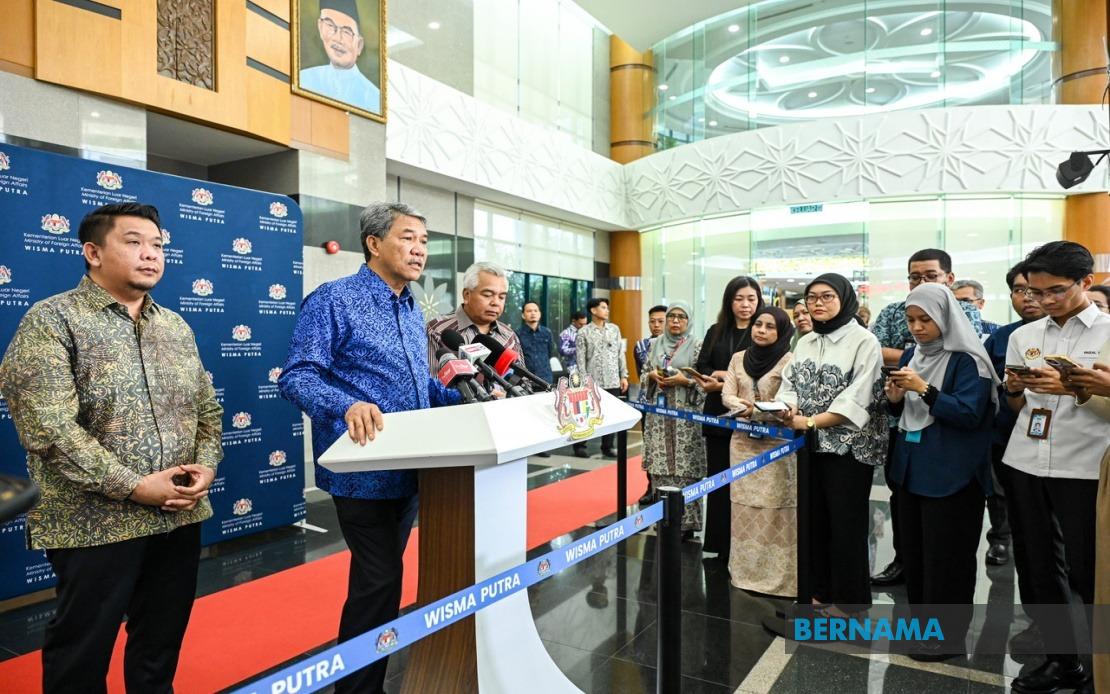
Malaysia's Foreign Minister Datuk Seri Mohamad Hasan confirmed on Monday that Myanmar has expressed willingness to repatriate approximately 5,000 of its nationals currently sheltering in Malaysia through maritime transport, marking a potential breakthrough in addressing the protracted refugee situation in Southeast Asia. The declaration came following discussions with Myanmar's newly appointed Foreign Minister Tin Maung Swe and represents a significant development in bilateral negotiations over the return of displaced persons. However, Mohamad emphasised that any repatriation operation must prioritise the welfare and security of the individuals involved, indicating that the Malaysian government will not proceed hastily despite diplomatic momentum.
The identification and documentation of all 5,000 individuals targeted for repatriation has already been completed by Malaysian authorities, establishing the administrative foundation for potential movement. Though Mohamad did not articulate a specific timeline for initiating the maritime operation, he indicated that accelerating the process remains a priority for both governments. The use of ships as the designated transport method suggests coordination on logistics and reflects both nations' recognition that a managed, organised return would be more orderly than unstructured movements. This methodical approach contrasts with the chaotic nature of much irregular migration in the region and demonstrates institutional capacity for handling sensitive humanitarian operations.
Crucially, Mohamad spotlighted a dimension of Myanmar's displacement crisis often overshadowed in international discourse. The refugee population in Malaysia extends well beyond the Rohingya community, encompassing members of numerous ethnic minorities including the Chin and Karen peoples, each with distinct historical grievances and vulnerability profiles. This broader perspective reflects the complex ethnic and political fractures within Myanmar itself, where decades of conflict have displaced multiple populations fleeing persecution, violence, and economic marginalisation. By framing the issue expansively rather than narrowly, Malaysia signals sophisticated diplomatic engagement that acknowledges the multifaceted nature of Myanmar's humanitarian challenges.
The broader ASEAN community views Myanmar's refugee outflows as a collective concern demanding unified regional action rather than bilateral arrangements in isolation. Myanmar's displacement crisis inevitably affects neighbouring member states through secondary migration, strain on resources, and security implications. Mohamad's remarks underscored ASEAN's commitment to coordinating responses and preventing individual nations from bearing disproportionate burdens. This regional solidarity, while sometimes challenged by geopolitical differences among member states, reflects acknowledgement that Myanmar's instability produces transnational consequences requiring collaborative solutions.
Central to ASEAN's approach toward Myanmar remains the Five-Point Consensus, a framework established by regional leaders to guide diplomatic engagement with Naypyidaw. Mohamad reaffirmed the bloc's determination to maintain this accord as the cornerstone of its Myanmar strategy, emphasising that any substantive modifications must return to the negotiating table for discussion and approval by all ASEAN leaders. This insistence reflects the delicate consensus upon which ASEAN operates and the desire to prevent unilateral actions that could fracture the association's unified front. The reference to Myanmar's prior acceptance of the Five-Point Consensus carries implicit pressure, reminding Naypyidaw of commitments made at the highest political level.
The refugee repatriation initiative, if successfully implemented, would constitute tangible progress on one of the Five-Point Consensus's core objectives: facilitating the return of displaced persons to Myanmar. Such movement would reduce Malaysia's hosting burden while creating space for verifying conditions within Myanmar and assessing whether returnees face continued persecution. The operation's success or failure will significantly influence future repatriation discussions and shape perceptions of Myanmar's commitment to addressing displacement. Maritime transport also provides built-in safeguards and documentation procedures compared to land-based returns, potentially reducing trafficking risks and ensuring international observers can monitor the process.
Malaysia's position as a primary host nation for Myanmar refugees gives it substantial leverage in these negotiations, though Mohamad's emphasis on safety considerations indicates awareness that humanitarian imperatives must supersede political expedience. The country shelters one of the world's largest populations of undocumented Myanmar nationals, straining social services, employment markets, and security infrastructure. However, managing this presence through principled repatriation rather than forced returns preserves Malaysia's international standing and protects vulnerable populations from harm. This balancing act—between national interest and humanitarian responsibility—characterises Malaysia's approach throughout the discussion.
The involvement of Myanmar's new Foreign Minister Tin Maung Swe in these negotiations suggests potential shifts in diplomatic engagement following recent political transitions within Myanmar. Fresh ministerial teams sometimes bring modified approaches to entrenched problems, and early signals of cooperation on refugee repatriation could presage broader normalisation of ASEAN-Myanmar relations. Conversely, rhetorical commitments often precede disappointing implementation, and the actual timeline and conditions for returning refugees remain uncertain. Malaysia's insistence on expediting the process while maintaining safety standards represents a prudent position acknowledging both urgency and complexity.
The repatriation framework also encompasses critical questions about returnees' legal status, property restoration, and protection against persecution upon arrival in Myanmar. Myanmar's ongoing political instability, despite any diplomatic normalisation, means many refugees remain justifiably concerned about conditions awaiting them. Malaysia must verify that repatriation occurs voluntarily and that adequate security measures protect returnees from vulnerability. International humanitarian organisations will likely scrutinise the operation to ensure compliance with refugee protection standards and non-refoulement principles. These oversight mechanisms, while potentially complicating logistics, serve essential safeguarding functions that Malaysian authorities have indicated they respect.
Moving forward, the technical implementation of maritime repatriation will test both Malaysia's and Myanmar's institutional capacities and political will. Coordination involving maritime authorities, border officials, health screening, documentation verification, and reception arrangements in Myanmar must function seamlessly for the operation to succeed. The 5,000-person scope, while manageable, involves sufficient scale to reveal any systemic deficiencies. Beyond this specific cohort, successful repatriation could establish precedents and mechanisms for larger future movements, potentially addressing Malaysia's longstanding refugee challenge through managed, orderly processes rather than perpetual containment.

