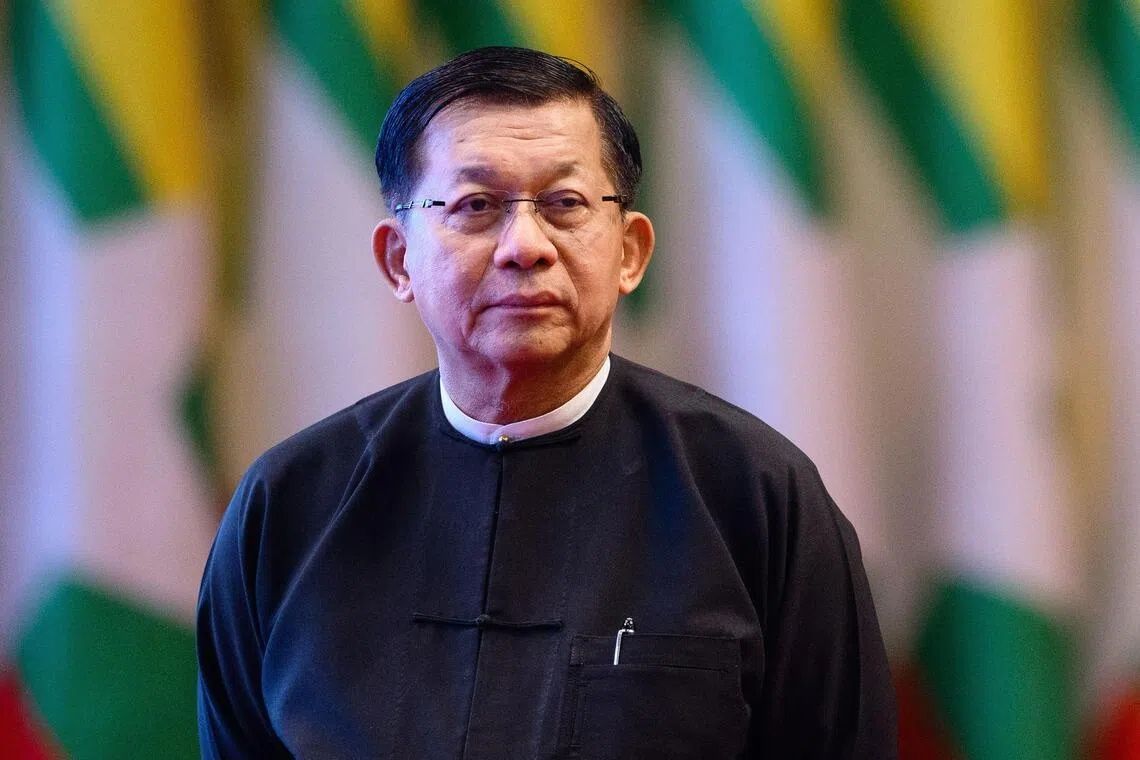
Myanmar's former military ruler Min Aung Hlaing touched down in Thailand on Thursday for what marks his inaugural diplomatic visit to the kingdom since trading his general's uniform for civilian dress. The trip underscores an ambitious campaign to position Myanmar as a responsible actor worthy of restoration within the Association of Southeast Asian Nations, an organisation that has kept his government at arm's length since he orchestrated the 2021 coup that upended democratic governance and plunged the nation into bloodshed.
The consequences of Min Aung Hlaing's seizure of power three years ago have been catastrophic by any measure. The overthrow of Aung San Suu Kyi and her elected government triggered a multi-sided civil conflict that has claimed more than 100,000 lives across all factions. Armed resistance movements have proliferated across the country, creating a fractured battlefield where the military confronts numerous rebel organisations simultaneously. This ongoing instability has transformed Myanmar into a failed state struggling with governance, humanitarian crisis, and lawlessness in vast stretches of territory.
What makes Min Aung Hlaing's current positioning particularly striking is the theatrical nature of his transformation. He underwent an orchestrated transition to civilian authority in April when he was installed as president following elections that international observers and Western governments unanimously characterised as deeply fraudulent. These stage-managed polls were widely understood as a cosmetic exercise designed to legitimise military rule under a civilian veneer, essentially repackaging authoritarian control without substantive reform. Yet this thin veneer of civilian credentials is precisely what has enabled his diplomatic rehabilitation tour across the region.
Thailand has emerged as the unlikely architect of Myanmar's rehabilitation strategy within Asean. Bangkok has spearheaded bilateral efforts alongside regional initiatives aimed at normalising Myanmar's status, recognising that the country's isolation serves nobody's interests, least of all Thailand's own. The kingdom has both pragmatic concerns and strategic calculations driving this approach. Thailand shares a lengthy and porous border with Myanmar through which conflict has repeatedly spilled, whilst simultaneously hosting millions of Rohingya and other Myanmar refugees straining Thai resources and creating social tensions.
Min Aung Hlaing's current diplomatic sojourn represents a carefully choreographed escalation of engagement. Beyond Thailand, he has already visited India, cultivated Myanmar's long-standing partnership with China, and journeyed to Laos within Asean's membership. These moves signal a patient strategy to rebuild international respectability through selective engagement with sympathetic capitals. The visits serve dual purposes: they demonstrate to his domestic audience that Myanmar remains a player on the regional stage, whilst signalling to Asean that the junta's civilian facade deserves recognition and inclusion.
Yet Myanmar's position within the bloc remains deeply complicated. Asean has excluded Min Aung Hlaing's government from high-level ministerial summits and key decision-making forums since the coup, though the blockade has begun showing cracks. Myanmar's foreign minister attended an informal gathering of regional counterparts in Thailand last month, a thaw suggesting that complete ostracisation may not be sustainable indefinitely. Thailand appears committed to testing whether pragmatic engagement can succeed where isolation has failed, though such an approach carries significant reputational risks.
The tensions underlying Myanmar's Asean aspirations run far deeper than diplomatic protocol. Min Aung Hlaing consistently refuses to endorse Asean's so-called five-point consensus, a framework that purports to resolve the crisis through dialogue engaging all stakeholders including opposition forces. Analysts observe a profound paradox: the Myanmar military leader wants to project an image of responsible regional citizenship whilst simultaneously rejecting the bloc's core mechanism for conflict resolution. This contradiction exemplifies what observers describe as zero-sum thinking incompatible with Asean's consensus-based diplomacy, yet it apparently hasn't deterred Thailand from pressing ahead with normalisation.
Thailand's motivations for hosting this visit extend well beyond abstract diplomatic niceties. Thailand faces concrete cross-border security challenges emanating from Myanmar's lawless eastern regions. Cyberscam networks operating from Myanmar's shadowy borderlands have targeted Thailand, whilst drug trafficking from opium-producing areas continues flooding Thai communities. Thailand's Foreign Minister Sihasak Phuangketkeow explicitly signalled that combating these networks would feature prominently in discussions with Min Aung Hlaing, suggesting that bilateral engagement serves as leverage on immediate security concerns affecting Thai citizens directly.
The reception being afforded Min Aung Hlaing in Bangkok carries deliberate symbolic weight. He is scheduled to be formally received with full ceremonial honours at Government House, followed by bilateral meetings with Prime Minister Anutin Charnvirakul. The visit includes a business forum and state dinner, with both sides expected to formalise a memorandum of understanding on labour cooperation. This pageantry of normalcy represents exactly the kind of international legitimacy that Min Aung Hlaing desperately seeks to consolidate his domestic position and signal to Myanmar's fractured society that international rehabilitation is underway.
However, this diplomatic warming has triggered fierce criticism from human rights advocates and campaign groups. Justice For Myanmar and international organisations have condemned Thailand's willingness to provide what they view as undeserved legitimacy to a leader credibly accused of serious international crimes. Min Aung Hlaing faces International Criminal Court allegations for crimes against humanity, whilst Western sanctions remain in place precisely because of documented atrocities and systematic abuses perpetrated under military rule. From this perspective, Thailand's red carpet treatment effectively rewards bloodshed and suppresses accountability, setting a dangerous precedent that military coups followed by staged elections can ultimately be whitewashed through patient regional diplomacy.
For Southeast Asia more broadly, Myanmar's reintegration represents a test of whether the region prioritises pragmatism over principle. Myanmar's strategic location, resource wealth, and demographic significance mean that permanent isolation appears impractical, yet premature rehabilitation risks validating the model that democratic backsliding can be overcome through calculated diplomacy alone. Thailand's gamble on engaging Min Aung Hlaing assumes that normalised relations and economic interdependence might eventually encourage more constructive behaviour, but this optimistic calculus must contend with a leader who has shown zero inclination toward genuine compromise with opposition forces or international accountability mechanisms.
Meanwhile, Aung San Suu Kyi's situation underscores the human cost of Myanmar's continuing instability. The deposed civilian leader remains under house arrest, her freedoms severely circumscribed, though she was permitted a meeting with International Committee of the Red Cross representatives on Monday—her first publicised contact with a foreign official since her ouster. This carefully managed gesture appears designed to soften Myanmar's international image ahead of Min Aung Hlaing's visit, suggesting that even modest humanitarian concessions are being calibrated to support the diplomatic rehabilitation campaign.
As Min Aung Hlaing departs Bangkok bearing whatever commitments have been sealed during his visit, the fundamental question remains unresolved: whether genuine reconciliation and stability can emerge from reintegration of a military junta that refuses to acknowledge wrongdoing or pursue dialogue with its opponents. Thailand's faith in engagement may ultimately prove vindicated if it gradually channels Myanmar toward more responsible regional behaviour, or it may simply provide a more respectable facade for continued authoritarian rule. For Malaysia and other Asean members watching from the sidelines, Myanmar's trajectory will profoundly shape the bloc's credibility as an organisation capable of upholding principles whilst managing strategic realities.

