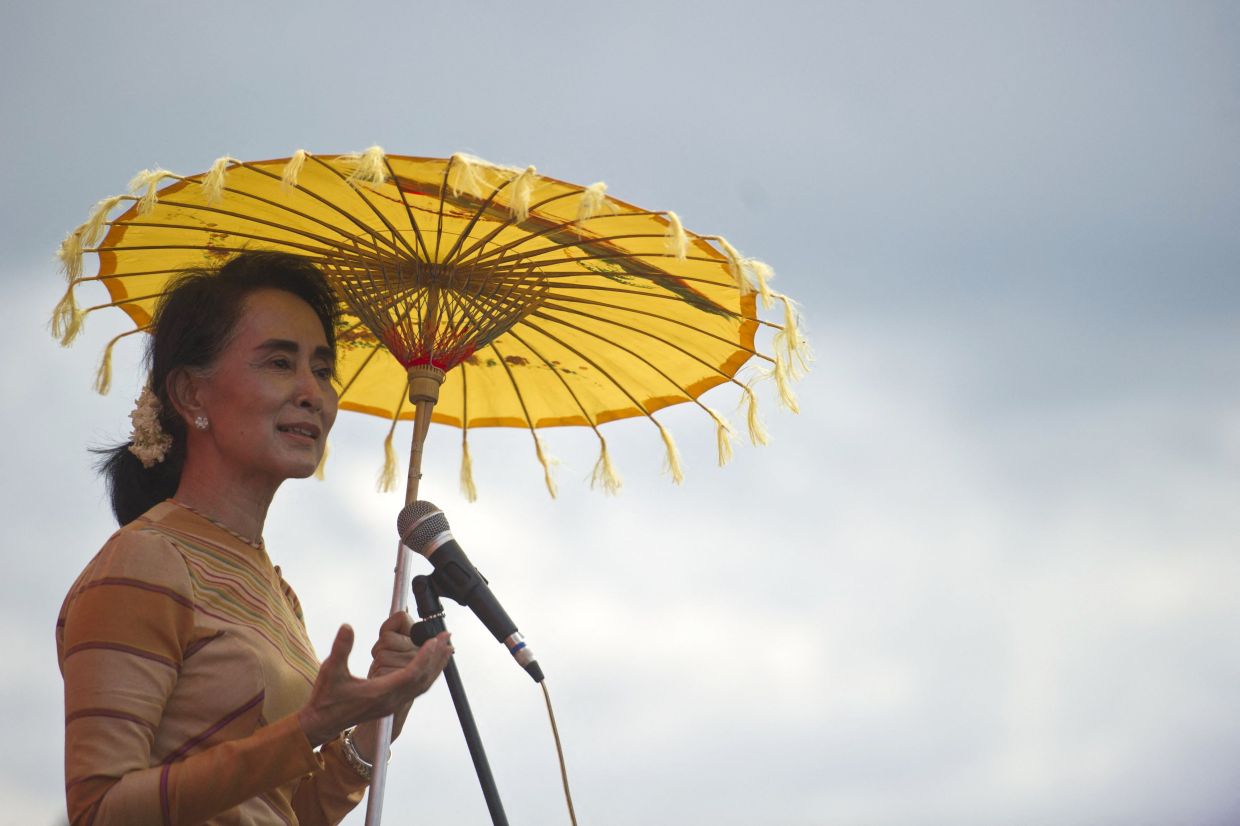
The Myanmar military regime's refusal to allow Asean representatives to visit Aung San Suu Kyi on her 81st birthday this year underscores a sobering reality: the regional organisation faces a credibility crisis that extends far beyond the suffering of one political prisoner. When the Philippines' Foreign Secretary Maria Theresa Lazaro, acting in her capacity as Asean chair, was again rebuffed in late June—with the regime's spokesperson Khaing Khaing Soe flatly declaring that Suu Kyi "is not allowed to meet with international representatives" because she is serving a sentence—the moment crystallised a larger strategic problem for the ten-nation grouping. The junta's casual dismissal signals a conviction that Asean lacks meaningful enforcement mechanisms and that the bloc's consensus-based diplomacy can be safely ignored by a determined autocrat.
The pattern of access granted and denied reveals the regime's calculation about international relationships with surgical precision. Only two foreign officials have secured meetings with Suu Kyi since her imprisonment began following the 2021 coup: former Thai Foreign Minister Don Pramudwinai, who visited in July 2023, and Chinese Foreign Minister Wang Yi, who met her during his April visit this year. This asymmetry is not accidental. It demonstrates that Min Aung Hlaing, who consolidated power by stepping down as military chief to assume the presidency in April after orchestrating a widely discredited election, views China and Thailand as his genuine strategic partners. Asean as a collective body, by contrast, he treats as an irritant without teeth—an organisation that can issue statements and peace plans but cannot compel compliance from a member state armed with nationalist rhetoric and regional indispensability.
Analysts interpret the blockade as deliberate signalling. Hunter Marston of the Lowy Institute observed that the regime's posture reflects a fundamental asymmetry: "Asean needs Myanmar more than Min Aung Hlaing deems Myanmar needs Asean." This calculation rests on Myanmar's geographic centrality, its role as a corridor between South and Southeast Asia, and its potential resource wealth. The junta believes these factors insulate it from the kind of sustained pressure that might have worked against a smaller, more peripheral state. By controlling access to Suu Kyi, the regime simultaneously reasserts its monopoly on Myanmar's political narrative and reminds Asean that it cannot dictate Myanmar's internal affairs without consequences.
Suu Kyi's predicament has grown progressively more severe. Originally sentenced to 33 years after her 2021 arrest, she has received several sentence reductions that have left her with approximately 18 years remaining. The charges against her—violations of Myanmar's official secrets act and corruption allegations—are widely regarded by international observers as politically fabricated. More troubling still, independent monitoring has become almost impossible. Reports in April suggested she had been placed under house arrest, and since then, she has not been observed or heard from by any independent source. Her son, Kim Aris, aged 48, has not been permitted contact with his mother for five years, despite repeated requests and the regime's assurances that she enjoys "good health."
The regime's intransigence must be understood in the context of Asean's failed peace initiative. Weeks after the coup, the bloc endorsed the Five-Point Consensus, a framework calling for an end to violence, humanitarian access, dialogue among Myanmar stakeholders, and crucially, permission for Asean's special envoy to meet all relevant parties. The enlistment of Suu Kyi in that process was not peripheral; her voice as Myanmar's deposed civilian leader would have lent weight to any negotiated settlement. By keeping her incommunicado and denying access, the regime simultaneously undermines Asean's peace architecture and sends a message that it will determine Myanmar's future unilaterally. The human cost of this standoff has been staggering: at least 100,000 people have died since the coup according to Armed Conflict Location & Event Data, an independent conflict monitor, yet the regime has shown no commitment to meaningful de-escalation.
Asean's predicament reflects a deeper structural vulnerability in the bloc's operating principles. The organisation has imposed a ban on Min Aung Hlaing attending leaders' summits, conditioning his return on compliance with the peace plan. Yet this measure has proven toothless. Min Aung Hlaing appears unmoved by the prospect of reintegration, and his regime has begun articulating a coherent counterargument to Asean pressure. Analysts note that from Naypyitaw's perspective, the bloc selectively enforces accountability: it has been conspicuously silent on territorial disputes between Thailand and Cambodia, raising the question of why Myanmar should be uniquely burdened with compliance demands. This rhetorical strategy serves the junta well, allowing it to frame Asean's pressure as interference masked in diplomatic language.
Phyo Win Latt, an independent historian of Myanmar, argues that the regime's refusal of Asean access goes to the heart of Myanmar's post-coup political settlement. By keeping Suu Kyi isolated, the junta "rejects the implication that Asean has some legitimate supervisory role over Myanmar's internal political settlement." The regime, he explains, "wants Asean recognition, but not Asean scrutiny." This distinction captures the fundamental tension: the military government seeks to restore its international standing and its seat at the Asean table, but only on terms that preserve its absolute dominion over Myanmar's domestic politics. A visit to Suu Kyi by Asean representatives would concede precisely what Min Aung Hlaing refuses to grant—that external actors have a legitimate stake in monitoring Myanmar's adherence to democratic norms and political pluralism.
The broader implications for Southeast Asia are troubling. Asean's founding principle of non-interference has become a liability in an era when one member state is experiencing mass atrocities and systematic political repression. The bloc has been unwilling to suspend Myanmar's membership or impose sanctions, instead relying on dialogue and consensus-building that the junta clearly perceives as weak. This approach has produced an unhappy equilibrium: Myanmar remains nominally within Asean's fold but is free to ignore the bloc's collective will, while Asean is denied even the symbolic victories that might validate its engagement strategy. Suu Kyi's continued isolation has become emblematic of Asean's larger paralysis in responding to systemic challenges within its own membership.
For neighbouring countries like Thailand, the situation presents particular complications. Thai-Myanmar relations are deeply intertwined through trade, migration, and security cooperation, yet Bangkok's refusal to firmly align with Asean pressure on its neighbour reflects the tension between bloc solidarity and bilateral interests. This fragmentation gives the Myanmar regime additional room to manoeuvre, confident that it can play member states against one another while invoking Asean's non-interference doctrine as a shield. The junta's apparent belief that it can outlast international pressure rests fundamentally on this calculation.
Kim Aris, Suu Kyi's son, expressed the moral stakes starkly in response to the regime's latest rejection: "They continue to isolate my mother from the world, raising serious questions about what they are trying to hide." His statement captures both a personal tragedy and a political indictment. The regime's refusal to permit even monitored contact between Suu Kyi and international observers invites speculation about her actual condition and treatment. Whether her physical health truly matches official assurances or whether the isolation itself constitutes a form of psychological pressure remains unknowable—precisely the opacity that the regime seems to prefer.
Looking ahead, the standoff suggests that Asean will continue to struggle with Myanmar unless the bloc is willing to recalibrate its approach fundamentally. The current strategy of dialogue without coercive backing has demonstrably failed to move the junta. Yet more aggressive measures—suspension, sanctions, or formal censure—would require Asean to abandon its consensus principle and risk fracturing the bloc further. Min Aung Hlaing appears to have calculated that Asean will ultimately choose institutional cohesion over principled pressure, allowing Myanmar to chart its own course while maintaining its seat at the regional table. Until that calculation changes, Aung San Suu Kyi's isolation will likely persist, and Asean's relevance as a force for regional stability will continue to erode.

