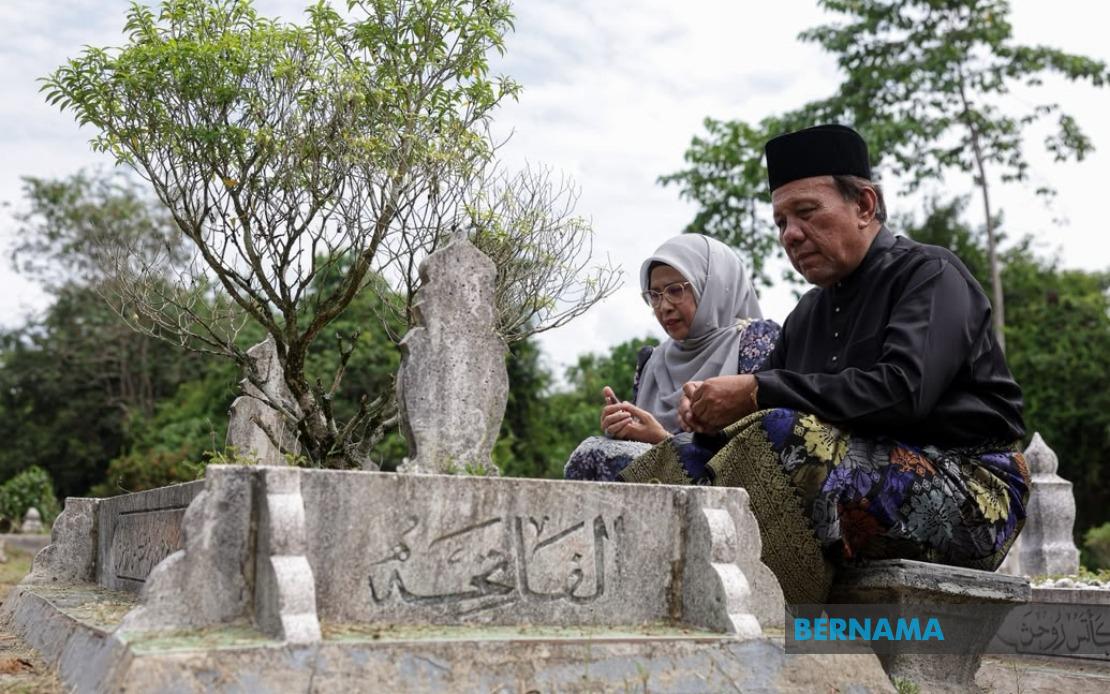
Datuk Ismail Lasim wasted little time honouring family ties after assuming the highest executive office in Negeri Sembilan. Within hours of being sworn in as Menteri Besar on August 2, the newly elected state leader journeyed to the Tebing Tinggi Muslim cemetery in Kuala Pilah, accompanied by his wife Datin Noraishah Othman, to pay his respects at the graves of his late parents. The visit, undertaken while still in formal traditional dress, reflected a personal moment of reflection during what was undoubtedly a pivotal day in his political career.
Ismail's appointment as Menteri Besar came after taking the oath before the Yang di-Pertuan Besar of Negeri Sembilan, Tuanku Muhriz Tuanku Munawir, at Istana Besar Seri Menanti. The ceremony marked the culmination of electoral efforts in the state's 16th general election held the previous day. His decision to visit the cemetery as one of his first acts in office underscored the significance of family legacy and ancestral remembrance in Malaysian political culture, particularly within Malay-Muslim tradition.
Ismail's father, the late Lasim Yaman, had lived to the age of 97 before passing away on March 5, 2020, during the height of the COVID-19 pandemic when family gatherings and funeral observances were severely restricted. His mother, the late Bedah Othman, had predeceased his father by several years, passing away on September 16, 2014. Both parents were laid to rest at the Tebing Tinggi cemetery, making it a deeply personal location for the newly elevated state leader and his family.
The electoral victory that propelled Ismail into the Menteri Besar position came via his success in the Juasseh state constituency. In a constituency-level contest that demonstrated voter confidence in his leadership, Ismail secured a mandate that contributed to his coalition's broader success in the state election. His rise to the chief ministerial post represented a significant political milestone, positioning him as the executive head of a state with considerable economic and strategic importance in the Klang Valley region.
The electoral backdrop to Ismail's appointment saw a convincing mandate for continuity and stability in Negeri Sembilan's governance. Barisan Nasional, the traditional governing coalition, secured 18 of the state assembly's seats, while Perikatan Nasional, the more recently formed political alliance, captured seven seats. This distribution enabled both coalitions to govern together with a commanding two-thirds supermajority, ensuring a stable legislative environment for the state government's agenda over the next five-year term.
The composition of this coalition government reflected broader patterns in Malaysian electoral politics following the 2022 federal election. The partnership between Barisan Nasional and Perikatan Nasional had become a familiar pattern in several state administrations, combining the traditional establishment structure with the political force that had emerged from the earlier Mahathir-era realignment. For Negeri Sembilan, the arrangement promised continuity in state development priorities while incorporating perspectives from both major political coalitions.
Ismail's background and ascent through the Juasseh constituency suggest a politician with local roots and community connections. The Juasseh area, encompassing portions of the Kuala Pilah district where his family graves are located, represents a traditionally significant constituency in Negeri Sembilan politics. His successful defence or capture of this seat validated his standing among local voters and demonstrated the political capital he had accumulated within his community.
The symbolism of the cemetery visit extended beyond personal piety to encompass broader themes of continuity and responsibility. In Malaysian political discourse, particularly in Muslim-majority contexts, the act of visiting ancestral graves carries cultural weight, signifying respect for those who came before and the traditions they represented. For a newly appointed state leader, such a gesture communicated respect for established values while embarking on new responsibilities.
Negeri Sembilan, as Malaysia's smallest peninsula state by land area, has historically punched above its weight in national politics and economic development. The state, home to the federal administrative capital Putrajaya and serving as a critical component of the Klang Valley economic corridor, faces ongoing challenges in infrastructure development, economic diversification, and managing rapid urbanisation. The new state government under Ismail's leadership would face expectations to maintain development momentum while addressing local priorities in areas such as housing, transportation, and business facilitation.
The swift transition from election victory to oath-taking and then to personal family observance illustrated the demanding schedule facing newly appointed senior political figures in Malaysia. Within a compressed timeframe, Ismail had to manage electoral celebrations, formal constitutional ceremonies, and personal family obligations—each demanding emotional and physical energy. His choice to prioritise the cemetery visit early in his tenure signalled his personal values and the balance he sought to maintain between public duty and private family responsibilities.
For Negeri Sembilan's political landscape, Ismail's appointment represented both continuity and generational transition within the state's leadership structures. The coalition's substantial two-thirds majority provided the new Menteri Besar with considerable legislative room to implement policies without compromise, though effective governance would still require building consensus across diverse constituencies and managing expectations within the broader Barisan Nasional and Perikatan Nasional frameworks at the state level.
The months ahead would test Ismail's ability to translate his electoral mandate into effective governance. Negeri Sembilan residents would be watching to see whether his administration could deliver on development promises, improve service delivery, and navigate the complex political dynamics of a coalition government. His visit to his parents' graves, captured in the media's early coverage of his tenure, provided a humanising detail that many voters could relate to—a reminder that political leaders, despite their elevated positions, remained connected to family, tradition, and personal values that grounded their public service.

