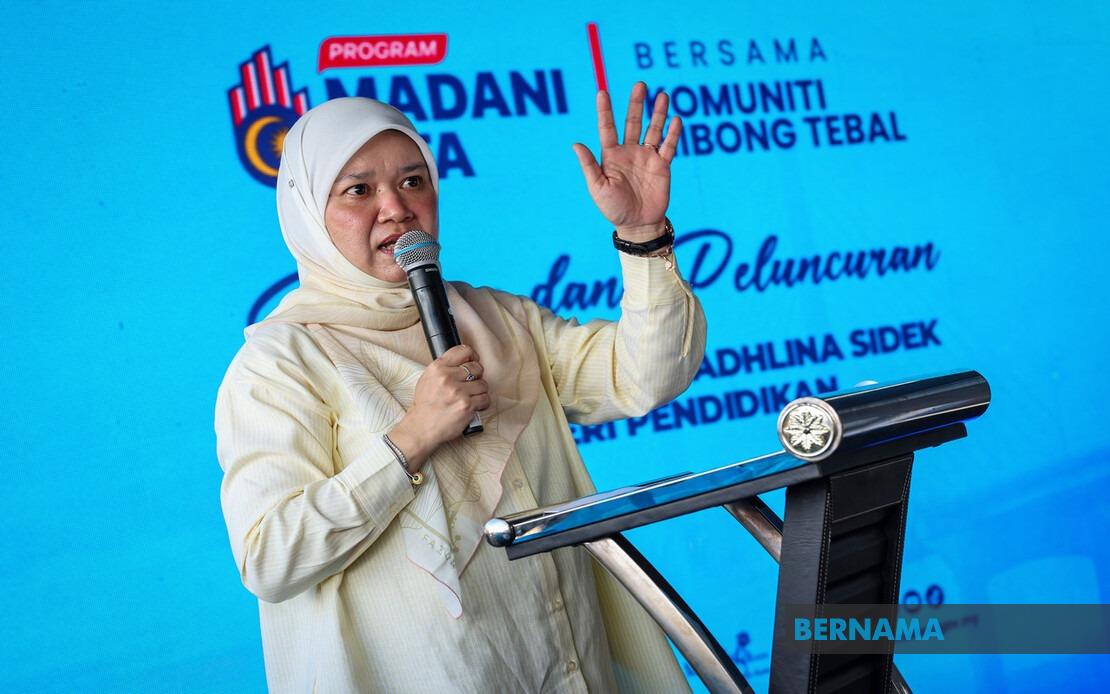
Education Minister Fadhlina Sidek has highlighted the growing success of the NADI Mahir school uniform initiative, a programme that permits Malaysian parents to purchase uniforms through flexible instalment arrangements rather than requiring full upfront payment. Speaking in her capacity as Member of Parliament for Nibong Tebal during the launch of the MADANI Kita programme in the constituency, Fadhlina described the scheme as transformative for families grappling with the cumulative costs of preparing children for the school year. The initiative addresses a genuine pain point in Malaysian households, where the back-to-school season often creates unexpected financial strain, particularly for lower and middle-income families.
Beyond its direct benefit to consumers, the NADI Mahir programme demonstrates a thoughtful approach to economic empowerment by linking uniform production directly to skills development and entrepreneurship. The garments are manufactured by 120 graduates of the NADI Mahir Jahit sewing programme, individuals who completed formal skills training through NADI's Pintar Services platform and have since established themselves as successful independent entrepreneurs. This supply chain model creates a virtuous cycle where consumer demand translates into stable income for trained workers, particularly benefiting those seeking to transition into self-employment or microenterprise. The approach reflects broader policy efforts to build local economic capacity while maintaining affordable access to essential school supplies.
The Nibong Tebal launch event drew participation from senior government officials including Mano Verabathran, deputy secretary-general of the Ministry of Communications (Telecommunications Infrastructure), and Bukhari Yahya, State Affairs chief officer of the Malaysian Communications and Multimedia Commission. Their presence underscores the initiative's positioning as part of a coordinated national strategy spanning education, digital infrastructure, and community development. The convergence of these government agencies suggests NADI's work extends beyond narrowly defined education assistance into broader ecosystem-building around skills training, digital inclusion, and entrepreneurial opportunity.
Fadhlina elaborated on the diverse portfolio of initiatives operating under the NADI umbrella, each targeting different aspects of community welfare and youth development. The NADI Tuisyen Rakyat programme, which provides subsidised tutoring services, has already enrolled more than 42,000 students across Malaysia, with over 73 participating in Nibong Tebal alone. The programme's tangible results became evident in the 2025 Sijil Pelajaran Malaysia examination results, where 65 students supported through NADI Tuisyen Rakyat achieved distinction grades. This outcome suggests the tutoring programme successfully narrows educational achievement gaps, potentially offsetting advantages that wealthier families gain through private tuition fees that many Malaysian households struggle to afford.
Digital engagement forms another critical pillar of NADI's work, particularly through the NADI E-Sukan initiative, which harnesses competitive gaming and esports to develop soft skills among young Malaysians. Rather than dismissing gaming as frivolous, the programme recognises esports as a legitimate platform for identifying talent, building confidence, and fostering teamwork in cohorts of young people who might otherwise lack structured opportunities for skill development. Nibong Tebal constituencies have already produced measurable success, including a national championship victory in the NADI E-Sukan MADANI Mobile Legends competition and runner-up finishes at the Penang state level. The Cooking Star competition, where Nibong Tebal participants secured second place at state level, demonstrates that NADI extends beyond digital domains into practical life skills valued in employment markets.
Artificial intelligence literacy represents an emerging frontier in NADI's capacity-building mandate, reflecting Malaysia's strategic positioning within the digital economy. The 1 NADI 1 Prompt Engineer initiative seeks to democratise access to AI training, equipping young Malaysians with foundational competencies in generative AI and large language models. In Nibong Tebal, the initiative has attracted eleven participants thus far, a modest but indicative figure suggesting gradual awareness-building around AI as a professional skill. Given Malaysia's aspirations toward high-income economy status and the rapid integration of AI across economic sectors, this training pipeline assumes strategic importance in preparing the workforce for technology-driven career transitions.
The financial accessibility of school uniforms through instalment purchasing carries particular significance in the Malaysian context, where education remains central to social mobility narratives and where the costs of schooling extend well beyond tuition fees. Parents must purchase uniforms, textbooks, stationery, sports attire, and co-curricular activity charges, creating a substantial outlay that often exceeds monthly disposable income for working-class families. The NADI Mahir scheme acknowledges this structural reality by breaking the uniform cost into manageable monthly payments, reducing the likelihood that families defer school preparation or accumulate high-interest consumer debt. This design thinking reflects deeper understanding of how financial barriers operate in Malaysian households and how modest structural adjustments can unlock access without requiring direct cash subsidies.
The integration of entrepreneurship development into the uniform supply chain offers lessons applicable across Malaysian public service delivery. Rather than centralising production through government-owned factories, the NADI approach distributes manufacturing across a network of trained entrepreneurs, creating dispersed economic opportunity while maintaining quality control and affordability. This model aligns with national policies emphasising the role of small and medium enterprises in economic growth, and it provides practical scaffolding—market access, buyer certainty, guaranteed volumes—that emerging entrepreneurs often lack. The 120 sewing entrepreneurs participating in NADI Mahir likely experience considerably more stable income than typical freelance operators, reducing entrepreneurial risk and potentially enabling further business growth or reinvestment.
For parents navigating the annual back-to-school season, the convergence of these NADI initiatives—affordable uniforms, subsidised tutoring, digital skills development, and esports opportunities—creates a comprehensive support ecosystem that recognises education encompasses far more than classroom instruction. The programmes acknowledge that learning outcomes depend on financial security, access to supplementary academic support, digital fluency, and confidence-building through extracurricular achievement. Fadhlina's emphasis on NADI's community impact reflects this holistic framing, positioning education policy as inseparable from economic security and youth development.
Looking forward, the success of initiatives like NADI Mahir in Nibong Tebal will likely inform scaling considerations across other constituencies and states. Malaysia's education system encompasses millions of students annually purchasing uniforms, representing a market where instalment-based purchasing models could expand significantly if demonstrated successful. The programme also provides a template for other essential school supplies—textbooks, stationery, sports equipment—that might benefit from similar financing and entrepreneurship models. As Malaysian policymakers increasingly emphasise inclusive growth and the reduction of barriers to quality education, schemes like NADI Mahir exemplify practical policy implementation that moves beyond rhetoric to tangible family support.

