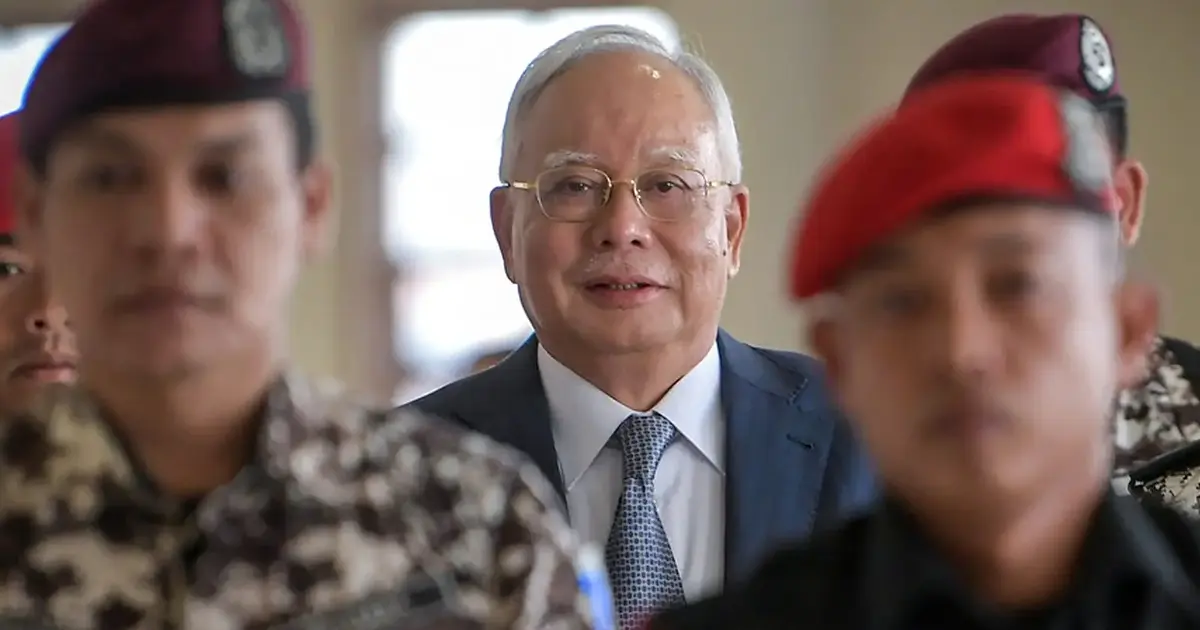
Former Prime Minister Najib Razak has secured permission to attend an upcoming Court of Appeal hearing where the Malaysian Bar Council will challenge a decision made by the pardons board, after his legal team made an ex parte application before the court. The approval represents a significant procedural development in the ongoing legal dispute surrounding clemency matters that have drawn intense public and professional scrutiny.
The ex parte application—a submission made by one party without the opposing side present—was granted by the Court of Appeal, enabling Najib's attendance at the hearing. This procedural decision underscores the complexity of the matter and the court's recognition that the former premier's personal involvement may be relevant to the proceedings, particularly given the centralised nature of his legal interests in the dispute.
The Bar Council's challenge focuses on the pardons board's handling of the case, raising questions about the transparency and propriety of clemency processes in Malaysia. As the nation's primary professional body for lawyers, the Bar Council's intervention signals concerns extending beyond individual legal rights to broader issues of institutional accountability and public trust in governmental decision-making mechanisms. Such challenges are rare and typically emerge only when fundamental principles are perceived to be at stake.
The pardons board operates under constitutional provisions that grant it authority over clemency matters, including commutations and pardons. When courts examine pardons board decisions, they typically focus on whether proper procedures were followed and whether the board acted within its legal mandate, rather than substituting judicial judgment for the board's discretionary assessment. The Bar Council's legal grounds for challenge will likely centre on procedural irregularities or potential violations of natural justice principles.
Najib's permission to attend the hearing in person carries symbolic weight alongside its procedural significance. His direct engagement in the courtroom allows the former prime minister to demonstrate commitment to the legal process and may provide the bench with a clearer understanding of the implications at stake. Moreover, his presence signals confidence in the legal merits of his position, though it also heightens public interest in proceedings that have already commanded considerable media attention throughout Malaysia and the region.
The hearing represents another chapter in the extended legal saga that has defined much of Najib's post-premiership period. Since his departure from office in 2018, the former leader has faced multiple trials and proceedings, with varying outcomes that have kept Malaysian legal and political landscapes in flux. Each judicial pronouncement has rippled through public discourse, influencing perceptions of accountability, institutional strength, and the rule of law.
For Malaysian observers, this development illuminates persistent questions about how the country's legal system balances different institutional roles. The Bar Council's standing to challenge executive clemency decisions reflects the profession's broader constitutional role as guardian of procedural integrity. Simultaneously, the court's willingness to hear such challenges demonstrates judicial willingness to examine executive action, albeit within defined boundaries that typically respect executive discretion in clemency matters.
The timing of the hearing may also carry political resonance. Malaysia's domestic political landscape remains fluid, with coalition alignments continuing to shift and reform discourse ongoing. Any judicial pronouncement touching on clemency or executive prerogative inevitably influences broader political calculations, regardless of the court's purely legal reasoning. International observers monitoring Malaysia's democratic institutions will scrutinise the proceedings for signals about judicial independence and institutional resilience.
The outcome of this hearing could establish important precedent regarding the scope of judicial review applicable to pardons board decisions. Should the court uphold the Bar Council's challenge, it might impose stricter procedural requirements on clemency determinations. Conversely, if the court sustains the board's decision, it would reaffirm the traditionally broad discretion granted to clemency authorities while still preserving space for challenge on narrow grounds of procedural impropriety or manifest unreasonableness.
For the broader legal profession in Malaysia, the Bar Council's activism in this matter reflects institutional confidence and willingness to engage with complex constitutional questions that intersect executive power with professional ethics. The challenge also demonstrates that Malaysian lawyers remain engaged with the machinery of governance, contributing expert perspectives to debates that shape public administration and accountability frameworks.
The hearing itself will likely attract substantial legal interest, with senior counsel expected to present detailed arguments on both constitutional principles and specific factual circumstances. The Court of Appeal bench hearing the matter will weigh competing considerations: respect for executive clemency authority against the principle that no governmental action operates entirely beyond judicial scrutiny when fundamental procedural requirements are potentially compromised.
As this case progresses toward hearing, it continues to illustrate Malaysia's ongoing navigation of institutional challenges and the complex interplay between different branches of government. The eventual judgment will contribute to jurisprudential development in an area where Malaysian law is still evolving, potentially influencing how future clemency decisions are structured and reviewed across the Malaysian legal system.

