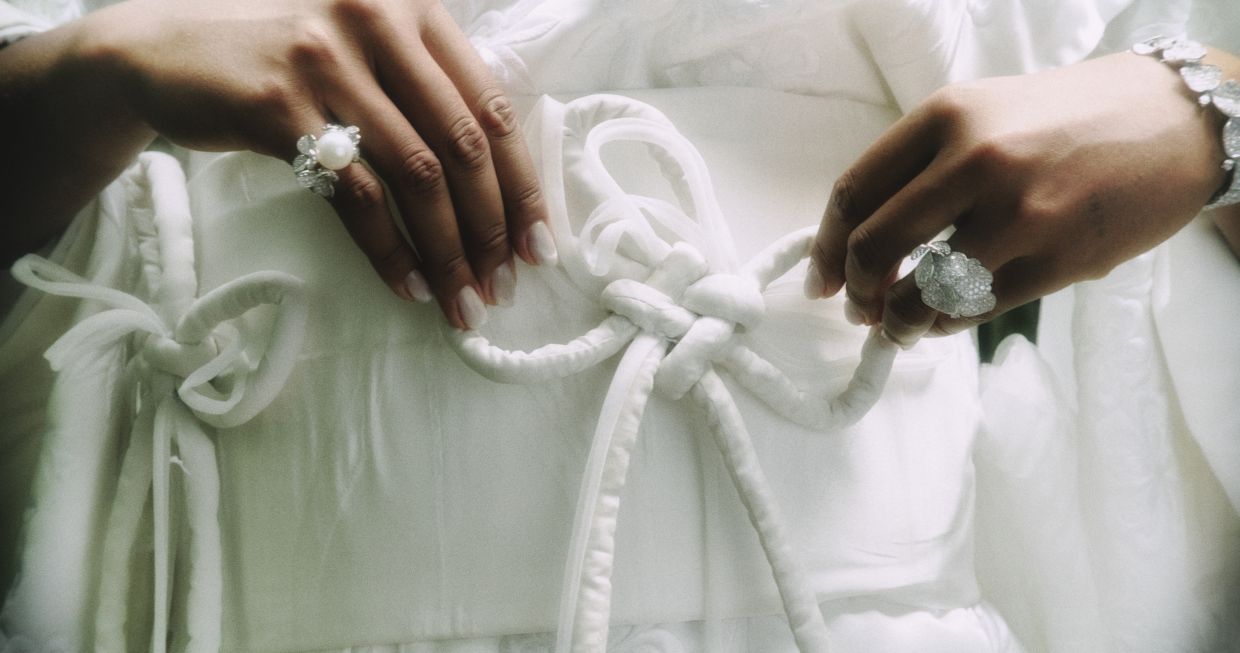
Naomi Osaka's appearance at Wimbledon this week demonstrated that for the tennis champion, the walk-on has become as calculated and deliberate as any match strategy. Despite recovering from a foot injury, the former world number one and 14th seed stepped onto centre court in an all-white creation by Hana Yagi titled "Evolving Ceremony," a design that drew inspiration from classical Japanese garments while championing modern sustainability practices. The entrance itself has become less about the tournament ahead and more about the narrative Osaka constructs through fashion—a shift that has redefined how elite athletes approach their pre-match presentations.
The Yagi gown represented a masterclass in cultural storytelling woven into wearable art. Constructed from seven different textiles salvaged from vintage kimonos, a traditional shiromuku wedding dress, and a deconstructed wedding dress, the creation honoured Japanese heritage through material recovery rather than new production. The design drew direct lineage from the junihitoe, the elaborate 12-layer dress worn by noblewomen during Japan's Heian period between 794 and 1185, translating ancient aesthetics into contemporary silhouettes. Accompanying the entrance dress was a Nike performance outfit featuring kirigami-inspired floral appliques and a micropleated curved hem—elements that sold out before competition even began, demonstrating how Osaka's fashion choices drive commercial momentum alongside artistic expression.
What sets Osaka apart from her peers is not merely her investment in distinctive looks but her strategic framework beneath them. She paired the Yagi gown with jewellery from Mikimoto, the renowned Japanese pearl house, creating a fully integrated statement that projected cultural pride and contemporary design sensibility. In her official statement, Osaka articulated the vision deliberately: "Working with Hana allowed us to celebrate Japanese history and craftsmanship while creating something that feels entirely modern. I love that it feels both powerful and delicate at the same time." This balance between strength and elegance defines not just the aesthetic but the broader philosophy guiding her fashion evolution.
The Wimbledon entrance marks the conclusion of a three-act fashion narrative that commenced at the Australian Open in January. There, Osaka appeared in a Robert Wun jellyfish-inspired gown, complete with a butterfly hat signalling rebirth and motherhood, which she removed before play commenced. The French Open followed with a black Kevin Germanier corset and ball gown skirt, crafted from upcycled Nike kits and nodding to the Eiffel Tower's architectural silhouette. Examining these three appearances together reveals a coherent philosophy emerging across major tournaments, one that transcends typical athlete fashion and enters territory dominated by sustainability advocacy and deliberate mentorship.
Osaka's approach prioritises three interconnected objectives. First, she has made sustainability non-negotiable, ensuring that haute couture-level creations repurpose existing materials rather than demanding fresh production. Second, her selections deliberately amplify emerging and independent designers, with stylist Marty Harper characterising the choices as giving "voices to new kids on the block." Yagi exemplifies this commitment—a designer in her 20s who launched her Tokyo-based company after achieving finalist status in Italy's International Talent Support competition in 2019. By offering such a platform at tennis's most prestigious venue, Osaka accelerates career trajectories while building her personal brand through acts of creative patronage.
The engineering challenges underlying these visions are more complex than spectators realise. Each custom creation must satisfy contradictory demands: it needs visibility from the highest stadium seats whilst remaining removable within three minutes, as Harper explained. The outer court infrastructure at Wimbledon poses particular logistical hurdles, as the distance from players' lounges could compromise delicate fabrics. Yagi's solution involved making the dress's nine segments detachable through strategic velcro applications, allowing rapid changes while enabling recombination across tournament stages. The gown also features an adjustable train extending nearly ten feet, adaptable depending on court selection, demonstrating how haute couture problem-solving intersects with practical athletic requirements.
This meticulous construction reflects a broader evolution in professional tennis culture. Fashion has always played roles in on-court presentation, from Serena Williams' personality-driven competition looks to Jannik Sinner's Gucci ambassadorial appearances. Yet Osaka transcends this tradition by weaponising fashion as strategic communication—each entrance functions simultaneously as artistic statement, sustainability manifesto, and career advancement tool for chosen collaborators. The velcro innovations, the upcycled textile sourcing, the selection of designers from underrepresented demographics—these elements coalesce into something unprecedented in tennis: fashion as organised, purposeful activism.
The Malaysian and Southeast Asian significance of Osaka's approach extends beyond aesthetics. Her championing of Japanese heritage and regional designers challenges Western luxury fashion hegemony, particularly relevant across Asia where local design communities often struggle for international recognition. The emphasis on upcycling and sustainability addresses growing environmental consciousness among Asian consumers and investors. Furthermore, Osaka's platform demonstrates how individual athletes with global visibility can reshape industry standards—her approach potentially influences how younger Malaysian and Southeast Asian athletes view their own presentation and brand-building opportunities.
The commercial dimensions also merit attention. The immediate sell-out of her Nike collaboration before tournament commencement illustrates how Osaka's fashion choices generate measurable economic activity. Her designer selections create market opportunities for emerging talent, whilst partnerships with heritage brands like Mikimoto strengthen cultural narratives around Japanese craftsmanship. These commercial outcomes are not accidental but integral to her strategic vision, where aesthetic expression, sustainability, and economic impact reinforce rather than contradict one another.
From a competitive standpoint, Osaka's entrance strategy accomplishes something rarely discussed in tennis analysis: it wins the attention championship before matches commence. Regardless of tournament outcomes, the pre-match presentation ensures her narrative dominates discourse. This represents a calculated recalibration of what constitutes competitive advantage in modern professional tennis, where sponsorship reach, brand value, and cultural influence extend far beyond match results. In this context, the walk-on becomes not merely ceremonial but central to overall career strategy.
Osaka's evolution also reflects generational shifts in athlete activism and brand positioning. Rather than issuing statements or wearing symbolic attire, she integrates advocacy directly into her appearance, making sustainability and designer support visible rather than merely verbal. This embodied approach proves more memorable and authentic than conventional corporate sponsorships, establishing her as a creative force rather than a passive brand vessel. The three-tournament arc demonstrates deliberate curation, suggesting future appearances will maintain this trajectory of innovation, sustainability, and emerging talent elevation.
Ultimately, Osaka's Wimbledon entrance encapsulates a new paradigm where tennis fashion operates as sophisticated cultural communication. The "Evolving Ceremony" literally fulfils its title through the dress's progressive unveiling, mirroring Osaka's own evolution as an athlete, mother, and cultural ambassador. By placing young designers and sustainable practices at the centre of elite sports presentation, she demonstrates that fashion's highest expression in competitive athletics need not compromise environmental responsibility or equitable industry participation. Whether her Wimbledon campaign succeeds on the court matters less than the precedent she establishes for how athletes can leverage visibility to reshape industry norms and celebrate cultural heritage.

