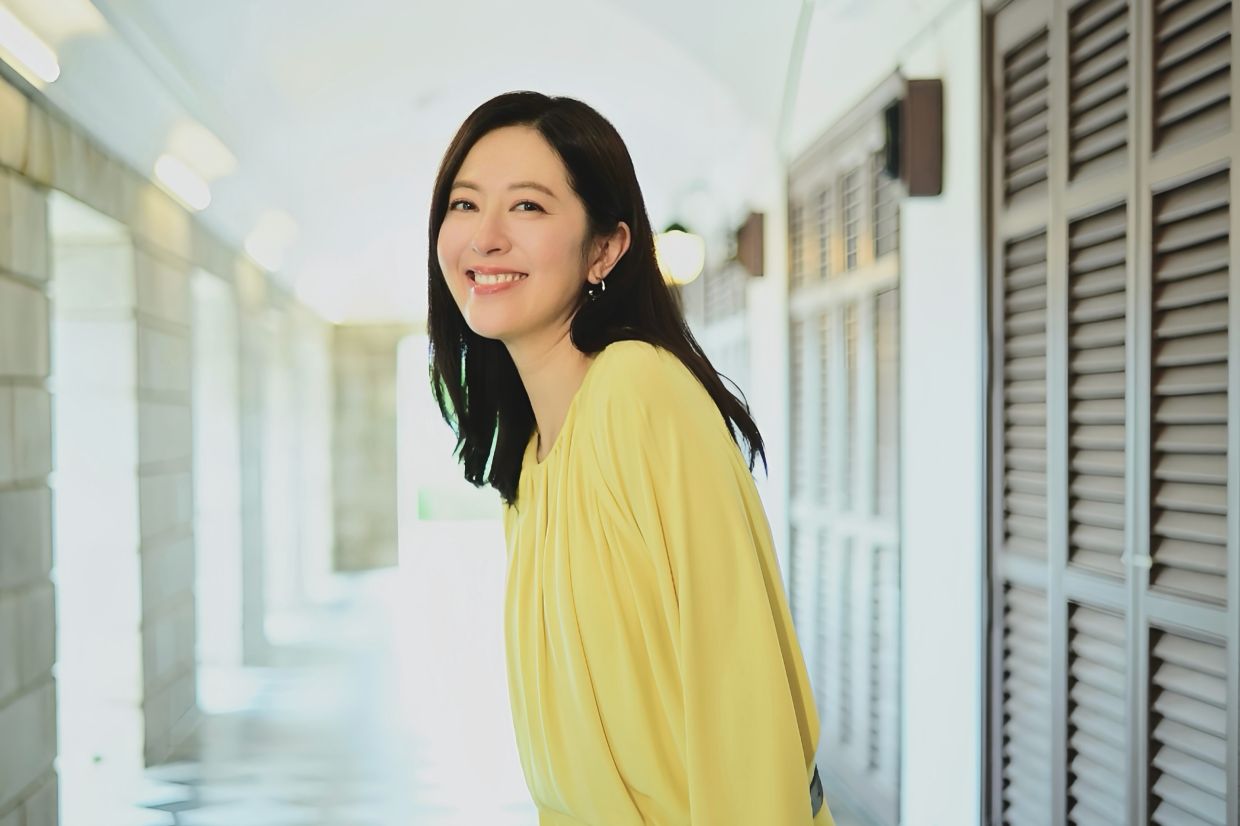
Hong Kong actress Natalie Tong has opened up about one of life's most poignant sorrows—the death of her mother in 2009—and the weighty regret that has stayed with her through the years. During a recent appearance on a variety show, the 45-year-old actress became visibly emotional as she reflected on how her relentless pursuit of career advancement left her with insufficient time to nurture her relationship with her mother while she was still alive.
Tong's candid admission touches on a universal tension that many ambitious professionals face, particularly in the demanding entertainment industry where professional obligations often eclipse family obligations. She acknowledged that during her mother's lifetime, she had been singularly focused on building her career trajectory, devoting her energy almost exclusively to work commitments. This singular dedication came at the expense of meaningful moments with her family, and she now recognises that the time she gave her mother fell far short of what might have been possible. The regret, she explained, stems not from a lack of love but from a misplaced sense of priority that seemed reasonable at the time but now appears shortsighted.
The circumstances surrounding her mother's final illness added another layer of complexity to Tong's regret. Her mother required a pacemaker replacement procedure, a medical intervention that would have extended her life and wellbeing. However, the family faced financial constraints that forced them to postpone the necessary treatment. Tong reflected on this period with the clarity of hindsight, recognising that at that moment, she had believed time was something they possessed in abundance. This false sense of security—the assumption that there would always be more tomorrows—is a common human misconception that often goes unchallenged until it is too late.
The tragedy unfolded with sudden brutality. After her mother returned from a trip, her health deteriorated catastrophically. She began vomiting blood and required emergency hospitalisation. When Tong rushed to the hospital the following morning, driven by an inexplicable sense of dread, she encountered doctors bearing devastating news. Her mother had died during the night. The shock and grief proved overwhelming; Tong collapsed, unable to process the reality that her mother had slipped away while she had still harboured the expectation of more conversations, more moments, more opportunities to be present.
In the years since, Tong has processed not merely the loss of her mother but the broader philosophical questions about mortality, time, and regret that the loss raised. She has come to understand that while acceptance of death's inevitability is possible with maturity, the sting of regret—the knowledge that certain things remained undone—represents a different and perhaps more acute form of pain. The regret she carries is not about her mother's death itself, which was beyond her control, but rather about the invisible choices she made each day to prioritise her career over presence in her mother's life. These incremental decisions, each seeming minor in isolation, accumulated into a gap that can never be closed.
This reckoning became the catalyst for a profound life change. After nearly two decades with TVB, the broadcaster where she had built her reputation and honed her craft, Tong made the difficult decision to leave in 2022. This departure was not a rejection of acting or performance, but rather a deliberate restructuring of her priorities. She explicitly articulated that she wanted to reclaim time for herself and her family, to reverse the equation that had previously weighted career so heavily above all else. This was not a decision made in grief-stricken impulse, but rather the result of sustained reflection on what constitutes a meaningful life.
Tong's journey after leaving TVB demonstrates her commitment to rebuilding her relationship with life itself. In 2023, she ventured into the food industry, opening a bakery in Causeway Bay. This entrepreneurial move represented not merely a business decision but a conscious effort to create something tangible that integrated with family life rather than consuming it. A bakery is inherently a different proposition from daily television production; it allows for more flexible scheduling and direct engagement with customers. In 2025, Tong took another artistic risk by making her stage debut in a theatrical production, expanding her creative expression beyond the medium that had defined her career.
Despite the various transitions, Tong has not abandoned public engagement entirely. She continues to make selective appearances on variety shows, suggesting that she has arrived at a more balanced relationship with the entertainment industry—one where she participates on her own terms rather than being consumed by its demands. This represents a maturation of her understanding about what she wants from her professional life and her existence more broadly.
Crucially, Tong has resisted allowing her regrets to become the defining narrative of her remaining years. She has explicitly stated that she chooses not to permit past disappointments to dictate her future trajectory. Instead, she has embraced the capacity for change and correction as a fundamental human right and responsibility. This perspective is particularly valuable for Southeast Asian audiences, where cultural emphasis on duty and family obligation sometimes collides with individual aspiration and career advancement. Tong's example suggests that these are not necessarily opposing forces; rather, they require conscious negotiation and regular reassessment of priorities.
Her message resonates particularly deeply in the context of rapid social change across the region. Many Malaysians and Southeast Asians working in high-pressure industries face similar tensions between professional demands and family presence. Tong's journey—marked by achievement, loss, reflection, and ultimately, recalibration—offers neither easy answers nor guilt-inducing lessons. Instead, it presents a realistic acknowledgment that such tensions exist, that choices have consequences, and that the ability to recognise mistakes and redirect one's life remains possible at any age. Her transformation from career-focused actress to more balanced entrepreneur and occasional performer demonstrates that reinvention and redemption are not merely possible but perhaps necessary components of a reflective life well-lived.

