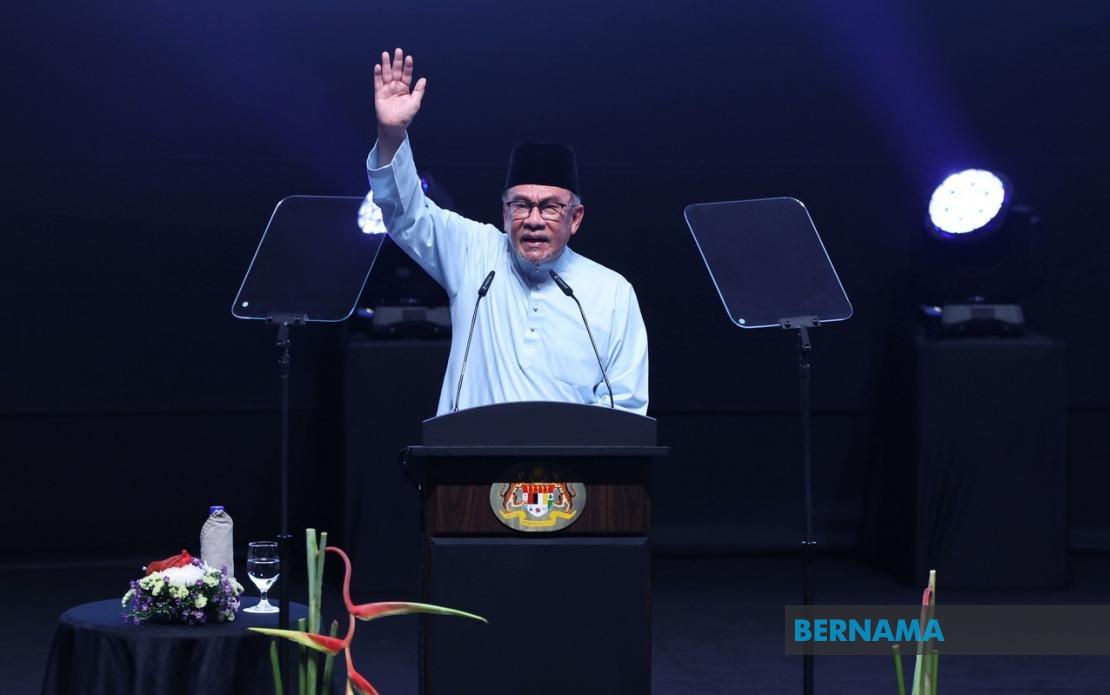
The 2026 National Day Prime Minister's Address Ceremony will take place at the Putrajaya International Convention Centre (PICC) at 2 pm, according to an announcement by the Ministry of National Unity. The precise timing represents a deliberate scheduling choice made by organisers in response to prevailing environmental and operational considerations affecting the nation's flagship patriotic observance.
The relocation of this significant state ceremony from its traditional venue at Dataran Merdeka in Kuala Lumpur to PICC underscores the ongoing challenge posed by regional haze conditions across Malaysia. The National Day and Malaysia Day Celebration Working Committee, operating under the Ministry of Communications, determined that the indoor venue at PICC offered greater protection for attendees and participants. This represents a pragmatic shift in planning for one of the country's most important annual events, reflecting how environmental factors continue to shape major public gatherings across the region.
The Ministry of National Unity emphasised that the adjustment accounted for multiple operational priorities. Officials noted that the new arrangements prioritise the safety, health and comfort of invited guests and members of the public who wish to participate in the celebration. Additionally, the decision facilitates the smooth execution of ceremonial protocols and formal proceedings that characterise this high-profile governmental event. Such considerations reveal how contemporary event management in Malaysia must balance traditional expectations with practical realities.
MetMalaysia's forecasts painted a concerning picture of air quality across several states during the planned celebration period. The Malaysian Meteorological Department's director-general, Dr Mohd Hisham Mohd Anip, had previously warned that hazy weather conditions were anticipated in Sabah, whilst elevated haze concentrations posed risks in Johor, Melaka, Negeri Sembilan, Selangor, Kuala Lumpur and Putrajaya through August 31. These warnings directly prompted the relocation decision, illustrating how scientific meteorological data now fundamentally shapes Malaysia's approach to large-scale public ceremonies.
The Prime Minister's address during this ceremony serves as a keynote platform for articulating the MADANI government's vision and aspirations for the nation. Officials characterised the event as an essential occasion for reflecting on the government's strategic direction whilst rekindling the spirit of independence and national pride. The ceremony functions as more than ceremonial protocol; it represents a formal opportunity to reinforce national identity and governmental priorities before a captive national audience.
Beyond the immediate governmental messaging, the Ministry of National Unity framed the National Day celebration as a vehicle for cultivating deeper social cohesion. The official statement appealed to all Malaysians to attend and participate, emphasising that the occasion provides space for fostering mutual understanding, respect and acceptance of Malaysia's acknowledged diversity. This rhetorical positioning reflects how National Day has evolved into a platform for addressing broader national concerns about social harmony and intercommunal relations.
The emphasis on strengthening patriotism and nurturing responsibility towards the country indicates that these ceremonies retain symbolic importance despite demographic and social changes. National Day observances continue to function as ritualised moments when the state articulates its vision of shared nationhood and collective purpose. For Malaysian governments, these annual occasions provide crucial opportunities to reconnect citizens with foundational concepts of unity and national progress.
The PICC venue offers distinct advantages over the traditional Dataran Merdeka location, beyond mere weather protection. The convention centre's climate-controlled indoor environment ensures consistent conditions for the formal ceremony, whilst its infrastructure accommodates large gatherings with enhanced security and crowd management capabilities. The move thus represents a modernisation of how Malaysia stages its most important patriotic ceremonies, adapting to contemporary urban realities and weather patterns.
For Southeast Asian observers, Malaysia's approach to managing National Day celebrations amid environmental challenges offers a revealing case study. The region's persistent transboundary haze problem, often originating from agricultural burning in neighbouring countries, continues constraining outdoor activities and forcing contingency planning for major events. Malaysia's pragmatic relocation strategy demonstrates how haze has become institutionalised as a factor in event management across the region, rather than remaining merely an occasional weather inconvenience.
The decision also signals how Malaysian governance increasingly prioritises health and environmental quality in public planning. By explicitly citing guest and public comfort as decision-making criteria, officials acknowledge growing awareness of air quality's impact on citizen wellbeing. This represents a subtle but significant shift in how the state frames its obligations toward public health during major ceremonial occasions.
Looking forward, the PICC ceremony presents an opportunity for the government to articulate its development agenda and national priorities to a broad Malaysian audience. The 2 pm timing ensures accessibility for various demographic groups whilst maintaining the formality appropriate to a prime ministerial address. The event will likely be broadcast nationally, extending its reach far beyond the venue itself.
The relocation ultimately exemplifies how Malaysia's major national occasions must adapt to contemporary realities whilst preserving their ceremonial significance. Rather than abandoning the Prime Minister's address ceremony despite environmental challenges, officials engineered a solution that maintains the event's importance whilst ensuring practical viability. This flexible approach maintains continuity with national traditions whilst demonstrating governmental responsiveness to objective environmental conditions.

