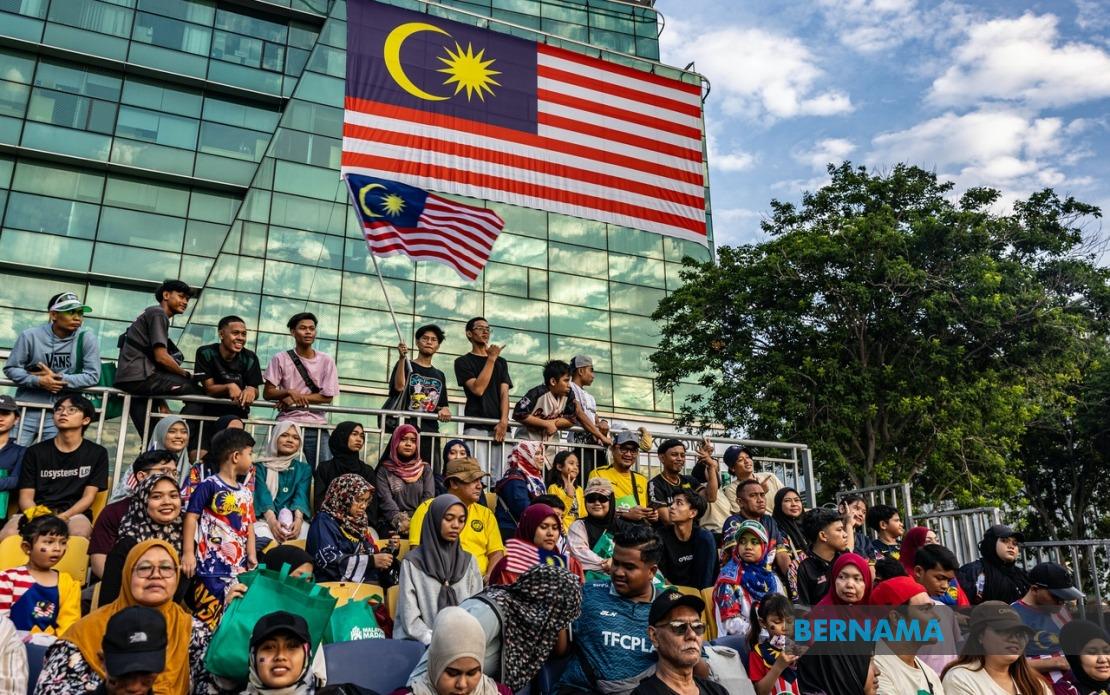
Malaysia's 69th National Day celebration in Putrajaya on August 31 attracted more than 100,000 attendees, substantially exceeding the organisers' initial projection of 80,000 participants. The robust turnout underscores the enduring national sentiment across Malaysia, with visitors travelling considerable distances to participate in the festivities. Communications Minister Datuk Seri Fahmi Fadzil, who chairs the 2026 National Day and Malaysia Day Main Committee, attributed the successful execution to meticulous advance planning and favourable meteorological conditions that persisted throughout the day.
The seamless organisation reflected coordinated efforts spanning multiple government departments and agencies. The Department of Environment, Malaysian Meteorological Department, and National Disaster Management Agency worked in tandem to monitor weather patterns and prepare contingency measures, including cloud seeding protocols should rainfall threaten proceedings. This multi-agency approach ensured that no significant disruptions occurred during the main parade and associated activities, allowing the celebration to proceed without incident despite the large gathering.
The geographic diversity of attendees demonstrated the celebration's appeal across Malaysia's regions. Participants journeyed from distant locations including Sandakan in Sabah, Johor Bahru in the southern peninsula, and Jeli in Kedah, reflecting how National Day continues to function as a unifying occasion that motivates Malaysians from disparate backgrounds to converge at a common venue. This nationwide participation patterns suggests that despite competing demands on citizens' time and resources, patriotic observance remains a priority for significant population segments.
The 2026 celebration embraced the theme "Malaysia MADANI: Kesejahteraan Dinikmati," which encapsulates the government's policy direction toward inclusive prosperity and national harmony. This thematic framing represented more than ceremonial language; it articulated a governing philosophy emphasising development that transcends communal divisions whilst advancing collective welfare. By anchoring the National Day narrative to this governance framework, organisers positioned the celebration as reinforcing substantive policy objectives rather than serving as purely symbolic occasion.
The parade itself constituted an elaborate spectacle involving 76 contingents, 22 marching bands, and 11 decorated vehicles, with approximately 10,819 participants representing a cross-section of Malaysian society. Government agencies, security forces, uniformed bodies, and educational institutions participated alongside representatives from government-linked companies and civil society organisations. This inclusive representation strategy communicated that National Day belonged collectively to Malaysian institutions and citizenry rather than constituting exclusively a government-orchestrated event.
The 2026 celebration introduced several inaugural elements, including participation by the Royal Johor Military Force and a dedicated Southeast Asian Games 2027 contingent. The inclusion of an Orange Economy Sustainability cluster reflected contemporary policy emphases on creative industries and environmental responsibility. These additions signalled an effort to ensure the celebration remained contemporary and responsive to evolving national priorities rather than defaulting to repetitive ceremonial patterns from previous years.
The artistic dimensions of the celebration demonstrated sophisticated deployment of Malaysia's cultural heritage. The "Gema Inovasi MADANI" percussion performance synthesised traditional instruments including Rebana Inovasi and Kompang Inovasi, involving 150 percussionists and 1,500 human graphic performers in coordinated presentations. This artistic integration served to showcase Malaysia's diverse cultural patrimony whilst linking traditional practices to contemporary governance narratives, thereby positioning cultural preservation as aligned with rather than antagonistic to modern development agendas.
The celebration extended beyond the main parade to encompass supplementary recreational activities that sustained public engagement. Attendees accessed national defence assets displayed at Anjung Floria, participated in the Riuh Merdeka programme at Monumen Alaf Baru, and utilised food service facilities dispersed throughout the venue. This diversified programming transformed the event from a time-bounded parade into an extended experiential occasion, enabling families to engage with National Day observance across multiple dimensions whilst enjoying leisure activities.
The finale featured Royal Malaysian Air Force demonstrations involving fighter, transport, and helicopter squadrons, culminating in the closing performance "Rentak MADANI, Paluan Tradisi," which incorporated 2,350 participants. This concluding segment combined military pageantry with cultural performances, symbolically bridging defence capabilities with national artistic traditions. The decision to position aerial demonstrations as the celebration's visual climax carried subliminal messaging regarding national security and military readiness whilst simultaneously integrating these elements within a broader cultural framework.
Minister Fahmi's public remarks emphasised the celebration's role in strengthening national cohesion and collective attachment to Malaysia. His appeal for Malaysians to preserve national unity and safeguard the country's interests carried particular resonance given contemporary political polarisation and competing regional allegiances. By framing National Day as an occasion for recommitting to shared national identity, organisers attempted to leverage the celebration's emotional dimensions toward politically stabilising purposes.
The event's success in exceeding attendance targets carries implications for future National Day planning. The demonstration that public enthusiasm substantially outstripped conservative estimates suggests that organisers may consider expanding venue capacity and augmenting programming for subsequent celebrations. From a Malaysian perspective, the robust turnout from multiple regions indicates that geographic distance and competing local priorities do not substantially diminish citizens' willingness to participate in national commemorations, provided that organisational quality meets reasonable standards.
The coordination mechanisms that facilitated smooth execution offer replicable models for major national events. The integration of meteorological forecasting, environmental management, and disaster preparedness protocols created operational resilience that accommodated the unexpectedly large attendance whilst minimising logistical friction. This institutional learning could inform planning for future significant national gatherings, from Malaysia Day observances to ASEAN-regional commemorations that Malaysia may host.
Looking forward, the 2026 National Day celebration's success establishes a benchmark for national event management and public engagement. The demonstrated capacity to attract over 100,000 participants whilst maintaining operational standards without incidents reflects evolving sophistication in Malaysian government's event execution capabilities. As Malaysia continues positioning itself as a regional hub and considers hosting larger international gatherings, the institutional competencies demonstrated during this celebration constitute valuable preparatory experience that may facilitate success in subsequent major undertakings.

