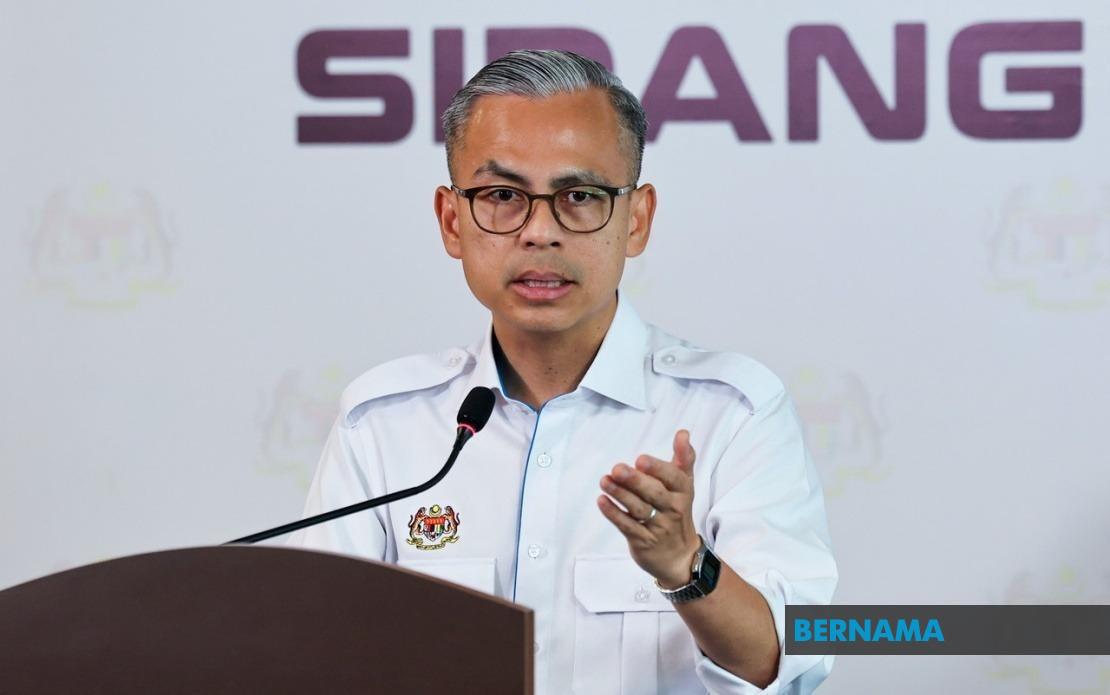
Organizers of Malaysia's 2026 National Day celebrations have signaled that preparations are approaching completion, with Communications Minister Datuk Seri Fahmi Fadzil indicating that only minor refinements remain before tomorrow's comprehensive dress rehearsal at Dataran Putrajaya. The intensive preparation phase, which culminates in the full rehearsal, represents a critical juncture for the event's organizing committee as they work to ensure that the nation's premier public celebration meets the high standards expected by Malaysians and international observers.
Fahmi, who heads the 2026 National Day and Malaysia Day Main Committee, identified spacing between parade contingents as the primary focus for final adjustments. The ministry has determined that some military and civilian contingents are positioned at excessive distances from their preceding units, compromising the visual cohesion and disciplined appearance that characterizes Malaysia's National Day processions. Tightening these intervals represents a straightforward but essential task that will enhance the parade's overall presentation and convey the synchronized unity that such events are designed to project.
The communications minister praised the conditions under which today's preliminary rehearsal took place, noting that favorable weather contributed significantly to the exercise's success. Beyond meteorological fortune, Fahmi highlighted the exceptional enthusiasm and dedication displayed by all participating groups, ranging from security personnel to students from three states who will perform the human graphics segment. This collective commitment underscores the broad-based mobilization required to execute a parade of this scale and complexity.
A centerpiece of the 2026 celebrations will be the debut appearance of the Johor Military Force as a formal parade contingent, marking an expansion of institutional participation in the national event. Equally significant is the inclusion of the Ibrahim-class maritime vessel, a custom-designed boat created under the direction of His Majesty Sultan Ibrahim, King of Malaysia. These elements underscore Malaysia's commitment to integrating its defence capabilities and royal heritage into the ceremonial fabric of the nation's founding day observance.
The human graphics performance, which will involve 1,500 students arranged on a multi-level platform structure, has attracted particular attention from organizers and safety authorities. Fahmi provided detailed assurances that Putrajaya Corporation has conducted comprehensive structural assessments, confirming that the facility meets rigorous safety standards. The minister acknowledged that observers have noted slight movement within the platform during rehearsals, but emphasized that such flexibility falls well within engineering tolerance limits and is actually necessary to safely accommodate the rhythmic movements of the assembled students.
The platform structure itself carries historical significance, having been utilized successfully in previous National Day celebrations. This third iteration of deployment has thus far proven structurally sound, with no incidents or problems reported from prior uses. The accumulated operational experience provides confidence in the structure's reliability for the 2026 event, though organizers remain vigilant in their monitoring and assessment protocols throughout the preparation phase.
Fahmi also addressed observations concerning the platform's slightly asymmetrical positioning on the parade grounds. He explained that this positioning results from the geometric relationship between the parade route and the Putrajaya Corporation building, which do not align on the same axis. Additionally, organizers reduced the number of participating students from 2,000 to 1,500 this year, a modification that influenced the platform's placement and overall configuration. Rather than dismiss concerns about appearance, Fahmi indicated that the organizing secretariat would examine technical adjustments for future National Day editions, demonstrating a commitment to continuous improvement.
The dress rehearsal scheduled for tomorrow will serve as the final comprehensive test of all elements, from contingent spacing and timing to the coordination of maritime assets and human graphics sequences. This exercise will enable organizers to identify any remaining adjustments needed before the actual celebration, typically held on August 31st. The intensity of these final preparations reflects the high expectations that government and civil society place on the National Day parade as a showcase of Malaysian national identity, institutional capability, and democratic celebration.
For Malaysians and regional observers, the 2026 National Day parade represents more than ceremonial pageantry. Such events carry significant symbolic weight in a multicultural society, demonstrating the capacity of diverse communities and institutions to coordinate effectively toward shared national objectives. The inclusion of new military and maritime components, alongside continued emphasis on youth participation through the human graphics performance, sends signals about Malaysia's defence modernization, technological advancement, and investment in younger generations.
The meticulous attention to detail evident in Communications Ministry oversight of preparations also reflects broader governmental emphasis on delivering quality public events that enhance national pride and international standing. In an era when social media scrutiny amplifies public perception of such occasions, organizers' willingness to refine spacing, positioning, and structural elements demonstrates awareness that execution quality directly influences how celebrations resonate with audiences. The final dress rehearsal will prove whether these preparation efforts have achieved the near-complete readiness that Fahmi has indicated, setting the stage for a seamless National Day observance in 2026.

