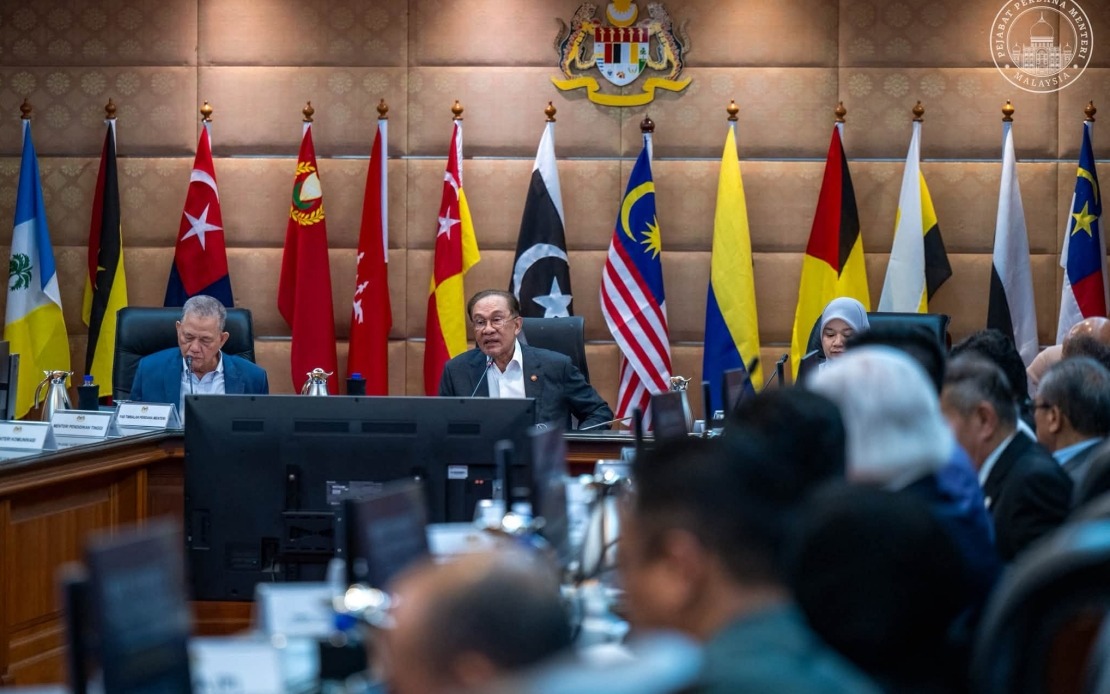
Malaysia has taken a significant step towards overhauling its education system with the establishment of a new National Education Council, according to Prime Minister Datuk Seri Anwar Ibrahim. The initiative represents a formal institutional commitment to addressing longstanding concerns about educational relevance and quality in an increasingly competitive global landscape. By creating this dedicated council, the government aims to ensure that Malaysian schools and universities produce graduates equipped to meet the demands of the 21st century while remaining rooted in national identity.
The council's mandate extends across both primary and secondary schooling as well as higher education, marking an unusually comprehensive approach to educational governance. Anwar presided over the inaugural meeting of the National Education Council in 2026, where participants reviewed the strategic direction of national education at all levels. This broad scope suggests the government recognises that fragmented policymaking across different educational sectors has hindered cohesive progress, and a unified council structure may facilitate better coordination and implementation of reforms.
Curriculum development and content improvement form the centrepiece of the reform agenda. The council will examine existing syllabi and learning materials to ensure they remain relevant to contemporary challenges and economic opportunities. This reflects growing anxieties among educators and policymakers that Malaysian curricula have become outdated in certain areas, failing to adequately prepare students for technological disruption and evolving career pathways. By placing curriculum renewal at the forefront, the government signals that incremental tinkering will no longer suffice.
Among the council's priorities is elevating English proficiency across the student population without compromising Malaysia's commitment to Bahasa Malaysia as the national language. This linguistic balancing act reflects the complex identity negotiations Malaysia continues to navigate. The government seeks to position English as an essential tool for global competitiveness while reasserting that the national language remains the cultural anchor of Malaysian education. For regional observers, this approach offers an interesting contrast to neighbouring countries that have taken more decisive positions in either direction.
The strengthening of Science, Technology, Engineering, and Mathematics (STEM) education represents another crucial focus area. Recognising that Malaysia's economic future depends on developing a technically skilled workforce capable of competing in high-value sectors, the council will work to build systematic pipelines of talent from secondary school through to tertiary institutions. This proactive approach to workforce development suggests the government is responding to private sector feedback about skills shortages in critical technical fields.
The council has also committed to improving educational quality at the district level, a recognition that centralised policies often fail to account for local contexts and disparities. Malaysia's vast regional differences in infrastructure, teacher quality, and student demographics mean that a one-size-fits-all approach frequently disadvantages rural and underdeveloped areas. By emphasising district-level elevation, the council acknowledges that national reform requires tailored implementation strategies that respect local realities.
The Bumiputera education agenda features prominently in the council's discussions, reflecting the government's commitment to ensuring that indigenous and Bumiputera students benefit from educational improvements. This focus addresses historical inequalities and recognises that comprehensive reform must specifically address the needs of communities that have historically experienced lower educational attainment. The integration of Bumiputera considerations into mainstream education policy rather than treating them as peripheral demonstrates a commitment to inclusive development.
Anwar emphasised that educational reform demands objective evaluation guided by expertise from diverse stakeholders rather than political ideology or attachment to existing structures. This appeal for evidence-based policymaking stands as a implicit critique of past approaches that prioritised maintaining institutional continuity over educational outcomes. The prime minister's insistence that complacency with current systems must not impede progress signals determination to overcome bureaucratic resistance that often stymies educational innovation in Southeast Asian contexts.
The council's establishment reflects broader regional trends where governments grapple with reconciling traditional values and national identity concerns with the imperatives of global economic integration. Malaysia's approach of embedding national language, culture, and moral values within a reform framework focused on English proficiency and STEM development attempts to navigate this tension deliberately. For Malaysian readers, the council represents both an acknowledgment that the current education system requires substantial overhaul and a commitment to conducting that transformation in ways consistent with Malaysian values and priorities.
The success of this council will ultimately depend on its ability to move beyond discussion and into implementation. Malaysia has established numerous educational committees and councils throughout its history, not all of which have produced tangible improvements. This council faces the challenge of translating broad aspirations about quality, relevance, and inclusivity into concrete curriculum changes, teacher development programmes, and resource allocations. The months ahead will test whether this new institutional arrangement can overcome the coordination problems and bureaucratic inertia that have historically limited educational reform in the country.

