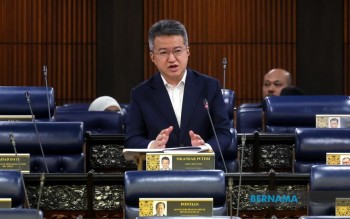
Malaysia's parliament has taken its first formal step toward establishing a National Trust Fund, with the bill receiving its initial reading in the Dewan Rakyat on July 14. Deputy Finance Minister Liew Chin Tong introduced the legislation, which aims to construct a durable financial safety net designed to benefit both present and future generations of Malaysians. The proposal represents an important shift toward institutionalizing long-term fiscal stewardship and intergenerational wealth preservation within Malaysia's governance framework.
The legislation will create two interconnected institutional structures: the National Trust Fund itself and the National Trust Fund (Incorporated), a dedicated body tasked with overseeing the fund's operations, investments, and strategic deployment. This governance model reflects international best practice in sovereign wealth fund administration, creating a specialized entity insulated from day-to-day political pressures while remaining accountable to the Finance Minister and parliament. The operational framework suggests policymakers are mindful of balancing autonomous fund management with democratic oversight.
Funding mechanisms embedded within the bill reveal a multi-source approach designed to sustain contributions across varying economic cycles. The Federal Government commits to channeling a minimum 0.1 per cent of projected annual revenue into the fund annually—a baseline obligation that institutionalizes consistent investment regardless of fiscal conditions. This threshold, while modest in percentage terms, guarantees a growing absolute contribution as the national economy expands, thereby building the fund's capital base systematically over decades.
Petroleum revenues form a particularly significant pillar of the funding structure. The legislation mandates that no fewer than two per cent of dividends received from Petroliam Nasional Bhd must flow into the National Trust Fund each financial year. Given Petronas's substantial contribution to government revenues, this mechanism taps a major income stream while recognizing that hydrocarbon wealth is finite. The requirement institutionalizes a portion of energy sector returns for intergenerational benefit, a principle aligned with resource management philosophy in comparable petroleum-exporting economies.
A third revenue stream derives from Malaysia's exploitation of depleting natural resources. The bill stipulates that the Federal Government contribute no less than two per cent of export duties collected on such resources, after accounting for duty-related assignments already allocated to states. This provision acknowledges federalism complexities in resource-rich Malaysia, where state governments possess constitutionally protected interests in resource royalties. The formula attempts to balance national trust-building with state financial prerogatives—a delicate political equilibrium.
The legislation also contemplates voluntary contributions from state governments that benefit from petroleum or other depleting resource royalties. This optional provision creates pathways for subnational governments to participate in the fund, potentially strengthening its capital base while signaling coordinated commitment to intergenerational stewardship. Whether states will exercise this option remains uncertain, but the mechanism acknowledges that resource-producing states possess independent financial capacity and sovereign discretion to contribute.
Transparency mechanisms embedded within the bill require the National Trust Fund (Incorporated) to furnish the Finance Minister with comprehensive returns, reports, accounts, and information concerning fund assets and activities as requested. These reporting requirements ensure parliamentary and public visibility into fund performance while granting the Finance Minister sufficient information to discharge his constitutional responsibilities. Annual financial statements tabled in the Dewan Rakyat will disclose contributed amounts, embedding the fund within Malaysia's established parliamentary accountability structures.
The fund's investment mandate encompasses broad discretionary authority. KWAN's resources may be deployed for strategic investments designed to generate long-term returns, supporting the fundamental objective of wealth accumulation across generations. Complementary uses include compensation for National Trust Fund (Incorporated) board members, officers, and staff, as well as administrative, management, and investment-related expenses. This operational flexibility permits the governing body to attract qualified talent and implement professional fund management practices without requiring separate parliamentary appropriations for routine operational costs.
A critical governance requirement stipulates that the National Trust Fund (Incorporated) board must formulate a strategic asset allocation framework specifying long-term investment direction and approach. This discipline prevents ad-hoc or politically motivated deployment decisions, instead anchoring investment activities within clearly articulated strategic parameters. International experience demonstrates that sovereign wealth funds performing strongest over extended periods maintain clearly defined investment philosophies resistant to short-term political pressures, and Malaysia's legislative design appears informed by this insight.
The second reading is scheduled during the current parliamentary session, suggesting the government intends moving the bill through parliamentary stages with reasonable expedition. Full legislative passage would transform the National Trust Fund from concept into operational reality, establishing Malaysia among countries maintaining dedicated institutional mechanisms for preserving and deploying sovereign wealth across generations. For Southeast Asian regional context, the initiative positions Malaysia alongside peers like Singapore and Indonesia in recognizing that sustainable development requires transcending annual budget cycles to embrace multi-generational fiscal planning.
The National Trust Fund Act 2026 will commence operations on a date appointed by the Finance Minister through gazette notification, granting executive flexibility for implementing regulations and institutional arrangements while ensuring parliamentary awareness of implementation timing. This approach enables phased operational activation, allowing authorities to establish governance structures, recruit professional expertise, and establish investment protocols before formal fund operations commence. For Malaysian investors and policymakers, the legislation signals strengthening institutional commitment to fiscal prudence and intergenerational responsibility.

