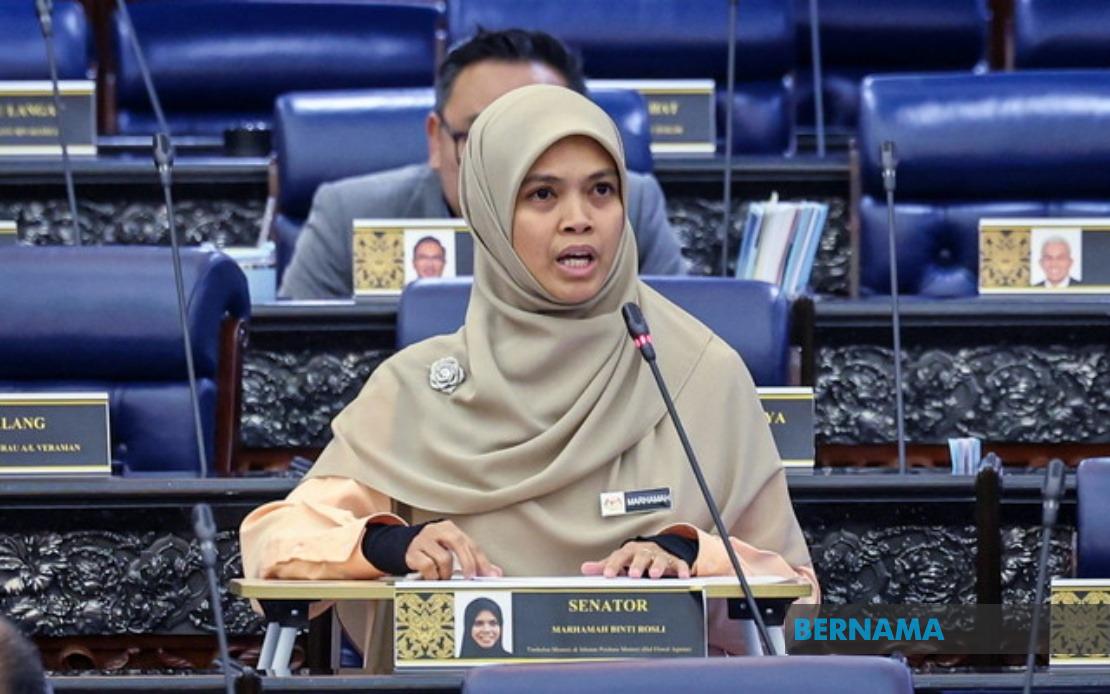
Malaysia is taking steps toward dismantling barriers that prevent Islamic law practitioners from working seamlessly across state lines. Deputy Minister in the Prime Minister's Department (Religious Affairs) Senator Marhamah Rosli announced in Parliament that a landmark proposal for standardising Syariah lawyer admission and accreditation will be presented to the National Council for Islamic Religious Affairs Malaysia (MKI) at its next gathering. The initiative emerged from the 2026 Syariah Legal Profession Convention, representing a significant push to modernise how the country manages its Islamic legal workforce.
The fragmented nature of current Syariah lawyer regulation across Malaysia's 13 states and three federal territories has created an inefficient patchwork that frustrates legal practitioners and complicates access to justice. Under the existing framework, a Syariah lawyer qualified and admitted to practise in Selangor, for instance, cannot automatically extend their services to Kuala Lumpur or Terengganu without undergoing separate admission procedures and assessments in each jurisdiction. This territorial restriction has forced many practitioners to maintain multiple licences or restrict their client base geographically, regardless of their professional competence.
Marhamah articulated the core problems afflicting the current system during her response to Senator Datuk Salehuddin Saidin's parliamentary question. The lack of harmonisation has spawned inconsistent qualification standards across states, with different authorities applying varying benchmarks for admission and professional conduct. Admission procedures themselves differ markedly, creating confusion and administrative duplication. Practitioners face financial burdens from repeating assessments and paying separate fees in multiple jurisdictions, effectively penalising mobile lawyers who wish to serve clients nationwide. Perhaps most significantly, the absence of any mutual recognition framework means that professional credentials earned in one state carry no weight elsewhere, undermining the notion of a cohesive national legal system.
If the MKI endorses the proposal, the framework would proceed to a refinement stage before potentially being escalated to the Conference of Rulers for formal consideration and endorsement. This multi-tiered approval process reflects the constitutional complexity surrounding Islamic law administration in Malaysia. Under the Federal Constitution, Islam remains a state matter, and the Malay Rulers hold the constitutional position of Heads of Religion within their respective territories. Any nationwide standardisation must therefore navigate these federalism and religious authority considerations carefully, explaining why the government has committed to advancing harmonisation "in a measured, inclusive and phased manner" while respecting state jurisdictions and the prerogatives of the Rulers.
The constitutional sensitivity underscores why this initiative, though seemingly technical, carries genuine political weight. Malaysia's dual legal system—with civil courts handling criminal and commercial matters, and Syariah courts administering family law, inheritance, and Islamic disciplinary affairs for Muslim citizens—requires institutional coherence. The Islamic legal profession has grown steadily as Syariah courts have expanded their caseload and scope. Allowing qualified Syariah lawyers to move between states would facilitate speedier case resolution, reduce geographical disparities in access to specialised legal talent, and encourage professional excellence through interstate competition and knowledge-sharing.
For legal practitioners, the implications are substantial. A unified accreditation system would enable Syariah lawyers to establish networked practices across state boundaries, similar to civil lawyers operating under the Malaysian Bar Council. This mobility would encourage specialisation and expertise development, as practitioners could serve clients nationwide without administrative friction. The professional remuneration landscape would also shift, as lawyers could pursue cases and clients across a wider geography, potentially boosting earnings and career trajectory for accomplished practitioners.
For the public—particularly Muslim citizens requiring Syariah legal services—standardisation promises improved access and quality. Citizens in states with fewer available Syariah lawyers could access expertise from neighbouring jurisdictions. Consistent qualification standards would theoretically elevate the baseline competence of Islamic legal practitioners. Faster, more predictable admission processes would encourage qualified individuals to enter the field, expanding the overall supply of Islamic legal talent. These benefits align with broader judicial efficiency objectives that Malaysian policymakers have pursued across both the civil and religious court systems.
The timing of this proposal reflects broader conversations within Malaysia's Islamic governance architecture about modernising institutions without displacing the constitutional role of the Rulers. The government's language about respecting "constitutional jurisdiction of the states and the role of the Malay Rulers as Heads of Islam" indicates careful coalition-building among federal authorities, state governments, and the royal institution. This consultative approach, while slower than unilateral federal action, is politically necessary and may ultimately yield stronger consensus around reform.
Regionally, Malaysia's move toward professionalising and standardising its Islamic legal system carries significance. Several Southeast Asian nations with Muslim-majority or substantial Muslim populations face similar questions about harmonising religious law administration. How Malaysia resolves the tension between modernisation pressures and constitutional federated authority could inform approaches elsewhere in the region to managing parallel legal systems and professional standards.
The proposal's advancement through formal institutional channels suggests the government views this as a genuine priority rather than ceremonial gesture. The fact that it emerged from a professional convention, is being escalated through the MKI, and potentially heading to the Conference of Rulers indicates organised, sustained advocacy within the Islamic legal community itself. Practitioners clearly recognise that the current fragmentation hampers their profession's development and Malaysia's judicial efficiency.
Looking ahead, success will depend on crafting accreditation standards that command legitimacy across all states while respecting their constitutional autonomy. The process will require extensive consultation with state Islamic authorities, the Syariah legal profession, and religious scholars to ensure that standardisation enhances rather than diminishes the quality and integrity of Islamic legal practice. If executed thoughtfully, this initiative could establish a model for how federalised systems can achieve professional modernisation while maintaining constitutional principles and institutional respect.

