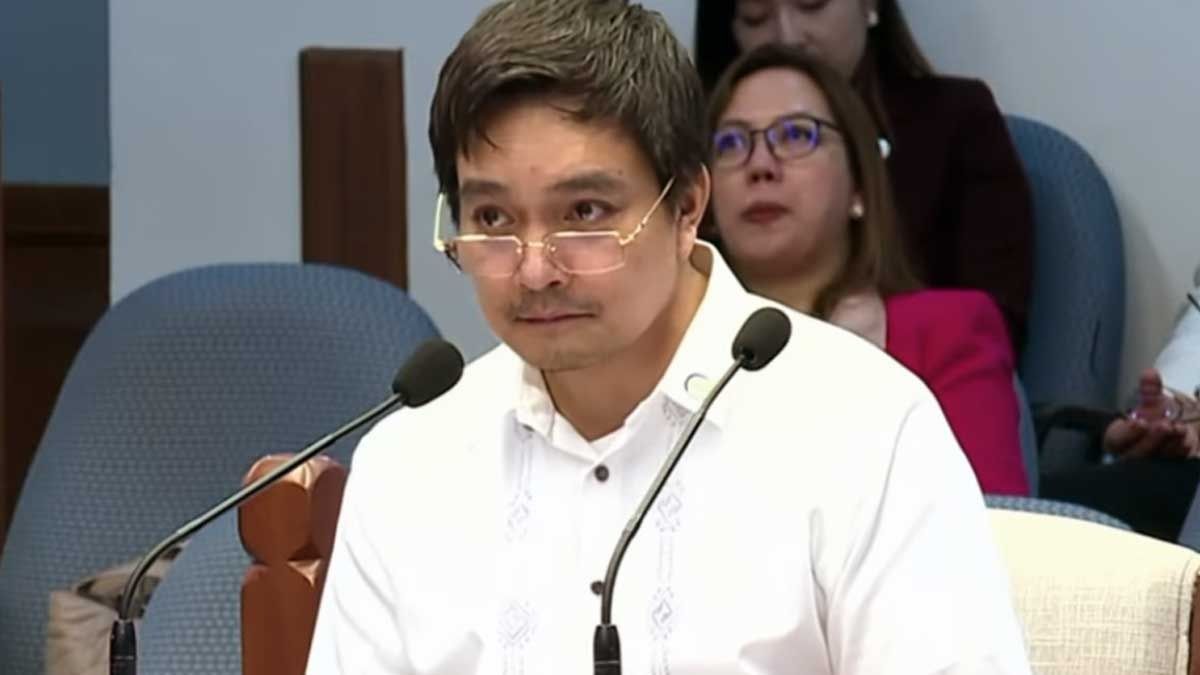
The National Bureau of Investigation's lead investigator has acknowledged a critical gap in the case against Vice President Sara Duterte: he possesses no firsthand knowledge that she actually hired someone to kill President Ferdinand Marcos Jr., even as he maintains that gathered evidence points toward her involvement. Jeremy Lotoc, who headed the NBI's Crime Division during the initial investigation, made this admission during Tuesday's continuation of Duterte's impeachment proceedings, a moment that exposed the evidentiary challenges prosecutors face in making charges of conspiracy to commit murder stick.
The distinction between belief and proof has emerged as a central battleground in the trial, which centres on remarks Duterte made during a November 23, 2024 online media briefing in which she spoke of contracting someone to kill the president, First Lady Liza Araneta-Marcos, and former House Speaker Martin Romualdez. Defence counsel Mark Vinluan pressed Lotoc repeatedly on this precise issue, attempting to establish that the investigator's conclusions rested on inference rather than concrete evidence of actual criminal conspiracy. Lotoc's responses revealed the investigative team's reliance on the Vice President's own recorded statements as primary evidence, a methodological approach that defence lawyers have sought to undermine by questioning whether such remarks constituted genuine threats or merely provocative rhetoric.
The trial transcript captured a moment of evident judicial frustration when Senate Presiding Officer Francis "Chiz" Escudero intervened as lawyers sparred over the characterisation of the evidence, remarking pointedly that the proceedings were not "a college debate." This interjection underscored the procedural complications arising from conflicting interpretations of what Duterte's statements actually represented and how much weight should attach to circumstantial indicators of motive and capability. The cross-examination revealed fundamental disagreements about how to read the evidentiary record, with the defence suggesting that acknowledged utterances could not automatically be construed as evidence of actionable conspiracy.
Lotoc's testimony ventured into murky interpretive territory when private prosecutor Amando Ligutan challenged the defence's characterisation of the witness's answers. The exchanges grew heated enough that Escudero felt compelled to restore order and instruct the witness to provide complete, unambiguous responses that would resist misinterpretation by either side. This procedural challenge reflects a deeper problem: establishing intent and agency in cases involving public figures whose statements occupy an ambiguous zone between political rhetoric, venting, and genuine criminal intent remains extraordinarily difficult without documentary or testimonial evidence of actual planning or commission.
The question of capability surfaced as Senate President Sherwin Gatchalian probed whether the NBI had developed tangible evidence that Duterte possessed the means to execute her alleged threats. Lotoc's initial response—that Duterte's position as Vice President itself demonstrated capability—drew sharp rebuke from Gatchalian, who correctly noted that holding high office does not automatically confer ability to organise contract killings. This exchange highlighted a fundamental evidentiary weakness: the investigative team appeared to be conflating office-holding with actual capacity for crime, a logical leap that even sympathetic senators found unconvincing.
Attempting to shore up the capability argument, Lotoc then referenced the international legal proceedings against Duterte's father, former President Rodrigo Duterte, at the International Criminal Court concerning allegations of extrajudicial killings during his administration's drug war. The witness suggested that Sara Duterte's family background and proximity to her father's alleged practices demonstrated her own potential capacity for organising violence. This reasoning prompted critical reflection on how family history and presidential lineage might or might not constitute evidence of individual criminal propensity, a question that touches on fundamental principles of individual accountability.
The impeachment proceedings have generated significant ripples across the Philippine political landscape, with implications extending throughout Southeast Asia's democratic frameworks. Duterte's impeachment represents a rare instance of a sitting Vice President facing formal removal proceedings, raising broader questions about constitutional mechanisms for addressing alleged misconduct by high-ranking officials. The trial's evidentiary struggles illuminate how difficult it becomes to prosecute conspiracy charges, particularly when primary evidence consists of public statements whose interpretation remains contestable.
For Malaysian observers, the proceedings offer instructive lessons regarding the intersection of political conflict and criminal law. The case demonstrates how charged partisan environments can shape investigative priorities and trial strategy, and how the absence of smoking-gun evidence complicates efforts to hold powerful figures accountable. The NBI's reliance on circumstantial evidence and the Vice President's own public statements mirrors challenges that law enforcement agencies throughout the region face when investigating alleged crimes involving political elites.
The fundamental tension exposed by Lotoc's testimony concerns epistemology: what constitutes sufficient evidence of criminal intent when dealing with statements made in public forums by politicians addressing opponents? The investigative team appears convinced of Duterte's culpability based on interpretations of her rhetoric and her family background, yet this conviction has not translated into the kind of direct evidence—such as documented communications with would-be assassins, financial transfers, or testimonies from intermediaries—that would transform belief into proof beyond reasonable doubt. This distinction remains critical to the trial's ultimate outcome and to broader questions about how democracies hold their leaders accountable.
The impeachment trial continues at a moment of heightened political tension in the Philippines, with the Duterte family's political fortunes and national policy directions hanging in the balance. Senate votes on whether to convict and remove Duterte will ultimately depend on whether a two-thirds majority finds the evidence of conspiracy sufficiently compelling to justify such an extraordinary constitutional remedy. Lotoc's admissions regarding his lack of personal knowledge of the alleged assassination plot have complicated the prosecution's task, even as investigators maintain their analytical conviction that the available evidence points toward Duterte's involvement.
The proceedings also underscore how technological change has transformed political communication and created new forms of evidence that investigative and legal systems struggle to properly evaluate. Duterte's remarks emerged during an online media briefing, instantly distributed and preserved in digital form, yet their interpretation as genuine threats rather than inflammatory political speech remains contested. This dynamic—wherein public statements can be simultaneously preserved for posterity and yet remain ambiguous in meaning and intent—will likely define similar cases in Philippine and regional politics for years to come.

