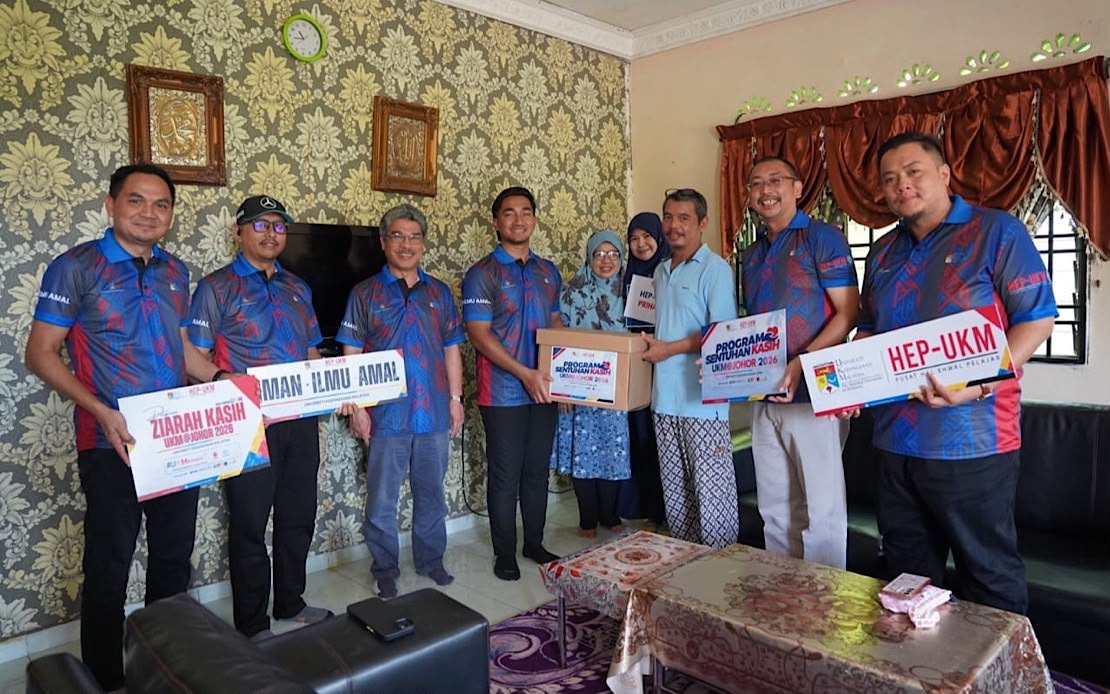
Universiti Kebangsaan Malaysia (UKM) has demonstrated its commitment to bridging the gap between academic institutions and the public through a substantial community engagement drive that drew nearly 1,000 residents across multiple Johor locations. The Sentuhan Kasih UKM@Johor programme, which unfolded over a weekend recently, reflected the university's broader philosophy of extending its impact beyond classroom walls and into the neighbourhoods that host its students. Held across Kota Masai, Pasir Gudang, Kampung Baru Sri Aman and Taman Jaringan in Skudai, the initiative mobilised 78 members of the UKM community, from students to staff, to deliver hands-on services and foster genuine connections with residents.
The programme's thematic focus—"Dari Kampus ke Komuniti, Menyebar Kasih dan Bakti" (From Campus to Community, Spreading Love and Service)—encapsulated a philosophy increasingly relevant in Malaysia's higher education landscape. As universities face growing pressure to demonstrate social relevance, UKM's approach signals recognition that meaningful engagement requires sustained, visible presence in communities rather than tokenistic gestures. The variety of activities undertaken, ranging from gotong-royong community cleaning efforts to mental health screening and recreational sports, addressed multiple dimensions of community wellbeing simultaneously. The inclusion of "ziarah kasih" welfare visits underscored a particular emphasis on checking on families and students who might face economic or social hardship, a concern acute in the semi-industrial belt of southern Johor.
The choice of venue carries particular significance. Areas like Kota Masai and Pasir Gudang are predominantly industrial zones where residents balance demanding work schedules with family obligations, often leaving limited time for engagement with local institutions. According to community leaders, approximately 80 per cent of residents in these neighbourhoods work in the industrial sector, which ordinarily constrains their availability for weekend activities. Despite this structural disadvantage, the programme achieved encouraging participation levels, suggesting either effective communication strategies or genuine enthusiasm among residents to connect with a major national university. This outcome challenges the assumption that low-income, working-class communities lack interest in educational or social initiatives; rather, it indicates that such communities respond positively when engagement efforts acknowledge their circumstances and offer tangible value.
UKM's decision to simultaneously conduct welfare visits to families of enrolled students reveals a sophisticated understanding of student success factors. University completion rates and academic performance correlate strongly with family stability and economic security. By extending institutional care into students' home environments, UKM acknowledges that classroom excellence cannot be divorced from household circumstances. The seven families visited in the Tiram and Puteri Wangsa areas represented precisely the demographic most likely to face invisible struggles—families whose circumstances may not immediately disqualify them from university but whose economic precarity could undermine their children's academic journey. This targeted support mechanism reflects contemporary best-practice thinking in student retention, particularly in Malaysia where first-generation university students often navigate significant family economic vulnerabilities.
Associate Professor Dr Darfizzi Derawi, heading the Student Affairs Centre and the Sentuhan Kasih programme, articulated a vision of universities as community institutions rather than insular ivory towers. His emphasis that students learn irreplaceable soft skills through direct community interaction addresses a persistent critique in Malaysian higher education: that curricula, however comprehensive, cannot substitute for exposure to real-world complexity, human diversity, and communication demands. The distinction he drew between classroom learning and community-based experiential learning reflects emerging global consensus on graduate competencies. Employers increasingly emphasise adaptability, intercultural communication, and practical problem-solving—capacities most effectively developed through unscripted interaction with diverse populations beyond campus. By institutionalising such engagement through the Sentuhan Kasih model, UKM signals recognition that graduate quality encompasses dimensions unmeasurable by examination results.
The presence of Higher Education Minister Datuk Seri Dr Zambry Abd Kadir at the programme suggests official validation of UKM's community-engagement approach. Government endorsement carries weight in Malaysia's education policy environment, potentially encouraging other universities to allocate resources toward similar initiatives. The ministerial attendance also reflects broader policy trends emphasising universities' social responsibility beyond knowledge production—a shift documented in recent higher education white papers and strategic plans. However, sustained progress requires moving beyond one-off high-visibility events toward institutionalised, year-round community partnerships, a challenge that remains unresolved across Malaysia's university sector.
UKM Vice-Chancellor Prof Datuk Dr Sufian Jusoh framed the initiative within institutional philosophy centred on holistic human development. His articulation that the university prioritises student wellbeing alongside academic excellence represents an important positioning amid Malaysia's higher education landscape, where institutional prestige traditionally concentrated on rankings, research output, and graduate employment statistics. The concept of "holistic human capital" development, he suggested, extends beyond securing degree credentials to nurturing graduates equipped with compassion, social awareness, and civic responsibility. This framing positions UKM distinctly within the sector and potentially attracts students and families valuing educational institutions that concern themselves with character formation alongside intellectual development.
The explicit mention of support mechanisms extending beyond financial assistance to encompass broader welfare reflects evolving understanding of student support infrastructure. While bursaries and scholarships remain essential, the programme's welfare visits and mental health screening activities address non-financial barriers to completion—isolation, family stress, health crises—that frequently prove decisive in student persistence. For Malaysian students from modest backgrounds, the knowledge that their institution monitors their welfare and intervenes proactively can substantially impact psychological wellbeing and academic focus. This represents an important distinction from transactional student support models that address only financial need.
The commitment to expanding Sentuhan Kasih periodically to other states indicates UKM's intention to embed community engagement into core institutional practice rather than treating it as a periodic public relations exercise. This expansion strategy faces logistical and resource challenges but signals strategic intent. For Malaysian higher education observers, UKM's approach provides a replicable model: substantial community engagement requires dedicated institutional resources, trained student leadership, and integration into university values rather than marginalisation within a single office. The programme's success across Johor's diverse, largely working-class communities demonstrates that universities can conduct meaningful engagement without waiting for communities to come to campus.
Community leader Herman Ismadi Ismail's observation that the programme helped residents better understand UKM's opportunities and initiatives addresses an information asymmetry characterising Malaysia's university landscape. For families without direct university experience—and research suggests roughly 60 per cent of Malaysian parents lack tertiary qualifications—awareness of university programmes, support structures, and career pathways often remains limited. Grassroots engagement serves an important informational function, potentially encouraging younger residents to pursue higher education and strengthening their sense that universities are accessible institutions rather than distant elite preserves.
The programme's timing and location carry labour-market implications for the Johor region. Industrial zones surrounding Pasir Gudang and Kota Masai represent Malaysia's productive core but often see residents locked into relatively low-skilled, cyclical employment. By fostering closer connections between UKM and these communities, the initiative potentially creates pathways for mid-career skill upgrading, professional retraining, and credentialling through university programmes. For a region experiencing rapid industrial transformation and exposure to global supply-chain disruptions, such educational connectivity offers residents access to upskilling opportunities that could enhance employment resilience.
Looking forward, the Sentuhan Kasih model's evolution and replication across other universities will significantly influence Malaysian higher education's trajectory. If community engagement becomes genuinely valued and resourced—rather than performative and marginalised—Malaysia's universities could substantially strengthen their legitimacy and relevance. For UKM specifically, the programme represents an opportunity to differentiate itself in Malaysia's competitive university market not through narrower metrics but through demonstrated commitment to community partnership and student welfare conceived holistically. The nearly 1,000 Johor residents who participated in this weekend initiative may represent only a fraction of those within reach, but they potentially form the nucleus of stronger, more reciprocal relationships between Malaysia's universities and the communities they ostensibly serve.

