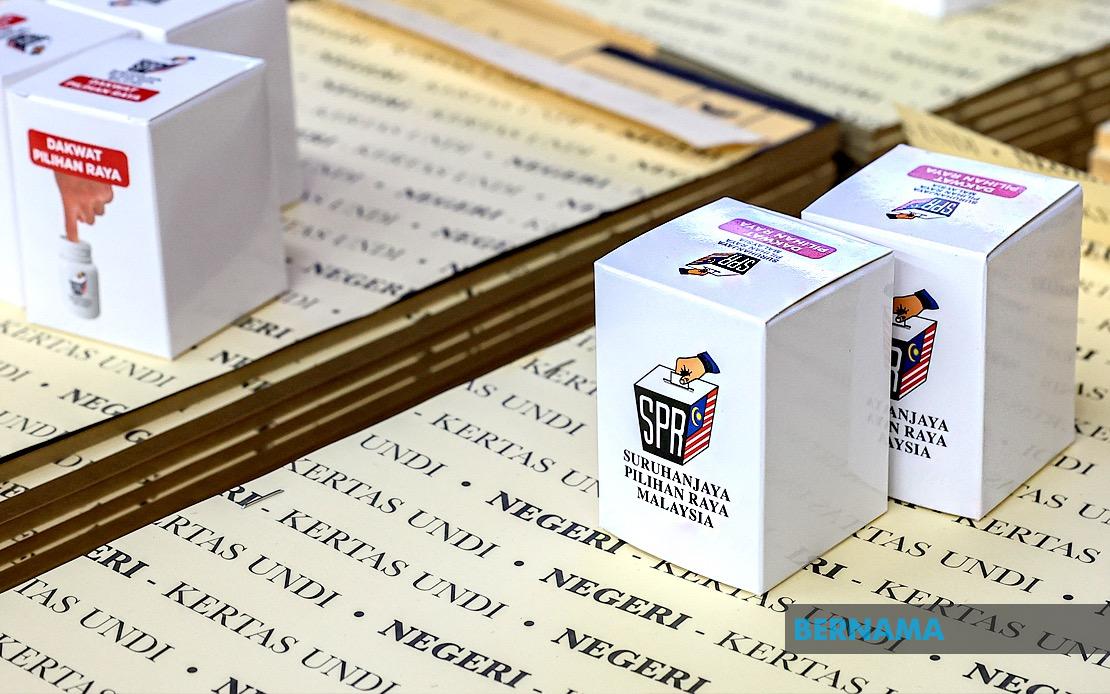
The Johor state election will enter its advance voting phase tomorrow as nearly 25,000 members of the military and police forces, along with their spouses, prepare to cast their ballots ahead of the main polling day on Saturday. This early voting exercise, involving 24,751 registered voters, represents a logistical undertaking designed to accommodate essential services personnel who will be on duty during the official election day on July 11. The operation will span 64 dedicated polling centres throughout the state, reflecting careful planning by election administrators to ensure this significant voter segment can participate without disrupting security operations across Johor.
The military contingent comprises 12,041 personnel and their dependents, while the police force contributes 12,710 voters to the early voting tally. This division of responsibilities allows both security services to manage their respective voting arrangements independently, though operating under a coordinated timeline. The scale of participation from uniformed services underscores their substantial presence within the state's workforce and the electoral commission's commitment to maintaining democratic participation across all demographic sectors, even among those with demanding public safety obligations.
Operations will commence at 8 am across all early voting locations, with 53 polling centres dedicated to police personnel and their families and 11 centres serving military voters. Among the police facilities, 12,067 voters are expected to cast ballots in person tomorrow, while an additional 643 have opted for postal voting arrangements. This flexibility in voting methods accommodates various operational schedules and deployment patterns that may affect individual attendance at physical polling centres. The availability of postal voting options reflects modern electoral administration practices, particularly important for security personnel who may face unpredictable scheduling demands.
Security operations supporting the early voting process will be substantial in scope. The police have allocated 3,565 personnel to manage the voting day, including 647 officers, 2,806 rank-and-file staff members, and 112 civilian support workers. Their responsibilities extend well beyond basic polling centre management to encompass comprehensive security coverage including perimeter control, ballot box security escorts, traffic management, crime prevention initiatives, dedicated operations command centres, and continuous monitoring of strategically sensitive locations. This deployment reflects the security challenges inherent in any significant public gathering and the commitment to maintaining orderly electoral processes.
Polling centres will stagger their closing times across the state between noon and 6 pm, with closures timed according to voter loads and geographical considerations. Smaller facilities serving remote locations or with minimal registered voters, such as Buloh Kasap Police Station in Segamat, Tenang Police Station in Labis, and Bandar Penawar Police Station, are scheduled to close at midday after processing their relatively small voter populations ranging between six and 28 individuals. Conversely, major urban voting hubs will remain operational throughout the extended afternoon period to accommodate higher voter traffic.
The largest early polling centre by voter concentration is the Federal Reserve Unit Hall No 2 located at Johor Police Headquarters, serving the Stulang state constituency, where 1,338 police personnel and spouses are registered to vote. The facility's substantial size and central location within the state capital reflect the concentration of police administrative operations at this site. Following closely behind is the KEMAS Preschool facility at the 6th General Operations Force Battalion in Bakri, which will process 927 voters designated for the Bukit Naning state constituency. These two locations represent the primary voting concentrations among security personnel and demonstrate how voter distribution mirrors institutional locations throughout Johor.
Weather conditions are expected to influence voting comfort levels in certain areas. The Malaysian Meteorological Department has forecast morning rainfall in the Batu Pahat, Muar, Pontian, and Tangkak districts, potentially affecting voter traffic and parking conditions at those centres during early hours of operation. The remainder of Johor is expected to experience fair weather conditions, allowing for more straightforward voting access across most of the state. These meteorological considerations may influence attendance patterns, particularly at rural or exposed polling locations.
The early voting tomorrow precedes the main state election scheduled for Saturday, July 11, when the broader electorate will determine the composition of the state assembly across 56 constituencies. A total of 172 candidates are contesting these seats, representing various political parties and independent aspirants competing for legislative representation. The scale of candidacy demonstrates robust political competition and suggests several constituencies will present voters with genuine multi-way contests rather than inevitable outcomes, contributing to genuine electoral suspense across the state.
For Malaysian observers and those interested in electoral processes, the Johor state election represents a significant democratic exercise within Southeast Asia's most developed economy. The meticulous planning evident in the early voting arrangements demonstrates institutional commitment to inclusive participation despite operational complexities arising from security personnel's public duty obligations. The election's outcome will influence Johor's political trajectory and potentially reflect broader sentiments within Malaysia's electorate during this period of political realignment and institutional development.

